

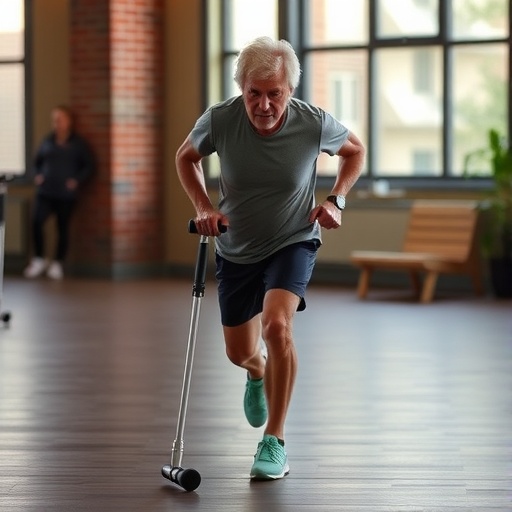
In an era marked by an increasing number of older adults globally, the quest to understand the intricate links between health factors becomes ever more critical. A significant area of concern has emerged surrounding the relationship between inflammation-related indices and physical performance in this demographic, particularly in instances of unintentional weight loss. A recent study conducted by researchers Gecegelen, Ucdal, and Baş, among others, delves into this multifaceted issue, employing a cross-sectional methodology that provides significant insights into the health dynamics faced by older adults.
The research forges vital connections between persistent inflammation and its debilitating effects on physical performance. In older populations, unintentional weight loss can often serve as a harbinger of grave health consequences, including increased morbidity and mortality rates. The investigators meticulously examined various inflammation-related markers, anticipating their role in predicting physical function decline. By assessing these indices, they aimed to illuminate the mechanisms through which inflammation can hinder mobility and overall physical capabilities.
Inflammation, often regarded as the body’s natural response to injury or infection, can develop into a chronic condition when protracted. This chronic inflammation signals a dramatic shift in the body’s homeostasis, exacerbating age-related decline in physical capabilities. Among older adults who experience unintentional weight loss, these inflammatory markers seem to present a potent risk factor for decreased mobility and physical dysfunction. The researchers aimed to explore this tantalizing hypothesis, seeking clarity in a field where findings can be particularly elusive.
In the study, volunteers underwent comprehensive assessments to quantify their physical performance, employing recognizable benchmarks to align with standard metrics. Moreover, detailed evaluations of their inflammatory markers were conducted, providing a rich data set for subsequent analysis. The design of the study underscores the importance of not just looking at weight loss per se, but contextualizing it within the intricacies of inflammation-related changes that often accompany such a condition.
The outcomes of the investigation paint a vivid picture of the impact inflammation can have on the physical capabilities of older adults. It became apparent that the higher the levels of specific inflammatory indicators, the more pronounced the decline in physical performance was observed. The alarming nature of these findings cannot be overstated: they suggest that older adults may be caught in a vicious cycle, where inflammation fuels physical incapacity, leading further to weight loss and a deeper plunge into health-related complexities.
Moreover, the researchers underscored that the interconnections between inflammation and physical performance in older adults could shape approaches to health interventions significantly. As preventive measures are discussed, this research flips the narrative to the chance to intervene in the life of older adults, mitigating inflammation and enhancing physical performance. The potential for holistic interventions that encompass dietary adjustments, increased physical activity, and perhaps even pharmacological approaches has emerged as an alluring prospect from these results.
The implications of inflammation-related indices acting as predictive measures for physical performance can inspire future research endeavors. By broadening the scope of inquiry into how these inflammatory responses influence various health outcomes, scholars may indeed contribute to a better understanding of how to care for older populations effectively. Understanding the degree of impact these indices have on quality of life might also prompt public health initiatives to forge strategies explicitly aimed at curbing inflammation through community-based programs focused on older adults.
The scholarly community must also consider how these findings resonate beyond the walls of academia. Engaging with policymakers and healthcare practitioners to highlight these pivotal connections can ultimately lead to transformative practices, enhancing not only the physical health of older adults but enriching their quality of life immeasurably. As the population continues to age, they stand to benefit enormously from a concerted effort to address health concerns driven by inflammation.
Furthermore, the research could sound a clarion call for heightened awareness around the signs and ramifications of unintentional weight loss. For caregivers, healthcare providers, and even families, being vigilant about nutritional intake and inflammation could pave the way for improved health trajectories in their older counterparts. Education and outreach programs focused on these themes could empower communities to support their older adults, making a tangible difference in their lives.
The phenomenon of unintentional weight loss is often overlooked; however, these findings establish it as a critical indicator of underlying health issues. Through a deeper understanding of inflammation’s role and its influence on physical performance, stakeholders can be equipped to tackle these challenges head-on. This research contributes significantly to a growing body of knowledge that is indispensable for the enhancement of geriatric care.
Moreover, it is essential to foster interdisciplinary collaborations to further unravel the complexities surrounding inflammation and physical performance. Bringing together experts in nutrition, gerontology, immunology, and physical therapy can provide a more unified understanding of this challenge. t’s imperative to utilize such interdisciplinary approaches in order to create comprehensive care strategies that can best support the aging population’s needs.
The study’s findings have far-reaching implications, demanding a shift not just in practices but in perspectives regarding the integration of inflammation monitoring in geriatric health care. As the healthcare community moves toward a more personalized approach, the insights gleaned from this research can screen for risks more effectively and implement preventive measures that target inflammation directly. All components of healthcare— from medical professionals to caregivers— can play a part in ensuring a more informed approach to aging.
In conclusion, the investigation by Gecegelen et al. provides compelling evidence regarding the link between inflammation-related indices and the physical performance of older adults suffering from unintentional weight loss. The analysis of their findings promises exciting avenues for future research, holistic health interventions, and educational outreach. By reflecting on and addressing these connections, society can aspire to improve the lives of older adults, ensuring they maintain their independence and wellbeing as they age.
In a world where aging populations are becoming increasingly prevalent, this research stands out as a crucial step toward enhancing quality of life for older adults. Future engagement with these findings could lead to revolutionary changes in how healthcare is approached, emphasizing prevention, education, and comprehensive management of health factors affecting the elderly.
Subject of Research: Inflammation-related indices and low physical performance in older adults with unintentional weight loss.
Article Title: Inflammation-related indices and low physical performance in older adults with unintentional weight loss: a cross-sectional study.
Article References:
Gecegelen, E., Ucdal, M., Baş, A.O. et al. Inflammation-related indices and low physical performance in older adults with unintentional weight loss: a cross-sectional study. BMC Geriatr (2026). https://doi.org/10.1186/s12877-025-06960-z
Image Credits: AI Generated
DOI:
Keywords: Inflammation, older adults, physical performance, unintentional weight loss, health indices.


