


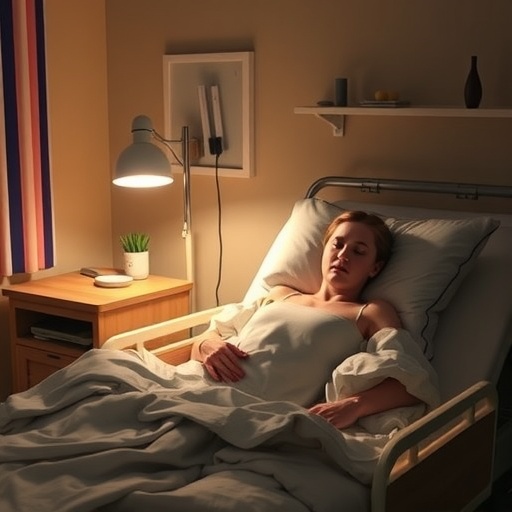
The ongoing evolution of healthcare delivery is witnessing exciting new frontiers, particularly with the increasing focus on home hospital care. A groundbreaking study explores a transformative concept: enhancing sleep and circadian health as a means of mitigating delirium in patients receiving treatment at home. This innovative approach, spearheaded by a team of researchers including Czeisler, Cerda, and Levine, seeks to redefine our understanding of patient care outside traditional hospital settings.
Delirium, an acute state of confusion often triggered by disruptions in sleep or changes in circadian rhythms, poses significant challenges for patients, especially the elderly. The traditional methods of treatment may not sufficiently address the nuances of delirium as it manifests in a non-hospital environment. In particular, the home setting introduces myriad variables that can affect a patient’s recovery, making it essential to adapt our methods of care to this context.
The researchers started by examining the critical role that sleep plays in cognitive functioning and overall health. By analyzing existing literature, they found compelling evidence linking poor sleep quality to increased incidence of delirium. Sleep disturbances can not only exacerbate the symptoms of delirium but can also serve as a precursor to its development. Thus, the foundation of their research hinges on the premise that enhancing sleep quality should be a priority in home healthcare programs.
Circadian rhythms, the biological processes that follow a roughly 24-hour cycle, are integral to regulating sleep patterns. Disruptions in these rhythms, often caused by inconsistent sleep schedules, exposure to artificial light, and environmental factors in the home, can significantly impact a patient’s mental and physical health. The researchers proposed that a systematic approach to reinforce healthy circadian rhythms could lead to improved outcomes for patients vulnerable to delirium.
Part of the study involved practical interventions that could be employed in home settings. For example, the introduction of structured sleep schedules and minimizing light exposure during nighttime hours were identified as vital strategies for enhancing sleep quality. The researchers also highlighted the importance of environmental adjustments, such as reducing noise levels and ensuring a comfortable sleeping arrangement to facilitate better rest.
Technological advancements played a crucial role in this research. Smart devices capable of monitoring various health metrics, including sleep quality and patterns, were examined. By integrating these technologies into home hospital care, healthcare providers can deliver personalized care that not only addresses medical needs but also enhances the overall well-being of patients. This sophisticated approach marks a significant departure from traditional care models, which often overlook the importance of the living environment.
The implications of this research extend beyond the confines of basic patient care. If successful, the findings could lead to broader systemic changes in how healthcare is delivered in non-hospital settings. With an aging population and rising healthcare costs, the shift toward home hospital models offers a sustainable solution to current challenges in the healthcare system. By embracing innovative concepts like enhanced sleep and circadian health, we can pave the way for more effective and patient-centered care.
Moreover, the study opens up important discussions regarding the interconnectivity of physical and mental health. Traditional models often isolate these aspects in clinical assessments and treatments. Yet, the evidence suggests that they are deeply intertwined, and addressing one without the other may lead to suboptimal outcomes. This holistic approach in understanding patient care could inspire future research across various domains of healthcare.
As we look to the future, the potential for continuing advancements in home-based care becomes clear. By focusing not only on the medical aspects of treatment but also incorporating an understanding of behavioral and environmental influences, healthcare professionals can create more comprehensive care plans tailored to individual needs. This could undoubtedly enhance recovery rates and improve quality of life for many patients navigating the complexities of illness at home.
The integration of insights from this research could also play a role in educating caregivers and patients about the significance of sleep hygiene and circadian health. Knowledge is power, and empowering individuals with the information they need to foster healthier day-to-day routines could further mitigate risks associated with delirium and other health problems. Ultimately, fostering resilient health patterns at home can serve as a proactive measure in preventing acute conditions from arising.
Indeed, the implications of such research could ripple throughout the entire healthcare system. By adopting principles of enhancing sleep and strengthening circadian health, public health policies could adapt to encourage practices that support at-home patient care, reinforcing the importance of a nurturing and healing home environment. This represents not just a shift in treatment methodology but a potential cultural shift in how we value and approach health in our personal spaces.
In conclusion, the study conducted by Czeisler and colleagues promises to be a game-changer in our understanding and management of delirium in home hospital care. As the research unfolds, it will be critical to monitor outcomes and refine interventions based on real-world applications and patient experiences. A focus on sleep and circadian health might soon become as fundamental to home healthcare as medication management and physical therapy, heralding a new era of personalized, effective care.
As we continue to explore these innovative concepts, the path towards a more integrated and understanding-based healthcare framework is bright. With ongoing research and dedication, we may indeed make strides towards not just treating illness but enhancing the overall quality of life for individuals receiving care in the comfort of their homes.
Czeisler, M.É., Cerda, I.H. & Levine, D.M. There’s No Place Like Home: Mitigating Delirium by Enhancing Sleep and Circadian Health in Home Hospital.
J GEN INTERN MED (2025). https://doi.org/10.1007/s11606-025-09845-4
Cite Scienmag News
Ophelia Keating. (September 23, 2025). Improving Sleep to Prevent Delirium in Home Hospitals. Scienmag. https://scienmag.com/improving-sleep-to-prevent-delirium-in-home-hospitals/
Ophelia Keating. "Improving Sleep to Prevent Delirium in Home Hospitals." Scienmag, 23 September 2025, https://scienmag.com/improving-sleep-to-prevent-delirium-in-home-hospitals/. Accessed 4 September 2026.
Ophelia Keating. "Improving Sleep to Prevent Delirium in Home Hospitals." Scienmag. September 23, 2025. https://scienmag.com/improving-sleep-to-prevent-delirium-in-home-hospitals/


