


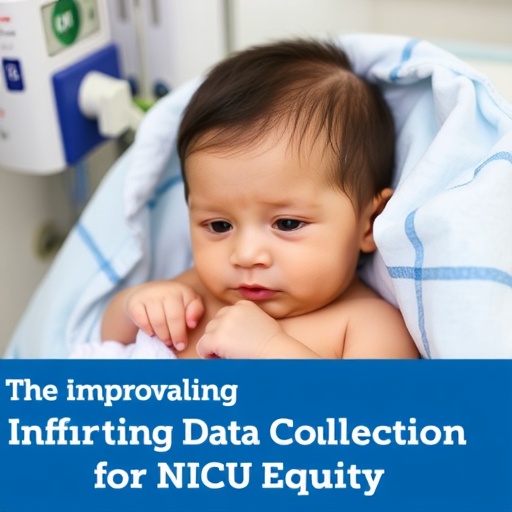
In a groundbreaking leap toward equitable healthcare in neonatal settings, recent research unveils an innovative approach to enhancing the accuracy and reliability of infant demographic data collection, as reported in a 2026 study by Barcroft, M., Davis, B., Bapat, R., and colleagues in the Journal of Perinatology. This pilot study addresses a critical yet often overlooked aspect of neonatal intensive care units (NICUs): the collection of caregiver-reported demographic information of infants, a fundamental determinant for tailoring clinical care and ensuring equity in health outcomes.
Neonatal intensive care units stand at the forefront of specialized medical intervention for the most vulnerable patients—newborns requiring critical care due to prematurity, congenital anomalies, or other serious conditions. Within this delicate clinical ecosystem, demographic information such as race, ethnicity, language, and socioeconomic background plays a pivotal role. It influences not only clinical decision-making but also the implementation of targeted interventions aimed at reducing healthcare disparities among infant populations. Yet, challenges have long existed in acquiring precise, comprehensive demographic data directly from caregivers during the acute stress of neonatal hospitalization.
The study introduces a meticulously designed pilot program that integrates structured caregiver interviews and refined data collection tools to engage families with compassion and clarity. By employing culturally sensitive communication techniques and digital data capture technologies, the authors have demonstrated a remarkable, sustained improvement in the quality of demographic data reporting. The refined process ensures that caregivers can provide detailed, accurate information without the burden of jargon or administrative complexity—thereby enhancing the reliability of data critical for epidemiological and outcome-based analyses.
Integral to this advancement is the recognition of the NICU environment’s profound impact on caregivers. Hospitalization of a newborn in the NICU often coincides with significant psychological distress for families, complexities in communication, and potential mistrust in healthcare processes. The researchers’ approach accounts for these variables by incorporating empathetic engagement strategies and iterative feedback loops with caregivers. This patient-centered methodology not only improves data accuracy but also fosters a supportive atmosphere conducive to better clinical collaboration.
Technical examination of the data collection algorithm reveals the strategic incorporation of adaptive questioning pathways. These pathways dynamically adjust queries based on real-time caregiver responses, thereby mitigating respondent fatigue and minimizing errors associated with repetitive questioning. The integration of electronic health record (EHR) interfaces further streamlines the process, allowing direct translation of caregiver inputs into structured data fields accessible for ongoing clinical use and retrospective research.
Notably, the research casts light on the critical concept of “information asymmetry” in NICUs. Historically, disparities in data quality have contributed to gaps in recognizing sociocultural determinants of neonatal health outcomes. By leveling this field through enhanced demographic capture, the study paves the way for more equitable resource allocation and personalized treatment protocols, potentially transforming NICU care paradigms worldwide.
From a methodological perspective, the pilot’s longitudinal framework extends beyond initial implementation, tracking data collection fidelity over several months. This durability analysis highlights that the improvements are neither ephemeral nor superficial but represent foundational shifts in communication and data management practices. It suggests scalability and replicability potential in diverse NICU environments, including resource-limited settings where accurate demographic data have often been elusive.
Moreover, this study underscores the intersection of technological innovation and ethical healthcare delivery. The balance between technological efficiency and maintaining caregiver dignity is delicately maintained through user-centric design. The application’s interface displays multilingual support, context-sensitive help prompts, and privacy safeguards that align with global data protection standards, reassuring caregivers about confidentiality and data use.
One of the more profound implications of this research is its contribution to reducing health inequities observed in neonatal outcomes. By ensuring that demographic variabilities are accurately recorded and considered, neonatal care teams can better identify trends such as differential rates of morbidity and mortality linked to racial or socioeconomic factors. This foundational data fuels quality improvement initiatives and informs public health strategies aimed at narrowing equity gaps.
This pilot initiative also opens new avenues for interprofessional collaboration within NICUs, uniting clinicians, social workers, data scientists, and health informaticians in a synergistic effort to optimize infant care. By involving multidisciplinary teams in the design and implementation of data collection tools, the program fosters a comprehensive approach that respects the complexity of neonatal care environments.
Furthermore, the authors discuss the potential for integration of their enhanced demographic data framework with broader health information networks. Such integration would allow longitudinal tracking of infant outcomes beyond the NICU, supporting longitudinal research into the social determinants of health from birth through early childhood development. This holistic perspective is invaluable in crafting interventions that extend the impact of NICU care into lifelong health trajectories.
Critically, the study’s findings prompt a reevaluation of institutional policies on demographic data collection within pediatric care settings. Hospitals and healthcare systems are encouraged to adopt similar models, recognizing that accurate demographic insight is not mere administrative paperwork, but a clinical imperative deeply tied to patient-centered care and equity.
In conclusion, this pioneering research articulates a visionary step toward enhancing demographic data collection in NICUs, embodying the fusion of humanity, technology, and scientific rigor. Its sustained improvements offer a replicable template poised to reshape neonatal care by embedding equity at its core, ultimately striving for a future where every infant’s health outcome is optimized by understanding their unique social and demographic context.
Cite Scienmag News
Harold Sullivan. (May 18, 2026). Improving Infant Data Collection for NICU Equity. Scienmag. https://scienmag.com/improving-infant-data-collection-for-nicu-equity/
Harold Sullivan. "Improving Infant Data Collection for NICU Equity." Scienmag, 18 May 2026, https://scienmag.com/improving-infant-data-collection-for-nicu-equity/. Accessed 3 September 2026.
Harold Sullivan. "Improving Infant Data Collection for NICU Equity." Scienmag. May 18, 2026. https://scienmag.com/improving-infant-data-collection-for-nicu-equity/


