

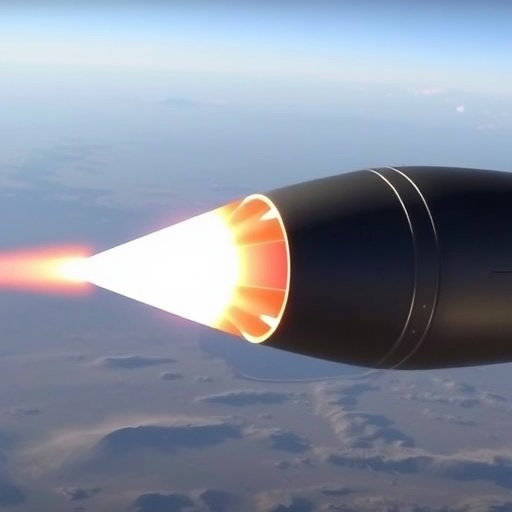
In the complex realm of military technology, the design and performance of missile warheads play a critical role in achieving successful operational outcomes. An intriguing new study delves into one specific aspect of warhead design—the influence of nose shape on the penetration performance of air-to-ship missile warheads equipped with semi-armor-piercing capabilities. Conducted by leading researchers Yu, B., Zhang, X., and Fan, Y., this investigation sheds light on the intricate dynamics of projectile design and the implications for modern warfare.
The aerodynamic efficiency of missile warheads is paramount in determining their performance, particularly when targeting ships. As evidence mounted regarding the effectiveness of various shapes in enhancing penetration capabilities, the study took on a structured approach to analyze how subtle changes in nose geometry significantly influence the missile’s ability to breach hull defenses. Using sophisticated modeling and simulation techniques, the researchers meticulously adjusted the artificial nose designs, assessing their behavior during the flight and impact phases.
Fundamental to the research is the understanding that the nose shape influences how air flows around the missile during its flight. Aerodynamics is not merely an aesthetic concern but a core factor affecting drag, lift, and stability. By meticulously altering the contours of the missile’s nose, the study sought to establish a direct correlation between aerodynamic performance and warhead penetration efficiency. The researchers employed finite element analysis to create a comprehensive model, simulating various flight scenarios which are critical during target engagement.
Upon conducting computer simulations, the research team observed that different nose shapes impacted the shockwave generation upon impact, which, in turn, affected the missile’s structural integrity and effectiveness against armored targets. The results indicated that more pointed nose designs yielded superior penetration capabilities due to their ability to concentrate striking force on smaller surface areas. This finding suggests that advancements in computational modeling could drive future designs that prioritize structural dynamics alongside aerodynamic performance.
Additionally, the effects of material choices for the semi-armor-piercing warhead were considered in conjunction with nose designs. Advanced materials can contribute to lower weight, which is crucial in missile engineering. This research underscores the need to incorporate material science considerations into future missile designs, aiming to enhance operational efficacy while maintaining the structural integrity of the warhead upon impact with hardened naval surfaces.
Another interesting angle explored in the study was the impact of velocity on penetration performance. With the evolution of missile technology leading to higher-speed projectiles, the researchers noted that the interplay between velocity and nose design became critical. They found that as velocity increased, the need for optimized nose shapes became more pronounced, highlighting a dependency on the physics of high-speed impacts. This interplay demands that designers prioritize a multidisciplinary approach, combining expertise from aerodynamics, materials science, and physics to achieve optimal outcomes.
Moreover, the implications of this research extend beyond military applications. The principles underlying missile design inform various industries, including aerospace engineering and automotive manufacturing. Insights gained from the impact of nose shapes can be translated into consumer vehicle designs to enhance fuel efficiency and performance due to the quest for reduced drag and increased stability.
Given the geopolitical landscape and the continuous evolution of naval combat, the stakes are high. As nations advance their military capabilities, understanding the science behind missile penetration performance arms strategists and engineers with the knowledge required to optimize their systems. This research reflects a shift toward data-driven military strategies that incorporate technology and scientific research to achieve competitive advantages.
The study also invites discussion on the ethical implications of advanced military technologies. As these systems grow more effective and discreet, the associated responsibilities and potential for misuse arise. Debates surrounding arms control and the deployment of advanced weaponry are as critical as the design principles themselves, urging stakeholders to consider the safeguards necessary to prevent escalation and promote stability.
In conclusion, the transformative insights from this study on missile nose shape engineering and penetration performance pave the way for future advancements in military technology. With the next generation of missiles expected to leverage these findings, it would not be an exaggeration to say we are on the brink of a paradigm shift in aerial attack capabilities. The implications are profound, shaping both tactical approaches and strategic planning in the face of evolving global threats. As technology continues to accelerate, one can only speculate how these advancements will ultimately shape the next era of naval warfare dynamics.
Understanding the details of such research not only enriches academic discourse but also prepares military personnel and engineers for the challenges ahead. As we dissect the nuances of design impacting real-world outcomes, it becomes evident that the intersection of science and defense is an arena that demands continuous exploration and innovative thought.
Subject of Research: The effect of nose shape on penetration performance of air-to-ship missile warhead with semi-armor-piercing capabilities.
Article Title: Study on the effect of nose shape for penetration performance of air-to-ship missile warhead with semi-armor-piercing.
Article References: Yu, B., Zhang, X., Fan, Y. et al. Study on the effect of nose shape for penetration performance of air-to-ship missile warhead with semi-armor-piercing. AS (2025). https://doi.org/10.1007/s42401-025-00396-4
Image Credits: AI Generated
DOI: 10.1007/s42401-025-00396-4
Keywords: missile warhead design, nose shape, penetration performance, air-to-ship missiles, semi-armor-piercing capabilities, aerodynamic efficiency, finite element analysis, high-velocity impacts, materials science in military technology, geopolitical implications.


