


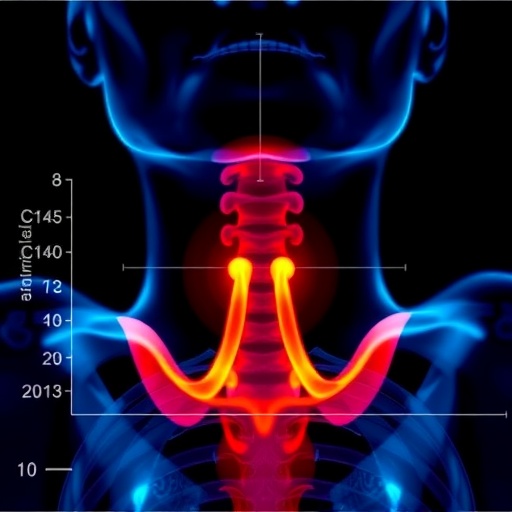
In the realm of head and neck cancers, laryngeal squamous cell carcinoma (LSCC) stands as a significant point of concern due to its aggressive nature and complex treatment modalities. Among the various management strategies employed, total laryngectomy has emerged as a standard procedure for advanced cases. Recent studies have begun to shed light on the role that lymph node count features play in the prognostic evaluation of patients undergoing this surgical intervention.
The findings presented in the research by Trache et al. offer compelling insights into the correlation between lymph node characteristics and patient outcomes. This comprehensive investigation highlights the importance of not only the number of lymph nodes excised during the operation but also their histopathological features, which seem to carry profound implications for overall survival and recurrence rates. By analyzing the data collected from a cohort of patients who underwent total laryngectomy for advanced LSCC, the researchers reveal fundamental patterns that could one day reshape clinical practices and improve prognostic stratification.
The body’s lymphatic system serves as a crucial component for immune response and metastasis. In the context of cancer, particularly LSCC, the presence and characteristics of lymph nodes can provide essential information regarding the extent of disease spread. Lymph nodes that contain malignant cells serve as indicators of the cancer’s staging, thus impacting treatment decisions. The meticulous examination of lymph node features, such as their count and the presence of cancer cells, offers a pivotal insight into tumor behavior and potential patient trajectories.
Trache and colleagues meticulously gathered data to explore these associations, employing advanced statistical methods to examine the prognostic significance of the features of excised lymph nodes. Their work underscores that a higher lymph node count, coupled with negative histopathological features, can be favorable. Contrastingly, when the lymph nodes exhibit extensive tumor involvement, patient prognosis takes a markedly adverse turn. The implications of such findings cannot be understated; they offer a nuanced perspective on how to approach patient management following total laryngectomy.
As practitioners evaluate postoperative outcomes, it is essential to recognize how lymph node count could influence the need for adjuvant therapies. The research delineates how subsets of patients with varying lymph node characteristics may require different follow-up approaches—ranging from stringent surveillance protocols to the initiation of palliative care. That specificity in patient management could significantly enhance the quality of life for survivors while strategically diverting resources to where they are most impactful.
The complexity of dissecting lymph node features extends into broader oncological research as well. The integration of these findings with emerging technologies such as artificial intelligence and machine learning presents a tantalizing frontier. The potential to analyze large datasets, encompassing various demographics and treatment regimens, can lead to more personalized treatment paradigms for patients battling head and neck cancers.
Despite the promising avenues of investigation opened by Trache et al., it is crucial to recognize the limitations of their study. The authors acknowledge the potential for confounding factors that may influence outcomes, such as variations in surgical technique and postoperative care. Consequently, they advocate for multicenter studies to validate their findings across diverse populations and treatment settings. This step would not only strengthen the evidence surrounding lymph node features but also serve to refine the surgical and postoperative protocol in managing advanced LSCC.
Another salient point arising from the study is the increasing emphasis on the necessity for comprehensive histopathological assessments of lymph nodes during surgical planning. For clinicians and surgical teams, the examination of lymph nodes should be more than a mere checklist item; it should become a central focus that guides clinical decision-making. Such a shift could lead to tailored therapeutic interventions that correlate closely with lymph node status, thereby optimizing patient outcomes.
The growing body of evidence further substantiates the perspective that LSCC is not merely a localized disease but rather a complex interplay of tumor biology, host immune response, and environmental factors. By carefully dissecting the prognostic implications of lymph node features, medical professionals can foster a deeper understanding of cancer pathology, potentially leading to ground-breaking innovations in treatment protocols.
In the ongoing quest for improved survival rates for LSCC patients, the integration of lymph node characteristics into the prognostic landscape serves as a crucial step forward. With the insights revealed by Trache et al., there lies an opportunity to ignite further research endeavors focused on lymphatic interventions as a cornerstone of laryngeal cancer treatment plans.
As cancer continues to challenge healthcare systems worldwide, it is imperative to invest research efforts in understanding critical prognostic indicators. The findings from this study elucidate the need for ongoing exploration into the biological behaviors of lymphatic spread and its correlation with systemic outcomes. Such investigations create pathways for future advancements, guiding the evolution of therapeutic frameworks that are as tailored and effective as possible.
In summary, the study led by Trache et al. paves the way for a paradigm shift in how lymph nodes are perceived in the context of cancer prognostics. Not only do these findings reinforce the relationship between node count and patient outcomes, but they also beckon a new era of personalized medical approaches in the treatment of laryngeal squamous cell carcinoma. With further validation and exploration of these concepts, the hope for improved patient prognosis and care is brighter than ever.
Promoting awareness of these findings is essential for advancing clinical practices while fostering informed dialogues within oncology. As researchers and clinicians continue to engage with the implications of such studies, a collaborative effort presents itself—one that could potentially redefine not only patient survival rates but also the quality of life for those facing the arduous journey of laryngeal cancer.
This study serves as a cornerstone for future research, stimulating interest in lymph node dynamics and their relevance within a broader oncological context. Engaging with these themes will likely yield richer insights and, importantly, drive forward the mission to enhance cancer outcomes through innovations and evidence-based practice.
Cite Scienmag News
Nathaniel Bowman. (October 7, 2025). Impact of Lymph Node Count in Laryngeal Cancer Surgery. Scienmag. https://scienmag.com/impact-of-lymph-node-count-in-laryngeal-cancer-surgery/
Nathaniel Bowman. "Impact of Lymph Node Count in Laryngeal Cancer Surgery." Scienmag, 7 October 2025, https://scienmag.com/impact-of-lymph-node-count-in-laryngeal-cancer-surgery/. Accessed 6 September 2026.
Nathaniel Bowman. "Impact of Lymph Node Count in Laryngeal Cancer Surgery." Scienmag. October 7, 2025. https://scienmag.com/impact-of-lymph-node-count-in-laryngeal-cancer-surgery/


