

Tuesday, September 1, 2026
Science
No Result
View All Result
  • Login
  • HOME
  • SCIENCE NEWS
  • CONTACT US
  • HOME
  • SCIENCE NEWS
  • CONTACT US
No Result
View All Result
Scienmag
No Result
View All Result
Home Science News Technology and Engineering

Impact of Electronic Screen Time on Sleep Duration and Patterns in Adults

March 27, 2025
in Technology and Engineering
Denise Maddox
By Denise Maddox Scienmag Editorial Profile - Mechanical Engineering
Reading Time: 3 mins read
0
Impact of Electronic Screen Time on Sleep Duration and Patterns in Adults
66
SHARES
603
VIEWS
Share on FacebookShare on Twitter
ADVERTISEMENT

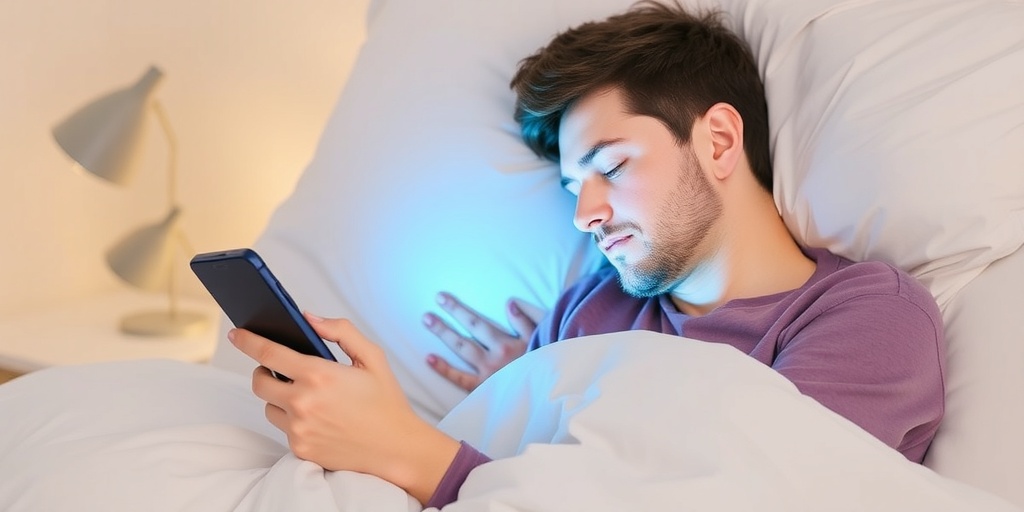
In recent years, the relationship between daily screen use and sleep patterns has garnered significant attention from researchers and health professionals alike. A compelling study has demonstrated a clear link between increased screen time and later bedtimes, revealing that individuals who engage in extensive electronic device usage may be sacrificing valuable sleep hours. The implications of this research stretch beyond mere statistics, highlighting critical considerations for public health, especially amid the rise of digital technologies that have become integral to daily life.

The phenomenon of social jetlag, which arises from misalignments between an individual’s circadian rhythms and the societal demands of daily schedules, was particularly pronounced among participants characterized by evening chronotypes. This temporal misalignment can lead to chronic sleep disruption, creating a cascading effect on mental and physical health. People who identify as evening chronotypes naturally feel more awake later in the day, yet are often forced to adhere to early morning commitments, resulting in a detrimental impact on their sleep quality and overall well-being.

In the study, participants reported, on average, losing approximately 50 minutes of sleep each week due to increased screen time. This reduction in sleep is significant when considering the cumulative effects over extended periods. Regular lack of sleep can lead to a variety of health-related issues, including impaired cognitive function, increased stress levels, and a heightened risk of chronic illnesses. Understanding these associations offers critical insights into how modern lifestyles may be contributing to a public health crisis characterized by sleep deprivation.

The study’s findings are further underscored by the fact that the adverse effects of screen usage on sleep are not confined to children and adolescents, as previously speculated. Adults, too, face risks associated with excessive screen time, which may seep into their sleep hygiene practices. As screens continue to dominate entertainment, work, and social interactions, the urgency to investigate effective interventions to mitigate their impact on sleep becomes more pressing.

To combat the challenges posed by electronic devices, researchers suggest implementing strategies to help individuals establish healthier sleep habits. This could involve creating stricter boundaries around screen time in the evenings, utilizing blue light filters on devices, or encouraging engaging in relaxing pre-sleep routines that better prepare individuals for rest. The need for awareness and proactive measures is vital not only for personal health but also for broader societal wellness.

As more evidence emerges linking screen use to sleep disturbances, it becomes imperative for health professionals, educators, and policymakers to develop comprehensive approaches to address this issue. Public health campaigns, community workshops, and organizational strategies could all play vital roles in fostering environments that support healthier sleep practices amidst the pervasive presence of digital technology.

In conclusion, the study boldly asserts that reduced sleep due to screen use represents a significant public health concern that can no longer be overlooked. As the digital age continues to evolve, remaining cognizant of the potential pitfalls associated with screen engagement will be essential for maintaining not just individual well-being, but also societal health. Future research will be critical in delineating further the complex relationship between technology use and sleep, paving the way for innovative interventions that can positively influence sleep hygiene across varied demographics.

This study not only provides crucial insights into the interplay between technology and sleep but also underscores the necessity for continued dialogue around the implications of modern lifestyles on health. As we navigate this digital transformation, we must remain vigilant in recognizing and addressing its impact on our fundamental need for adequate rest.

Keywords

Sleep, Biological rhythms, Chronotype, Circadian rhythms, Digital media, Public health, Sleep hygiene, Electronic devices, Evening chronotypes, Social jetlag, Sleep disruption, Screen time

Subject of Research: The impact of daily screen use on sleep patterns and duration
Article Title: Daily Screen Use Linked to Later Bedtimes and Reduced Sleep Duration
News Publication Date: [Insert date here]
Web References: [Insert any relevant links here]
References: [Insert any relevant references here]
Image Credits: [Insert image credits here]

Article Title: Impact of Electronic Screen Time on Sleep Duration and Patterns in Adults

Article References: Original research article

Image Credits: AI Generated

DOI: Not provided

Keywords: adult sleep patterns and screen use, chronic sleep disruption in adults, consequences of reduced sleep duration, digital device usage and health implications, evening chronotypes and sleep quality, impact of electronic screen time on sleep, mental health effects of sleep deprivation, physical health implications of poor sleep, public health concerns and technology, relationship between screen time and sleep loss, social jetlag and circadian rhythms, strategies to improve sleep in a digital age

Cite Scienmag News

Denise Maddox. (March 27, 2025). Impact of Electronic Screen Time on Sleep Duration and Patterns in Adults. Scienmag. https://scienmag.com/impact-of-electronic-screen-time-on-sleep-duration-and-patterns-in-adults/

Denise Maddox. "Impact of Electronic Screen Time on Sleep Duration and Patterns in Adults." Scienmag, 27 March 2025, https://scienmag.com/impact-of-electronic-screen-time-on-sleep-duration-and-patterns-in-adults/. Accessed 1 September 2026.

Denise Maddox. "Impact of Electronic Screen Time on Sleep Duration and Patterns in Adults." Scienmag. March 27, 2025. https://scienmag.com/impact-of-electronic-screen-time-on-sleep-duration-and-patterns-in-adults/


Tags: adult sleep patterns and screen usechronic sleep disruption in adultsconsequences of reduced sleep durationdigital device usage and health implicationsevening chronotypes and sleep qualityimpact of electronic screen time on sleepmental health effects of sleep deprivationphysical health implications of poor sleeppublic health concerns and technologyrelationship between screen time and sleep losssocial jetlag and circadian rhythmsstrategies to improve sleep in a digital age
Share26Tweet17
Previous Post

ENO2: A Crucial Contributor to Metastasis in Head and Neck Squamous Cell Carcinoma

Next Post

Professor Emphasizes the Importance of Including Eugenics in Genetics Curriculum

Related Posts

Multi-scale transformer with dynamic attention detects group behavior in volleyball matches
Technology and Engineering

Multi-scale transformer with dynamic attention detects group behavior in volleyball matches

August 30, 2026
Microbial Team Speeds Rice Straw Breakdown and Boosts Soil Fertility
Technology and Engineering

Microbial Team Speeds Rice Straw Breakdown and Boosts Soil Fertility

August 30, 2026
Pesticide etoxazole causes dose-dependent nerve, inflammation, and DNA damage in female rats
Technology and Engineering

Pesticide etoxazole causes dose-dependent nerve, inflammation, and DNA damage in female rats

August 30, 2026
Linear active disturbance rejection control advances missile roll and acceleration autopilots
Technology and Engineering

Linear active disturbance rejection control advances missile roll and acceleration autopilots

August 30, 2026
Particle dampers offer passive noise control for electric vehicle inverters
Technology and Engineering

Particle dampers offer passive noise control for electric vehicle inverters

August 30, 2026
Point clouds, meshes, or NeRFs: which 3D map best guides visual localization?
Technology and Engineering

Point clouds, meshes, or NeRFs: which 3D map best guides visual localization?

August 30, 2026
Next Post
Professor Emphasizes the Importance of Including Eugenics in Genetics Curriculum

Professor Emphasizes the Importance of Including Eugenics in Genetics Curriculum

  • Mothers who receive childcare support from maternal grandparents show more optimized

    Mothers who receive childcare support from maternal grandparents show more parental warmth, finds NTU Singapore study

    27656 shares
    Share 11059 Tweet 6912
  • University of Seville Breaks 120-Year-Old Mystery, Revises a Key Einstein Concept

    1061 shares
    Share 424 Tweet 265
  • Bee body mass, pathogens and local climate influence heat tolerance

    682 shares
    Share 273 Tweet 171
  • Researchers record first-ever images and data of a shark experiencing a boat strike

    546 shares
    Share 218 Tweet 137
  • Groundbreaking Clinical Trial Reveals Lubiprostone Enhances Kidney Function

    531 shares
    Share 212 Tweet 133
Science

Embark on a thrilling journey of discovery with Scienmag.com—your ultimate source for cutting-edge breakthroughs. Immerse yourself in a world where curiosity knows no limits and tomorrow’s possibilities become today’s reality!

RECENT NEWS

  • Most Australian women wearing shoes that don’t match their feet, study finds
  • Ant colonies show varied disease susceptibility and grooming across social levels
  • Leptospira bacteria detected in cattle and rodents across Papua New Guinea provinces
  • Do Parents and Teachers Agree on Preschool Dual Language Learners’ Social Skills?

Categories

  • Agriculture
  • Anthropology
  • Archaeology
  • Athmospheric
  • Biology
  • Biotechnology
  • Blog
  • Bussines
  • Cancer
  • Chemistry
  • Climate
  • Earth Science
  • Editorial Policy
  • Marine
  • Mathematics
  • Medicine
  • Pediatry
  • Policy
  • Psychology & Psychiatry
  • Science Education
  • Social Science
  • Space
  • Technology and Engineering

Subscribe to Blog via Email

Success! An email was just sent to confirm your subscription. Please find the email now and click 'Confirm Follow' to start subscribing.

Join 5,150 other subscribers

© 2025 Scienmag - Science Magazine

Welcome Back!

Login to your account below

Forgotten Password?

Retrieve your password

Please enter your username or email address to reset your password.

Log In
No Result
View All Result
  • HOME
  • SCIENCE NEWS
  • CONTACT US

© 2025 Scienmag - Science Magazine