


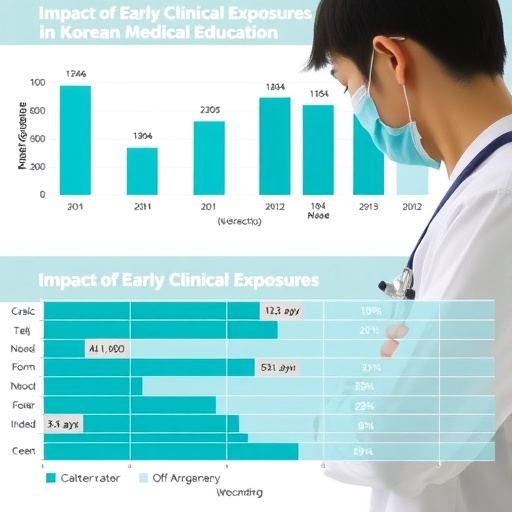
In an era characterized by rapid advancements in medical science and healthcare delivery, a pivotal study has emerged from South Korea that aims to reshape the educational landscape for future medical practitioners. The research focuses on the significant impact of early clinical exposure within health systems science courses, marking a transformative approach in medical education. The pioneering study conducted by Lee, Im, and Shin, alongside their research team, scrutinizes the effect of this innovative educational strategy on medical trainees, providing insights that can influence curriculum development worldwide.
At the forefront of this research is the new paradigm of blending early clinical exposure with health systems science education. The approach is grounded in the belief that familiarity with real-world clinical settings and healthcare systems can enrich the educational experience of medical students. By integrating these elements early in the academic journey, students can cultivate a profound understanding of patient care, healthcare policies, and the intricacies of medical practice from a systems perspective. This aspect of the study is particularly important as it highlights the intersection between theory and practice, a notoriously challenging aspect of medical education.
The prospective observational study design employed by the researchers allows for a comprehensive examination of the educational outcomes associated with this approach. This methodology offers the ability to observe participants in real-time as they navigate their clinical experiences while enrolled in the health systems science course. By evaluating their progress, challenges, and successes, the researchers can draw meaningful conclusions regarding the relevance and effectiveness of introducing clinical exposure earlier in the training process.
Moreover, the implications of this study extend beyond the confines of the classroom. By engaging with patients and healthcare professionals early in their education, students are better equipped to appreciate the complexities of healthcare delivery systems and the nuances of patient interactions. This real-world application of their studies is aimed at fostering a generation of physicians who are not only well-versed in medical knowledge but also possess the necessary skills to navigate the healthcare landscape effectively.
As medical education faces increasing scrutiny regarding its adequacy in preparing students for the demands of modern healthcare, the findings from this study contribute to a crucial conversation. The research outcomes underscore the benefits of experiential learning, particularly in health systems science, which remains an underrepresented area in traditional medical curricula. Integrating this focus into medical education could lead to a more holistic training approach, ensuring that future doctors are competent not just in clinical skills, but also in understanding the broader healthcare environment.
In addition to academic performance, the researchers have also assessed student engagement and satisfaction levels in relation to the early clinical exposure. Preliminary results indicate a positive correlation between participation in the health systems science course and heightened student enthusiasm for their future roles in medicine. By fostering a sense of purpose and connection to the healthcare field early in their education, the upcoming generation of physicians may be better prepared to tackle the challenges faced in their professional careers.
Importantly, this study spotlights the potential for curriculum innovation within medical education. The findings advocate for a shift away from traditional teaching methods toward more integrated, experiential approaches. By emphasizing real-world applications of health systems science, educators can better prepare students for the realities of medical practice. This adaptation could serve as a catalyst for broader reforms within medical education, encouraging institutions worldwide to consider similar approaches.
With an eye toward the future, the implications of the study extend to policy discussions surrounding healthcare education and training. As healthcare systems evolve to meet the needs of diverse populations, medical schools must keep pace by adopting forward-thinking educational strategies. Policymakers, educators, and healthcare leaders must collaborate to ensure that emerging physicians are equipped not only with clinical expertise but also with a comprehensive understanding of healthcare systems’ dynamics.
The research team’s commitment to rigor and excellence underlines the importance of evidence-based education strategies in shaping the future of medical training. As the landscape of healthcare continues to shift, ongoing studies like this one will be pivotal in informing best practices and illuminating pathways for the next generation of healthcare professionals.
In closing, the profound impact of this study lies in its potential to ignite change within medical education systems, encouraging a blend of early clinical exposure with health systems science. By redefining the educational experience for future medical professionals, the research initiatives driven by Lee, Im, and Shin pave the way for a more competent and empathetic healthcare workforce, capable of navigating the complexities of 21st-century medicine.
In summary, this groundbreaking research highlights the importance of early clinical exposure in medical education, suggesting that integrating health systems science into the curriculum can significantly enhance students’ learning experiences and outcomes. The study serves as a call to action for medical institutions around the globe to reconsider their educational approaches, advocating for reforms that promote experiential learning and a holistic understanding of healthcare.
Cite Scienmag News
Courtney Benton. (December 26, 2025). Impact of Early Clinical Exposure in Korean Medical Education. Scienmag. https://scienmag.com/impact-of-early-clinical-exposure-in-korean-medical-education/
Courtney Benton. "Impact of Early Clinical Exposure in Korean Medical Education." Scienmag, 26 December 2025, https://scienmag.com/impact-of-early-clinical-exposure-in-korean-medical-education/. Accessed 4 September 2026.
Courtney Benton. "Impact of Early Clinical Exposure in Korean Medical Education." Scienmag. December 26, 2025. https://scienmag.com/impact-of-early-clinical-exposure-in-korean-medical-education/


