


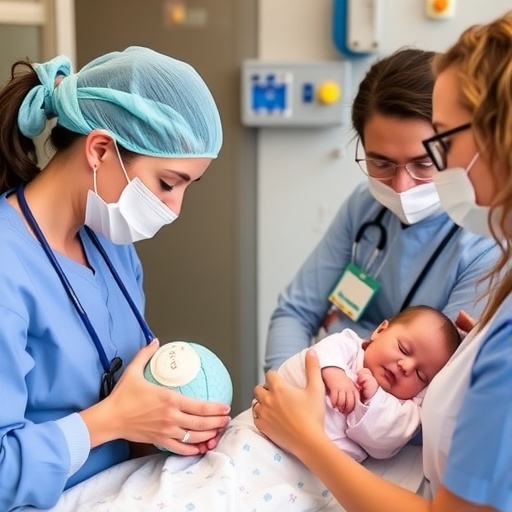
In the world of neonatal care, enhancing the comfort of hospitalized infants while simultaneously improving the skillsets of nursing staff is paramount. Recent research has delved into the effectiveness of structured training programs aimed at aligning nurses’ practices with the best comfort protocols for neonates. This has led to the development of comprehensive training programs, focusing on developmental positioning. The implications of such training go beyond immediate nurse performance; they touch the very heart of patient care, influencing outcomes for some of the most vulnerable infants in our hospitals.
The neonatal intensive care unit (NICU) is a specialized environment that brings together a diverse team of healthcare providers. Among these, nurses are crucial in implementing care strategies that ensure optimal outcomes for premature and critically ill infants. A recent study conducted by Karami, Arzani, and Zabihi explores how effective training in a comprehensive developmental positioning program can enhance not only the comfort of infants but also the performance of nursing staff in these high-pressure settings. The research provides groundbreaking insights, emphasizing the need for ongoing education and training in this sensitive area of healthcare.
The study presented a fascinating approach to neonatal nursing, where ‘developmental positioning’ is recognized as a vital element in providing physical and emotional support for infants. This practice involves strategically placing babies in positions that require nurse expertise. It allows infants to experience more natural, womb-like environments, thereby reducing stress and promoting physiological stability. The research team aimed to assess how a tailored training program could positively influence nurses’ proficiency in applying these critical techniques.
For many neonatal nurses, the NICU environment poses unique challenges. Long shifts, constant monitoring of vital signs, and the emotional toll associated with caring for critically ill infants can lead to burnout. The introduction of a comprehensive training program is not just a procedural adjustment; it can empower nurses, boosting their confidence and effectiveness in delivering care. By evaluating the impact of such training, the authors sought to provide a clear direction for future practices that could ultimately enhance both caregiver wellbeing and patient outcomes.
The methodology used in this research was robust, employing a quantitative approach that allowed the team to statistically analyze the results of the training program. Nurses underwent a systematic training regimen designed to enhance their knowledge and practical skills related to developmental positioning. The rigorous nature of this training involved both theoretical instruction and hands-on practice, ensuring that nurses could translate their learning into effective bedside care. This immersive training experience is critical in fostering an environment where nurses feel equipped to implement new strategies confidently.
Results from the study were promising, showing a significant improvement in nurses’ performance and their ability to provide comforting positions for infants. Feedback indicated that nurses felt more competent and confident in their roles following the training. Moreover, the study highlighted improved infant comfort levels, as evidenced by physiological indicators such as heart rate and oxygen saturation during and after developmental positioning. These findings suggest that investing in comprehensive nursing education can foster a more supportive atmosphere for both infants and caregivers in the NICU.
Incorporating developmental positioning practices into the daily routines of NICU staff is not merely a theoretical exercise; it presents an avenue for immediate and long-term benefits. Researchers underscored the importance of continual professional development, advocating for ongoing training and reinforcement of these practices as standard operating procedures within neonatal care settings. By doing so, hospitals can ensure that their staff remains knowledgeable about the latest evidence-based practices, improving the overall quality of care provided.
As healthcare systems worldwide continue to navigate the complexities associated with neonatal care, this research stands as a testament to the necessity of educational advancements in nursing practices. The findings encourage facilities to create structured training initiatives tailored specifically to the needs of their nursing staff. Hospitals investing in their teams can expect reciprocal benefits: improved nurse satisfaction and engagement, coupled with higher levels of infant comfort and well-being.
In recent years, the healthcare landscape has increasingly recognized the significance of professional development in nursing. As a result, programs aimed at enhancing nurses’ skills in specialized areas such as neonatal intensive care are gaining traction. This study serves not only as a response to current deficiencies in training but also as a model for how other healthcare institutions might address similar challenges in different specialties. The strategic implementation of developmental positioning training enables nursing teams to adapt to the unique demands of neonatal care environments effectively.
Outcomes from this research have broader implications for healthcare education and training paradigms. They provoke questions surrounding the best practices for ensuring that nurses are not only informed but also empowered to deliver adequate care tailored to individual patient preferences and needs. Developing competency in specialized areas is critical in an era where healthcare providers are continually striving towards excellence in patient-centered care.
The contributions of this research extend beyond individual hospitals. As institutions around the globe look to innovate and improve patient care, the study by Karami, Arzani, and Zabihi provides a clear and evidence-backed guideline. By employing the approaches outlined in their research, hospitals worldwide can revise their training protocols, leading to systemic changes that benefit the entire field of neonatal care. So, as healthcare continues to evolve, programs designed around comprehensive developmental positioning training may become standard practice across neonatal intensive care units everywhere.
Ultimately, this study shines a light on the critical interplay between training, nurse performance, and infant care. It reinforces the principle that investing in healthcare education not only prepares nurses for the challenges they face daily but also has a direct impact on patient outcomes in vulnerable populations. Health administrators and educators are thus called upon to work collaboratively, merging research findings with practical training applications to drive change in how care is provided in the NICU.
In conclusion, the comprehensive developmental positioning program introduced by the researchers marks a significant step forward in improving practice standards within neonatal care. It underscores the importance of nurturing well-trained, confident nursing staff as a way to ensure that the smallest patients receive optimal comfort and that their health outcomes reflect the highest levels of care. As we move towards a future in which evidence-based practices continue to guide healthcare, this study serves as an essential reference point, advocating for excellence in training and patient-centered practices in the NICU landscape.
Karami, T., Arzani, A., Zabihi, A. et al. The effect of comprehensive developmental positioning program training on nurses’ performance and infant comfort hospitalized in the neonatal intensive care unit.
BMC Med Educ (2025). https://doi.org/10.1186/s12909-025-08459-y
Cite Scienmag News
Courtney Benton. (December 27, 2025). Impact of Developmental Training on NICU Nurses and Infants. Scienmag. https://scienmag.com/impact-of-developmental-training-on-nicu-nurses-and-infants/
Courtney Benton. "Impact of Developmental Training on NICU Nurses and Infants." Scienmag, 27 December 2025, https://scienmag.com/impact-of-developmental-training-on-nicu-nurses-and-infants/. Accessed 4 September 2026.
Courtney Benton. "Impact of Developmental Training on NICU Nurses and Infants." Scienmag. December 27, 2025. https://scienmag.com/impact-of-developmental-training-on-nicu-nurses-and-infants/


