

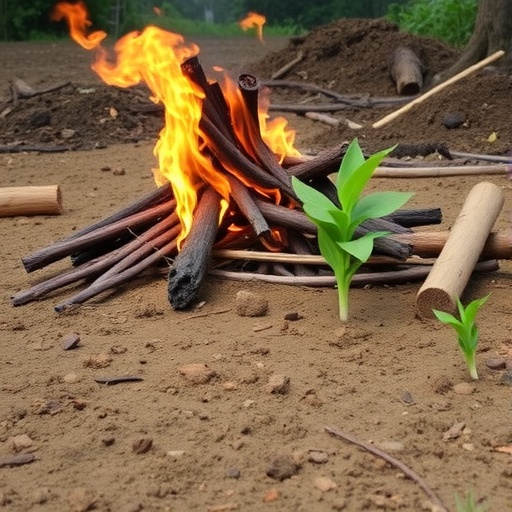
The environment is constantly subjected to various alterations driven by both natural and anthropogenic activities. One of the most pressing issues in the contemporary ecological landscape is the impact of biomass burning on soil characteristics, particularly in regions keenly engaged in shifting cultivation practices. The specific alterations that result from this practice are a significant area of academic inquiry and practical concern, especially in ecologically sensitive areas such as Northeast India. The critical study conducted by Khundrakpam, Nonglait, and Deka sheds light on the pedogeochemical transformations that stem from biomass burning, a practice deeply rooted in the cultural and agricultural practices of many communities in this region.
Shifting cultivation, often referred to as swidden agriculture, involves the clearing of forests or grasslands for temporary agricultural purposes. The land is cultivated for a few years, after which it is allowed to revert to its natural state. However, this age-old practice has come under scrutiny due to its association with environmental degradation and loss of biodiversity. The authors of the study emphasize the importance of understanding soil elemental and anionic dynamics in these cultivated plots to assess the long-term sustainability of shifting cultivation. Their work illustrates how biomass burning serves as a pivotal mechanism influencing these soil alterations, ultimately affecting not only plant growth but also the broader ecological balance.
In conducting their study, the researchers meticulously examined the various bio-geochemical processes that are triggered by biomass burning. These processes significantly alter the soil’s elemental composition, along with essential anionic dynamics. The study illustrates that ash resulting from burned biomass significantly enriches soil with key nutrients such as potassium, calcium, and magnesium. On the contrary, the burning process can lead to the leaching of vital anions and micronutrients, which can detrimentally affect soil fertility over time. Such findings highlight the dual nature of biomass burning—while it may provide short-term benefits in nutrient availability, the long-term implications for soil health are alarming.
The research delves into the variability of soil elemental dynamics that arise from these practices. The authors observed fluctuations in the concentration of phosphorus, sulfur, and nitrogen within the soil profiles of shifting cultivation plots. These changes are particularly crucial as they directly influence not just the immediate agricultural yield but also the larger ecosystem services that healthy soils provide. The degradation of soil structure and composition potentially leads to heightened erosion and loss of arable land, painting a concerning picture for future agricultural practices in the region.
One of the standout aspects of the study is its emphasis on anionic dynamics in the context of soil health. The researchers found that biomass burning altered the soil’s anionic exchange capacity, affecting how negatively charged ions, which are essential to various biochemical processes, interact with soil particles. Specifically, the study identified changes in the dynamics of anions such as nitrate and sulfate. This manipulation of soil chemistry elevates the risk of nutrient runoff into nearby waterways, which can create broader ecological issues, such as eutrophication and harm to aquatic life.
The implications of these findings extend beyond mere academic interest. With climate change and population pressures, understanding the sustainability of agricultural practices becomes paramount. The research highlights that communities engaging in shifting cultivation must consider the fire regime and its consequences on soil health. Tailoring traditional practices to integrate sustainable techniques may yield better environmental outcomes while preserving cultural and economic livelihoods.
Moreover, the findings of this research resonate in a broader global discourse concerning sustainable agriculture and land use practices. As nations grapple with food security issues amid growing populations, the principle of nurturing soil health comes to the forefront. The intricate balance between agricultural practices and ecological integrity must be examined closely; this study serves as a foundational piece of literature that prompts further research in this arena.
The processes outlined in the study offer a grim reminder of how traditional practices, while culturally significant, must evolve in the context of modern challenges. Effective policy solutions should take into account community knowledge while also integrating scientific insights to strike a balance that fosters both environment and livelihood. Engaging local farmers in discussions around sustainable practices that reduce reliance on burning could enhance soil health and agricultural productivity, creating a win-win situation for both the environment and agricultural stakeholders.
Khundrakpam, Nonglait, and Deka’s insights further advocate for the implementation of conservation tillage and agroforestry systems as methods to mitigate the adverse effects of biomass burning. These alternatives could enrich soil health without the disruptive effects associated with burning, thereby promoting long-term agricultural sustainability.
In conclusion, the study’s findings underscore the nuanced relationship between traditional agricultural practices and soil health in shifting cultivation contexts. The call for holistic approaches in managing agricultural landscapes juxtaposes local practices with contemporary environmental science, emphasizing the critical need for adaptive strategies that recognize both cultural heritage and ecological necessity. The research serves as an essential resource for further inquiries into sustainable agricultural methods, making it a valuable addition to discussions about food security and environmental stewardship.
While the challenges posed by biomass burning are formidable, they also present an opportunity for innovation in sustainable agriculture. Continued research in this domain will be vital as we seek to understand the long-term impacts of our farming practices on soil health, ecosystem services, and overall biodiversity. Engaging with communities and scientists alike will be key to paving a path forward that honors traditional knowledge while embracing sustainable solutions for the future.
Subject of Research: Pedogeochemical alterations induced by biomass burning in shifting cultivation plots of Northeast India.
Article Title: Pedogeochemical alterations induced by biomass burning: an assessment of soil elemental and anionic dynamics in shifting cultivation plots of Northeast India.
Article References: Khundrakpam, N., Nonglait, M.L. & Deka, P. Pedogeochemical alterations induced by biomass burning: an assessment of soil elemental and anionic dynamics in shifting cultivation plots of Northeast India. Environ Monit Assess 198, 175 (2026). https://doi.org/10.1007/s10661-026-14991-1
Image Credits: AI Generated
DOI: https://doi.org/10.1007/s10661-026-14991-1
Keywords: soil health, biomass burning, shifting cultivation, pedogeochemical alterations, Northeast India, sustainable agriculture.


