


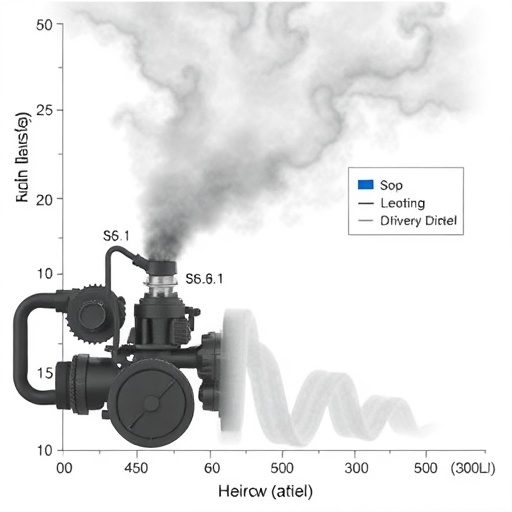
In the ever-evolving world of automotive technology, the intricate relationship between air-fuel ratios and the type of fuel being used has garnered significant interest among researchers focusing on diesel engines. A recent study spearheaded by Böhmeke, Wagner, and Koch delves deep into this subject, revealing critical insights that could potentially revolutionize diesel combustion processes. The research provides a comprehensive analysis of how varying the air-fuel ratio and different fuel compositions affect the reactivity of diesel soot, which is a major byproduct of diesel combustion.
Diesel engines have long been recognized for their efficiency and torque capabilities. However, the generation of soot during combustion remains a persistent challenge, contributing to air pollution and various health hazards. The research conducted by Böhmeke and his colleagues offers a nuanced understanding of the reactivity of soot, bringing forth new considerations for environmental and performance-related implications associated with diesel engines. The study systematically examines the nuances of how the composition of the fuel interacts with combustion dynamics, ultimately influencing soot formation.
A fundamental aspect of this research is the exploration of the air-fuel ratio, which dictates the efficiency of combustion. When there is an optimal ratio of air to fuel, the combustion process becomes more efficient, leading to lower emissions of particulate matter, including soot. The authors meticulously evaluate how deviations from this ideal ratio can result in increased soot formation, emphasizing the critical need for precise control in diesel combustion systems. The balance between air and fuel is not merely an operational parameter but a key determinant of combustion byproducts.
Further complicating the picture is the type of fuel being utilized. The researchers delve into various fuel types, such as conventional diesel, biodiesel, and synthetic alternatives, examining how each influences soot reactivity. For example, it has been determined that biodiesel tends to produce less soot compared to traditional diesel, largely due to its different molecular structure and combustion properties. This finding emphasizes the necessity for continued innovation in fuel technology as we move towards more sustainable and environmentally friendly automotive solutions.
Moreover, the study also highlights the implications of advanced combustion technologies, such as exhaust gas recirculation (EGR) and selective catalytic reduction (SCR). These technologies aim to optimize combustion conditions, thereby reducing soot emissions. The research indicates that understanding the reactivity of soot in conjunction with these advanced systems can lead to better design and operational strategies that enhance engine performance while simultaneously minimizing environmental impact.
A particularly compelling argument made by the authors is the call for further investigation into real-world operating conditions. While laboratory experiments have provided invaluable insights, there exists a critical gap in understanding how these findings translate to actual vehicular use. The variations in temperature, pressure, and other environmental factors during driving conditions can significantly influence soot formation and reactivity. Thus, the researchers advocate for more comprehensive tests that better replicate on-road conditions.
The findings of this study have far-reaching implications not just for engine design but also for regulatory frameworks. As governments worldwide tighten restrictions on emissions, understanding the interplay between air-fuel ratios and soot reactivity can inform policymakers in crafting regulations that are both effective and practical for manufacturers. By optimizing combustion processes, legislation can encourage the use of cleaner fuels and technologies, fostering a transition to more sustainable transportation.
Interestingly, the research also brings forth the notion of soot reactivity as a potential indicator of fuel quality. This presents an innovative metric for assessing both environmental impact and engine performance based on the combustion byproducts produced. Such an approach could streamline testing protocols in fuel standards, ensuring that only high-quality, low-emission fuels are available in the marketplace. This emphasis on fuel quality dovetails with broader goals of improving air quality and reducing the carbon footprint associated with diesel engines.
As the automotive industry prepares for a shift towards electrification, the research underscores the importance of addressing the legacy of diesel technology. While electric vehicles (EVs) are gaining popularity, there remains a significant population of diesel vehicles on the road today. To ensure a holistic approach to emissions reductions, it is crucial that the insights gained from this study influence ongoing transitions rather than being overlooked in favor of more glamorous electric solutions.
The collaboration among Böhmeke, Wagner, and Koch exemplifies the importance of interdisciplinary approaches in tackling complex challenges within the automotive sector. By integrating knowledge from combustion science, materials engineering, and environmental policy, this research provides a rich perspective on future avenues for exploration. It serves as an invitation for both academia and industry to engage in dialogue and collaboration to accelerate the development of cleaner technologies.
In summary, the groundbreaking findings of this research shed light on the intricate dynamics of diesel combustion, particularly the impact of air-fuel ratios and fuel types on soot reactivity. As the automotive industry faces increasing pressure to reduce emissions and enhance sustainability, understanding these relationships is critical. The implications not only extend to engine design and fuel formulation but also reverberate through regulatory frameworks and environmental policies. Thus, this study marks a pivotal contribution to the ongoing discourse surrounding diesel technology and its role in a sustainable future.
With these insights, we are reminded that the path to cleaner diesel engines is fraught with challenges, but also rich with opportunities for innovation and collaboration. As we look ahead, the lessons learned from Böhmeke, Wagner, and Koch’s research could pave the way for significant advancements in reducing soot emissions, improving air quality, and promoting a more sustainable automotive industry.
Böhmeke, C., Wagner, U. & Koch, T. Influence of the air–fuel-ratio and fuel on the reactivity of diesel soot. Automot. Engine Technol. 9, 7 (2024). https://doi.org/10.1007/s41104-024-00145-3
Cite Scienmag News
Denise Maddox. (January 22, 2026). Impact of Air-Fuel Ratio and Fuel Type on Diesel Soot Reactivity. Scienmag. https://scienmag.com/impact-of-air-fuel-ratio-and-fuel-type-on-diesel-soot-reactivity/
Denise Maddox. "Impact of Air-Fuel Ratio and Fuel Type on Diesel Soot Reactivity." Scienmag, 22 January 2026, https://scienmag.com/impact-of-air-fuel-ratio-and-fuel-type-on-diesel-soot-reactivity/. Accessed 4 September 2026.
Denise Maddox. "Impact of Air-Fuel Ratio and Fuel Type on Diesel Soot Reactivity." Scienmag. January 22, 2026. https://scienmag.com/impact-of-air-fuel-ratio-and-fuel-type-on-diesel-soot-reactivity/


