Immunochemistry, a discipline long defined by antigen–antibody reactions and classic laboratory assays such as ELISA, radioimmunoassay, immunofluorescence and Western blotting, has outgrown its historical definition, according to a new conceptual study published in Discover Immunity. The research argues that decades of advances in molecular engineering, nanotechnology, computational modelling and systems immunology have expanded the field far beyond its mid-twentieth-century boundaries, yet textbooks and academic sources continue to describe it in narrowly traditional terms.
The study, led by Mathew Folaranmi Olaniyan and Odekunle Bola Odegbemi, set out to critically examine existing definitions of immunochemistry and to develop a concise, contemporary definition grounded in empirical evidence rather than historical convention. The authors employed a qualitative, concept-driven design built on three sequential phases: a systematic literature review covering 1950 to 2024, semi-structured interviews with twelve experts, and a two-round Delphi consensus process designed to test whether specialists could agree on a modern conceptual framework.
The literature review began with 2,346 records identified across PubMed, Scopus and Web of Science. After duplicate removal, 1,804 unique articles were screened, and 1,392 were excluded for lacking conceptual or methodological relevance. Four hundred and twelve full-text articles were then assessed, and sixty recent high-impact publications met all inclusion criteria. Database searches were conducted between January and March 2024 using Boolean strings combining terms such as immunochemistry, antigen–antibody interaction, immunodiagnostics, molecular immunology, synthetic antibodies, biosensing and nanotechnology, with filters restricting results to peer-reviewed articles, authoritative textbooks and high-impact reviews.
The outcome of that review was striking. Approximately 85 percent of the sources examined described immunochemistry exclusively through its historical scope, centred on antigen–antibody interactions and traditional immunoassays including ELISA, radioimmunoassay, immunodiffusion, complement fixation and Western blotting. Only a minority of the reviewed literature addressed the contributions of molecular engineering, immunoinformatics, nanotechnology, synthetic immunoreceptors or systems-level approaches. The authors describe this pattern as a persistent conceptual gap between how the field is formally defined and how it actually operates in contemporary research and clinical practice.
The expert interview phase involved twelve specialists drawn from immunology, clinical chemistry, biochemistry, molecular biology and analytical science, a panel size consistent with recommended Delphi standards of ten to eighteen participants for concept-development studies. Selection followed a purposive strategy requiring at least five years of professional or research experience, demonstrable expertise through publications, laboratory leadership or teaching, and representation across clinical, research and academic institutions. Interviews were audio-recorded, transcribed verbatim, anonymised and analysed thematically, and the panel’s disciplinary diversity spanned immunopathology, nanobiotechnology, bioengineering and computational biology as well as the core disciplines.
Thematic analysis of the interviews revealed eight recurring conceptual elements, from which four interconnected domains emerged as the backbone of the proposed redefinition: chemical interactions, molecular design, functional applications and interdisciplinary convergence. Experts widely noted that existing academic definitions fail to reflect innovations such as recombinant antibody engineering, synthetic immunoreceptor construction, high-throughput screening, microfluidic immunosensors, epitope design pipelines and artificial intelligence-driven immune modelling. Representative quotations from the study capture the sentiment directly, with one participant observing that immunochemistry today extends beyond antigen–antibody reactions into engineered molecular systems and computational modelling, and another stating that the field now integrates nanotechnology and systems biology, neither of which appears in traditional definitions.
The Delphi process then tested these themes formally. In the first round, eighteen conceptual statements derived from the literature review and interviews were rated, with twelve statements achieving the predefined consensus threshold of at least 75 percent agreement and six requiring revision based on qualitative feedback. The revised statements were redistributed in a second round, where all items reached consensus with agreement levels ranging from 83 to 92 percent. The change in agreement between rounds ranged from zero to 12 percent, well within the stability criterion of 15 percent, indicating strong stability of expert opinion. Thematic coding was performed by two independent coders, with inter-coder reliability assessed using Cohen’s kappa, which produced a value of 0.82, indicating strong agreement. The authors acknowledge that the three data streams were not fully independent, since insights from the literature informed interview design and interview outputs informed Delphi statements, but they retained themes only when supported by at least two data streams to strengthen internal validity.
The resulting proposed definition reads as follows: immunochemistry is an interdisciplinary scientific field that examines and applies the chemical and structural principles governing immune system interactions, including antigen–antibody and receptor–ligand processes, while integrating molecular engineering, computational modelling and systems-level analysis to advance diagnostics, therapeutics and biomedical innovation. The authors argue that this formulation balances foundational theoretical concepts with practical applications in diagnostics, therapeutics and biosensing, and aligns the discipline with advances in personalised medicine, immunotherapy and real-time analytical platforms. They also stress the need for a clear boundary between immunochemistry and broader immunology, noting that immunochemistry is specifically concerned with the chemical and molecular interactions underlying immune processes, a distinction the modern expansion extends rather than erases.
The historical context the authors document helps explain why the field’s formal identity has lagged behind its practice. Immunochemistry’s early development was closely tied to milestones such as the Wassermann test for syphilis, one of the earliest diagnostic applications of antigen–antibody reactions, and Svante Arrhenius’s 1907 treatise Immunochemistry, which provided early physicochemical explanations for immune reactions. Over the past two decades, however, monoclonal antibody engineering, synthetic epitope modification, label-free biosensing and nanomaterial-enhanced immunoassays have transformed the field, while omics technologies such as proteomics and metabolomics now allow high-dimensional characterisation of immune processes, and immunoinformatics supports predictive analysis of antigenicity, immune regulation and therapeutic design. The discussion notes that nanotechnology-enabled biosensing platforms can detect biomolecular interactions at femtomolar concentrations, and that synthetic biology enables the design of artificial immune receptors, synthetic antibodies and programmable cellular responses.
The authors outline implications across education, laboratory practice, collaboration and policy. Curricula in biomedical sciences, they argue, should be updated to incorporate computational modelling, molecular design and nanobiotechnology so that graduates are prepared for emerging diagnostic technologies and biotherapeutic development pipelines. Standardised laboratory practices informed by the broader definition could support reproducibility in biomarker validation, immunoassay automation and point-of-care testing quality assurance. The integrative framework is also presented as a foundation for cross-disciplinary work on biosensors, lab-on-a-chip devices and AI-driven immunoassay platforms, and for regulatory bodies updating guidelines on assay validation, biosafety assessment and approval of next-generation diagnostics. The study’s limitations are candidly acknowledged: the structured literature review does not constitute a formal systematic review or meta-analysis and may not capture all relevant global literature, the expert panel was predominantly academic and may reflect regional perspectives, and Delphi outcomes can be influenced by expert selection. Even so, the authors conclude that immunochemistry must now be regarded as a dynamic, integrative discipline bridging foundational immune chemistry with emerging technologies, and that adopting the updated definition will help keep the field aligned with the rapidly advancing landscape of biomedical science.
Subject of Research: A conceptual study proposing a contemporary, evidence-informed redefinition of immunochemistry based on literature review, expert interviews and Delphi consensus.
Article Title: Redefining immunochemistry for contemporary biomedical science
Article References: Olaniyan, M. F., & Odegbemi, O. B. (2026). Redefining immunochemistry for contemporary biomedical science. Discover Immunity, 3(1), Article 9. https://doi.org/10.1007/s44368-026-00028-9
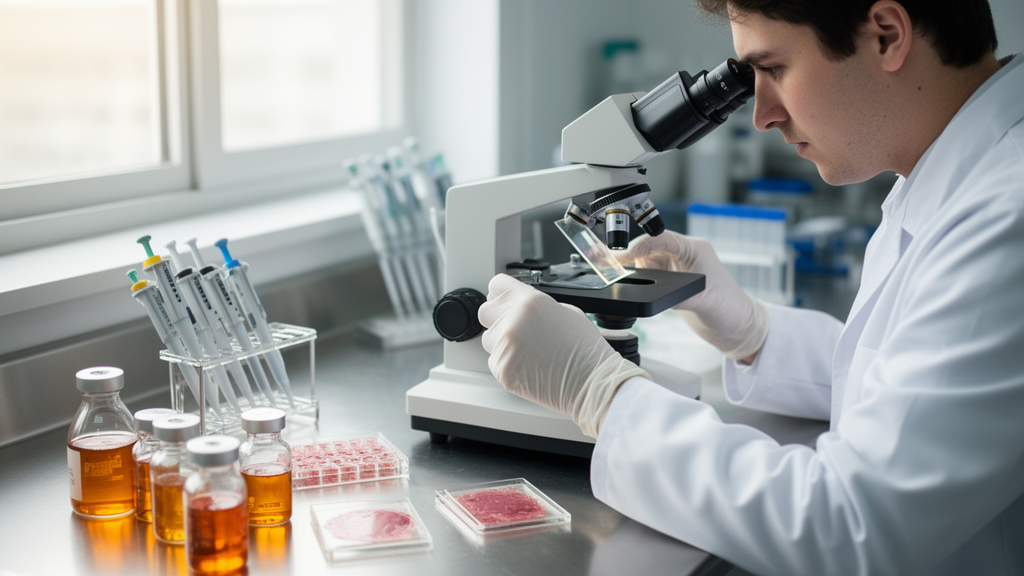
Image Credits: AI Generated
DOI: 10.1007/s44368-026-00028-9
Keywords: immunochemistry, antigen-antibody interactions, Delphi consensus, molecular engineering, nanotechnology, immunoinformatics, systems immunology, biosensors, ELISA, expert interviews, conceptual redefinition, biomedical science
Cite Scienmag News
Ophelia Keating. (October 29, 2026). Immunochemistry Gets a Modern Redefinition Backed by Expert Consensus. Scienmag. https://scienmag.com/immunochemistry-gets-a-modern-redefinition-backed-by-expert-consensus/
Ophelia Keating. "Immunochemistry Gets a Modern Redefinition Backed by Expert Consensus." Scienmag, 29 October 2026, https://scienmag.com/immunochemistry-gets-a-modern-redefinition-backed-by-expert-consensus/. Accessed 29 October 2026.
Ophelia Keating. "Immunochemistry Gets a Modern Redefinition Backed by Expert Consensus." Scienmag. October 29, 2026. https://scienmag.com/immunochemistry-gets-a-modern-redefinition-backed-by-expert-consensus/