

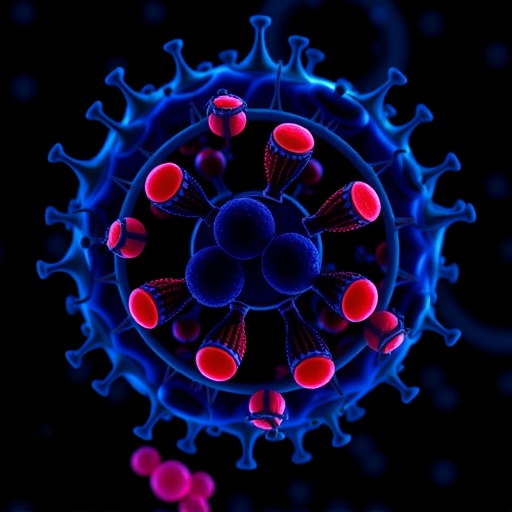
In a groundbreaking study poised to reshape our understanding of cancer progression, researchers at Ludwig Lausanne have unveiled a pivotal gene expression program within tumor-associated neutrophils (TANs) that orchestrates their pro-tumor functions. Neutrophils, typically recognized as rapid responders to infection and injury, have long confounded scientists with their ambiguous roles in the tumor microenvironment (TME), where they can either combat or facilitate malignancy. Despite their abundance in various cancers—including lung and breast tumors—the challenge has been to decipher the specific functional states these cells adopt within tumors, due in large part to technical limitations in existing single-cell RNA sequencing methodologies.
Led by immuno-oncology expert Mikaël Pittet, the team overcame these hurdles by developing a sophisticated probability classifier capable of parsing neutrophil functional states from raw sequencing data, thus exposing a conserved and terminally differentiated neutrophil population characterized by high expression of the chemokine CCL3. This discovery suggests that tumors actively reprogram neutrophils, guiding them through a dynamic maturation trajectory culminating in a senescent, CCL3^hi phenotype that thrives within hypoxic niches of the TME. These specialized neutrophils engage genetic subroutines that equip them to withstand harsh microenvironmental conditions, while simultaneously promoting tumor cell survival and growth.
The team’s integrative approach, spanning over 190 tumor samples across both human and murine models, confirmed that this CCL3^hi TAN subset is ubiquitous across multiple cancer types. Crucially, CCL3 does not merely serve as a marker; it functionally propels neutrophils down their terminal maturation pathway by binding to its receptor CCR1 on neutrophil surfaces. This signaling axis bolsters neutrophil survival in oxygen-deprived tumor regions and activates gene networks that underwrite tumor progression. Mouse models deficient in either neutrophil-derived CCL3 or CCR1 exhibited impaired tumor growth, unequivocally demonstrating the axis’s critical role in fostering a pro-tumor microenvironment.
This work highlights an elegant molecular mechanism whereby tumors sustain a pro-cancer immune niche through manipulation of neutrophil biology. The identification of CCL3 and its receptor CCR1 as key drivers of neutrophil-mediated tumor progression complicates the classical view of neutrophils simply as anti-pathogen effectors, revealing an insidious adaptation exploited by cancer cells. Moreover, the conserved nature of the CCL3^hi state across species and tumor types positions this axis as a promising target for therapeutic intervention, potentially enabling disruption of the pro-tumor neutrophil compartment to stymie cancer development.
The findings dovetail with previous research from Pittet’s group, which unveiled prognostic paradigms based on macrophage gene expression ratios—specifically, the CXCL9-to-SPP1 ratio—as broad predictors of cancer outcomes. The newly discovered CCL3^hi TANs emerge as a second, independent prognostic variable that could refine patient stratification and influence clinical decision-making. While macrophage-related signatures reflect an anti- versus pro-tumor dichotomy, the CCL3^hi neutrophil program provides a complementary axis reflecting neutrophil maturation and tumor-promoting capacities.
Biologically, the study sheds light on why neutrophils have been a vexing subject in cancer immunology. Their notoriously low RNA content and rapid turnover have hindered deeper phenotyping via single-cell transcriptomics, but the computational innovation introduced by Pittet’s team circumvents this limitation by probabilistic inference of transcriptional states, opening new vistas for exploring neutrophil heterogeneity. This approach not only facilitates mechanistic insights but also primes the field for the development of biomarkers that may predict disease trajectories or responses to emerging immunotherapies.
Mechanistic experiments further delineated the role of CCL3/CCR1 signaling in enabling neutrophils to adapt to hypoxia, a hallmark of solid tumors. In these oxygen-deprived regions, tumor cells and immune infiltrates orchestrate complex interactions that dictate progression or regression. By promoting neutrophil survival and terminal maturation within these niches, CCL3 sustains a feed-forward loop enhancing tumor resilience. This pervasive biological axis underscores the importance of considering microenvironmental context when designing strategies to modulate immune cell function in cancer.
From a clinical vantage point, targeting CCL3^hi TANs represents an innovative therapeutic frontier. Unlike current approaches that broadly deplete neutrophils—often leading to detrimental side effects—finely tuning the maturation trajectory or interrupting CCR1 signaling could selectively disarm the pro-tumor subset without compromising innate immunity. Such precision immunomodulation aligns with the contemporary paradigm shift toward harnessing tumor immunity with minimal collateral damage, promising more efficacious and tolerable cancer treatments.
In addition to its translational implications, this research advances fundamental immunology by illuminating how tumors co-opt neutrophil biology, inducing senescence-like programs that paradoxically support malignancy. The integrative, multi-omic approach combining computational deconvolution, functional assays, and murine genetics serves as a blueprint for dissecting complex cellular states in dynamic environments. As immune profiling technologies evolve, a more nuanced understanding of TAN diversity and plasticity will emerge, guiding next-generation immunotherapies.
In sum, the identification of CCL3^hi tumor-associated neutrophils and their central role in tumor growth marks a transformative advance in cancer immunology. This work not only illuminates a heretofore hidden dimension of the TME but also provides tangible molecular targets for disrupting the vicious cycle of tumor-immune interactions that fuel malignancy. As the research community builds upon these insights, the prospect of therapeutically reprogramming the TME to favor anti-tumor immunity appears increasingly attainable, heralding a new chapter in the war against cancer.
—
Subject of Research: Tumor-associated neutrophils and their role in cancer progression through the CCL3/CCR1 signaling axis.
Article Title: Tumors Harness CCL3-Expressing Neutrophils as a Driver of Cancer Progression in Diverse Cancers
News Publication Date: February 5, 2026
Web References:
– https://www.ludwigcancerresearch.org/scientist/mikael-pittet/
– https://www.cell.com/cancer-cell/fulltext/S1535-6108(26)00045-0
– https://www.ludwigcancerresearch.org/news-releases/ludwig-lausanne-study-illuminates-a-potentially-exploitable-coordination-of-gene-expression-across-the-tumor-microenvironment/
– https://www.science.org/doi/10.1126/science.ade2292
Image Credits: Ludwig Cancer Research
Keywords: Cancer, Tumor Microenvironment, Neutrophils, Tumor-Associated Neutrophils, CCL3, CCR1, Gene Expression, Immuno-oncology, Hypoxia, Single-Cell RNA Sequencing, Computational Biology, Biomarkers


