

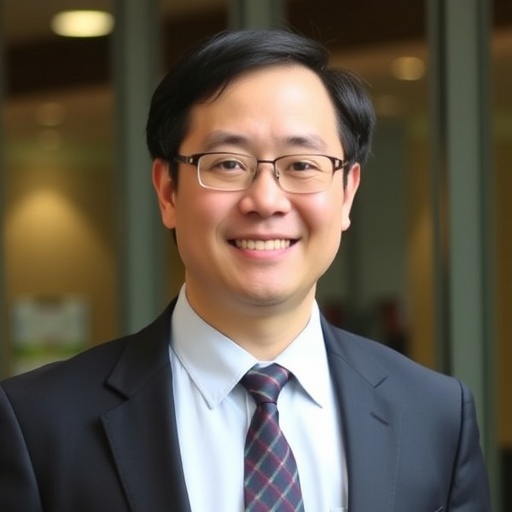
In a groundbreaking development poised to redefine the architecture and operation of modern power grids, Qing-Chang Zhong, the Max McGraw Endowed Chair of Energy and Power Engineering and Management at Illinois Tech, has been elected a 2025 fellow of the American Association for the Advancement of Science (AAAS). This prestigious election honors Zhong’s visionary contributions to the field of electrical engineering, particularly his pioneering work in integrating synchronization principles from natural sciences with democratic frameworks derived from social sciences to engineer autonomous, sustainable, and democratized power systems. His innovative approach marks a critical pivot towards intelligent, resilient energy ecosystems equipped to tackle the complexities of a rapidly evolving energy landscape.
Zhong’s seminal contribution, known as the synchronized-and-democratized (SYNDEM) architecture, represents a paradigm shift in power system engineering. By embedding synchronization—traditionally studied in physics and biology—into the fundamental structure of power grids, and coupling it with democratic principles emphasizing local autonomy and distributed decision-making, Zhong has devised a system where the coordination and stability of the grid emerge inherently from the interactions of its components. Unlike conventional grids that rely heavily on centralized control and communications networks, the SYNDEM architecture facilitates self-organizing dynamics that promote robust, scalable, and adaptive power delivery.
Central to the SYNDEM framework is the concept of virtual synchronous machines (VSMs). These digital constructs emulate the inertial and dynamic properties of traditional synchronous generators, which are foundational to grid stability but are progressively being phased out in favor of renewable and inverter-based resources lacking inherent inertia. Zhong’s VSM technology injects synthetic inertia and damping into the grid, enabling inverter-connected sources to mimic physical synchronous machines. This emulation not only ensures dynamic stability but also orchestrates autonomous local interactions that maintain frequency and voltage synchrony across distributed energy resources, thereby forming the operational backbone of the SYNDEM vision.
The implications of Zhong’s work extend beyond theoretical constructs into tangible industry impact. Modern power systems face escalating challenges from the integration of intermittent renewable energy sources, distributed generation, and the growing demand for energy equity and freedom. The SYNDEM architecture and VSM technologies offer a resilient alternative to centralized control paradigms by empowering localized power generation units to autonomously coordinate their behavior, reducing vulnerabilities to cyberattacks, communication failures, and operational bottlenecks. Such resilience is critical for sustaining power delivery amidst increasingly complex grid conditions driven by climate change, urbanization, and electrification trends.
Zhong’s multidisciplinary vision bridges the gap between natural and social sciences through an integrated engineering framework. By applying principles of synchronization—originally from nonlinear dynamics and complex systems theory—to a democratically structured power system, he reimagines autonomy in terms of emergent coordination rather than imposed directives. This novel lens enables the creation of power grids that not only function efficiently but also uphold the values of democracy and equitable participation among diverse stakeholders, aligning technological innovation with socio-political ideals.
One of the most revolutionary aspects of Zhong’s work is the operationalization of decentralized control through physical laws governing synchronization. This intrinsic mechanism facilitates power components at various grid nodes to adjust their dynamics based on local information without the need for extensive supervisory commands or communication infrastructure. Consequently, the SYNDEM-based systems exhibit improved fault tolerance, scalability, and adaptability, allowing for the seamless accommodation of fluctuating generation sources and dynamic load profiles pervasive in contemporary electric grids.
The evolution of power systems has traditionally been constrained by legacy technological and control models centered around centralized management. Zhong’s technological innovations confront these limitations directly by introducing foundational changes in system architecture. His SYNDEM and VSM methodologies collectively enable the conceptualization and realization of next-generation power grids characterized by “autonomous coordination” — a self-organizing orchestration of grid functions that arises naturally from the physical interactions of system components. This radical approach not only enhances reliability but also creates pathways for democratizing energy access and participation.
Zhong’s recognition by AAAS, one of the world’s largest and most prestigious scientific societies, underscores the scientific and practical significance of these innovations. AAAS fellows are chosen for their extraordinary achievements that transcend disciplinary boundaries; Zhong’s election highlights the transformative potential of cross-pollinating principles from natural sciences and social philosophies for engineering robust and equitable technological infrastructures. His election signals a growing acknowledgment within the scientific community of the importance of interdisciplinary, socially conscious approaches to engineering critical infrastructure systems.
The convergent evolution of SYNDEM and VSM technologies signals a foundational shift in how power systems are designed and operated. By embedding democratically inspired principles into the synchronization and control mechanisms of power electronics and grid dynamics, Zhong’s work paves the way for an energy future characterized by autonomy, resilience, sustainability, and inclusivity. The broader adoption of these concepts could catalyze a global transition towards grids that are not only technologically advanced but also socially equitable, supporting the aspirations of communities worldwide.
Furthermore, the SYNDEM architecture’s intrinsic reliance on physical laws over centralized communication networks presents compelling cybersecurity benefits. The distributed, self-synchronized operation reduces the attack surface susceptible to malicious cyber activities that target communication and control infrastructures. As the threat landscape escalates with increasingly sophisticated cyber incursions, Zhong’s framework offers a proactive pathway to fortify grid resilience through its natural, physics-based control schemes, enhancing the overall security posture of future energy systems.
The academic and industrial impact of Sino-American scholar Qing-Chang Zhong’s work is evident in the growing research and development momentum around virtual synchronous machines and decentralized coordination principles. His methodologies empower engineers and researchers alike to rethink grid stability frameworks, integrating inverter-based energy resources seamlessly into existing infrastructure. By enabling such a technological evolution, Zhong’s contributions facilitate the long-term transition toward fully sustainable and democratically governed power systems, driving innovation that aligns with global decarbonization and energy democratization goals.
Ultimately, Zhong’s election as an AAAS fellow not only honors his exceptional individual achievements but also signals a broader shift within the energy research community toward embracing holistic and interdisciplinary frameworks. His work’s implications extend beyond academic theorization, influencing practical grid modernization strategies worldwide. As the energy sector grapples with the twin imperatives of climate change mitigation and equitable access, innovations rooted in synchronized-democratized architectures and virtual synchronous machines stand mature to become cornerstones of future power infrastructures.
Subject of Research: Autonomous, sustainable, and democratized power systems through synchronized-democratized (SYNDEM) architecture and virtual synchronous machines (VSM) technologies.
Article Title: Redefining Power Systems: How SYNDEM Architecture and Virtual Synchronous Machines Are Revolutionizing the Grid
News Publication Date: 2024
Web References:
– https://www.iit.edu/directory/people/qing-chang-zhong
– https://www.aaas.org/news/aaas-welcomes-449-scientists-and-engineers-honorary-fellows
Image Credits: Illinois Institute of Technology
Keywords: Electrical engineering, Power systems, Power distribution, Electrical power, Virtual synchronous machines, SYNDEM architecture, Grid resilience, Autonomous coordination, Sustainable energy, Energy equity, Energy freedom, Decentralized control


