


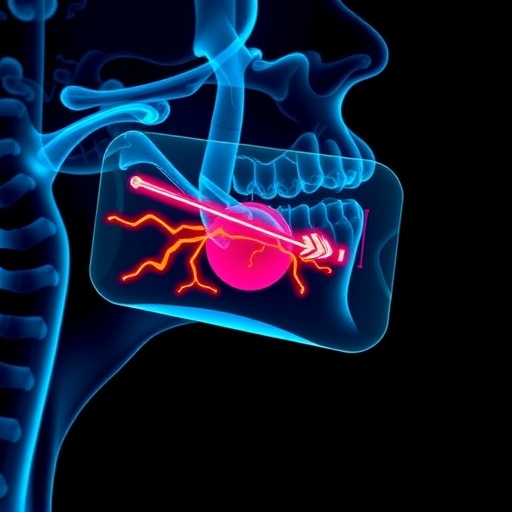
In recent years, the intricate role of cytokines in cancer pathogenesis has drawn significant scientific interest, particularly regarding their regulatory impact on tumor microenvironments and cancer cell signaling pathways. A paramount example in this realm is interleukin-6 (IL-6), a pleiotropic cytokine implicated in numerous inflammatory processes and increasingly recognized as a pivotal player in oncogenesis. A groundbreaking review by Tao et al. delves deeply into IL-6’s role in the onset and progression of nasopharyngeal carcinoma (NPC), a malignancy that poses distinct challenges due to its unique etiological and pathological characteristics.
Nasopharyngeal carcinoma, primarily prevalent in Southeast Asia and parts of North Africa, is a malignancy originating from the epithelial lining of the nasopharynx. Its progression is intricately linked to genetic predispositions, Epstein-Barr Virus (EBV) infection, and environmental factors. Despite advances in radiotherapy and chemotherapy, the survival rates for advanced NPC remain suboptimal. Understanding molecular drivers like IL-6 offers promise for novel diagnostic and therapeutic strategies.
IL-6 functions as both a pro-inflammatory and anti-inflammatory cytokine, modulating immune responses and cell survival mechanisms. Within the milieu of NPC, IL-6 is notably upregulated, with elevated serum and tissue levels correlating strongly with disease severity and metastasis. Mechanistically, IL-6 activates several downstream signaling cascades, including the Janus kinase/signal transducer and activator of transcription 3 (JAK/STAT3) pathway, which fuels cellular proliferation, inhibits apoptosis, and fosters immune evasion, effectively driving NPC progression.
The interplay between IL-6 and the tumor microenvironment is a critical aspect highlighted by Tao et al. IL-6 facilitates crosstalk between cancer cells and surrounding stromal components, including fibroblasts, immune cells, and endothelial cells, resulting in a niche that supports tumor growth and angiogenesis. This multifaceted communication network enhances the invasive capabilities of NPC cells and promotes resistance to traditional therapies.
One of the most compelling insights from the review concerns IL-6’s role in epithelial-mesenchymal transition (EMT), a process by which tumor cells acquire mesenchymal characteristics, gaining migratory and invasive capacities. IL-6-mediated activation of STAT3 leads to the transcription of EMT-associated genes, fostering metastasis and contributing to the aggressive clinical behavior of NPC.
Furthermore, IL-6 is implicated in modulating immune checkpoints within the NPC microenvironment, particularly influencing the expression of programmed death-ligand 1 (PD-L1). This modulation contributes to immune escape by dampening cytotoxic T cell activity, a phenomenon that underlines the potential synergy between IL-6 targeting and immune checkpoint blockade strategies.
In addition to its local effects in the tumor milieu, IL-6 exerts systemic influences that exacerbate cancer progression. Chronic elevation of IL-6 levels in NPC patients is associated with cancer cachexia, a debilitating syndrome marked by weight loss, muscle atrophy, and systemic inflammation, which significantly diminishes patients’ quality of life and treatment tolerance.
The pathological overexpression of IL-6 in NPC is often driven by aberrant activation of upstream signals, including nuclear factor-kappa B (NF-κB) and toll-like receptor (TLR) pathways, which are stimulated by viral components such as EBV-encoded latent membrane proteins. This establishes a pathological feedback loop sustaining IL-6 production and its oncogenic effects.
Therapeutically, the review underscores ongoing investigations into IL-6 inhibitors, such as tocilizumab, a monoclonal antibody against the IL-6 receptor. Preclinical studies demonstrate that blockade of IL-6 signaling disrupts tumor-promoting pathways, reverses EMT, and enhances sensitivity to chemoradiation in NPC models, heralding a new horizon for targeted therapy.
Another exciting avenue is the utilization of IL-6 as a biomarker for early diagnosis and prognosis of NPC. Elevated IL-6 levels in serum and tumoral secretions serve not only as indicators of disease progression but also as predictors of therapeutic response, enabling personalized treatment strategies.
Importantly, this review also highlights the challenges in translating IL-6-targeted therapies into clinical practice. Issues related to cytokine pleiotropy, compensatory signaling mechanisms, and potential adverse effects necessitate comprehensive clinical trials to delineate efficacy and safety profiles in NPC patients.
The authors further advocate for integrative approaches combining IL-6 blockade with immunotherapy and conventional cytotoxic treatments to exploit synergistic effects. Such combinatorial regimens could circumvent resistance mechanisms and potentiate anti-tumor immunity.
In summary, Tao et al.’s review offers an authoritative synthesis of IL-6’s multifaceted role in the biology of nasopharyngeal carcinoma. By illuminating the molecular underpinnings of IL-6-mediated oncogenic processes, this work lays a foundation for innovative diagnostic and therapeutic strategies poised to transform NPC management and improve patient outcomes.
As research continues to evolve, targeting cytokine networks like IL-6 in NPC exemplifies the broader shift towards precision oncology, where understanding the tumor microenvironment and its molecular determinants will be paramount in conquering complex malignancies.
Cite Scienmag News
Nathaniel Bowman. (November 10, 2025). IL-6’s Role in Nasopharyngeal Carcinoma Progression. Scienmag. https://scienmag.com/il-6s-role-in-nasopharyngeal-carcinoma-progression/
Nathaniel Bowman. "IL-6’s Role in Nasopharyngeal Carcinoma Progression." Scienmag, 10 November 2025, https://scienmag.com/il-6s-role-in-nasopharyngeal-carcinoma-progression/. Accessed 5 September 2026.
Nathaniel Bowman. "IL-6’s Role in Nasopharyngeal Carcinoma Progression." Scienmag. November 10, 2025. https://scienmag.com/il-6s-role-in-nasopharyngeal-carcinoma-progression/


