


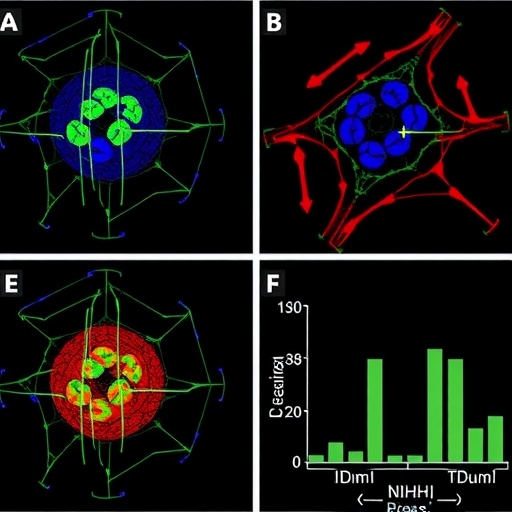
Recent advancements in cancer metabolism research have unveiled a critical biochemical pathway influenced by gain-of-function mutations in isocitrate dehydrogenase 1 (IDH1), specifically the R132H mutation. This mutation leads to a distinctive production of the oncometabolite (R)-2-hydroxyglutarate, which has been implicated in the tumorigenesis of various human cancers. The connection between IDH1-R132H and fatty acid metabolism has opened new avenues for understanding how tumors sustain their growth and proliferate under metabolic stress. While the significance of fatty acid biosynthesis in supporting IDH1-mutant tumors has garnered attention, the mechanistic details driving this phenomenon remained largely unexplored until now.
In a groundbreaking study, researchers have utilized chemical probes in conjunction with chemoproteomic profiling to investigate the enzymatic behavior of IDH1-R132H compared to its wild-type counterpart. This comprehensive approach identified a critical post-translational modification known as autopalmitoylation occurring at cysteine 269 (C269) in the IDH1-R132H enzyme. Unlike the wild-type IDH1, which lacks this modification, the unique autopalmitoylation of the mutant enzyme adds a layer of complexity to its regulation and function. This discovery raises intriguing questions about how alterations at the molecular level can lead to enhanced tumorigenic potential.
The study further posits that the autopalmitoylation of C269 is intricately linked to fatty acid levels, suggesting a feedback loop where fatty acids may influence the enzymatic activity of IDH1-R132H. This modulation enhances the binding affinity for both substrates and cofactors, ultimately leading to increased dimerization and enzymatic efficiency. Such a mechanism not only underscores the metabolic flexibility of cancer cells but also highlights the interplay between lipid metabolism and enzymatic regulation in the context of oncogenic mutations. It becomes evident that tumors harboring IDH1-R132H may exploit fatty acid availability to drive their metabolic reprogramming, which is essential for sustaining rapid cell proliferation.
The potential implications of disrupting C269 palmitoylation are profound. When researchers inhibited this modification, they observed a reversal of IDH1-R132H-induced metabolic alterations, alongside a decrement in hypermethylation phenotypes that typically facilitate tumorigenesis. This suggests that C269 palmitoylation serves as a pivotal regulatory switch governing the neomorphic activity of IDH1-R132H in cancer cells. Loss of this modification not only impairs the metabolic adaptations associated with tumor growth but also compromises the transforming potential of cells harboring the R132H mutation.
Beyond the fundamental biological insights, the implications for therapeutic intervention are particularly significant. C269 autopalmitoylation occurs within a hydrophobic pocket that is also a target for a clinical candidate inhibitor, LY3410738, designed to specifically address the challenges posed by IDH1-mutant cancers. This intersection of cancer biology and drug discovery exemplifies how understanding the unique biochemical landscapes of mutant enzymes can lead to the identification of novel vulnerabilities amenable to pharmacological exploitation. Targeting such modifications may provide an innovative therapeutic strategy aimed at treating patients with IDH1-mutant tumors.
Moreover, the relevance of this study is underscored by the increasing recognition of metabolic alterations in cancer as potential therapeutic targets. As investigators strive to elucidate the multifaceted interactions between oncogenes, metabolic pathways, and epigenetic regulation, IDH1-R132H exemplifies a prime candidate for such exploration. This mutation not only emerges as a central player in the metabolic reprogramming of cancer cells but also serves as a benchmark for understanding how other oncogenes may similarly exploit metabolic processes to favor tumor growth.
From a broader perspective, this research highlights an urgent need for the scientific community to delve deeper into the molecular mechanisms that govern metabolic adaptations in cancer. The IDH1-R132H case illustrates that even single-point mutations can catalyze a cascade of biochemical changes, thus reshaping our understanding of cancer biology. This newfound knowledge may foster the development of targeted therapies that are not only effective in curbing tumor growth but are also less toxic than conventional treatments.
As biochemists and oncologists continue to collaborate on the frontiers of cancer research, studies like these pave the way for innovative approaches to personalized medicine. The identification of chemical probes capable of selectively altering the behavior of mutant enzymes like IDH1-R132H has the potential to enhance the precision of targeted therapies, ultimately leading to improved prognoses for patients with various malignancies.
In conclusion, the identification of C269 autopalmitoylation as a key regulatory mechanism affecting the enzymatic activity of IDH1-R132H marks a significant advancement in our comprehension of cancer metabolism and biology. This research not only sheds light on the intricate relationship between fatty acid metabolism and enzyme function but also paves the way for novel therapeutic strategies targeting metabolic vulnerabilities in cancer cells. The potential for developing drugs that specifically inhibit this maladaptive metabolic response thus represents a timely and promising direction in the ongoing battle against cancer.
The journey of this research underscores the importance of interdisciplinary collaboration in science and medicine, illustrating how innovations in one field can reverberate through another to yield potentially life-saving advancements. As we move forward, the anticipation surrounding the application of these findings in clinical contexts foreshadows an era where targeted metabolic therapies may become standard care for patients battling IDH1-mutant cancers, ultimately enhancing their quality of life and survival outcomes.
Hu, L., Lin, J., Sun, L. et al. Autopalmitoylation of IDH1-R132H regulates its neomorphic activity in cancer cells. Nat Chem Biol (2026). https://doi.org/10.1038/s41589-025-02131-8
Cite Scienmag News
Nathaniel Bowman. (January 13, 2026). IDH1-R132H Autopalmitoylation Boosts Cancer Cell Activity. Scienmag. https://scienmag.com/idh1-r132h-autopalmitoylation-boosts-cancer-cell-activity/
Nathaniel Bowman. "IDH1-R132H Autopalmitoylation Boosts Cancer Cell Activity." Scienmag, 13 January 2026, https://scienmag.com/idh1-r132h-autopalmitoylation-boosts-cancer-cell-activity/. Accessed 6 September 2026.
Nathaniel Bowman. "IDH1-R132H Autopalmitoylation Boosts Cancer Cell Activity." Scienmag. January 13, 2026. https://scienmag.com/idh1-r132h-autopalmitoylation-boosts-cancer-cell-activity/


