


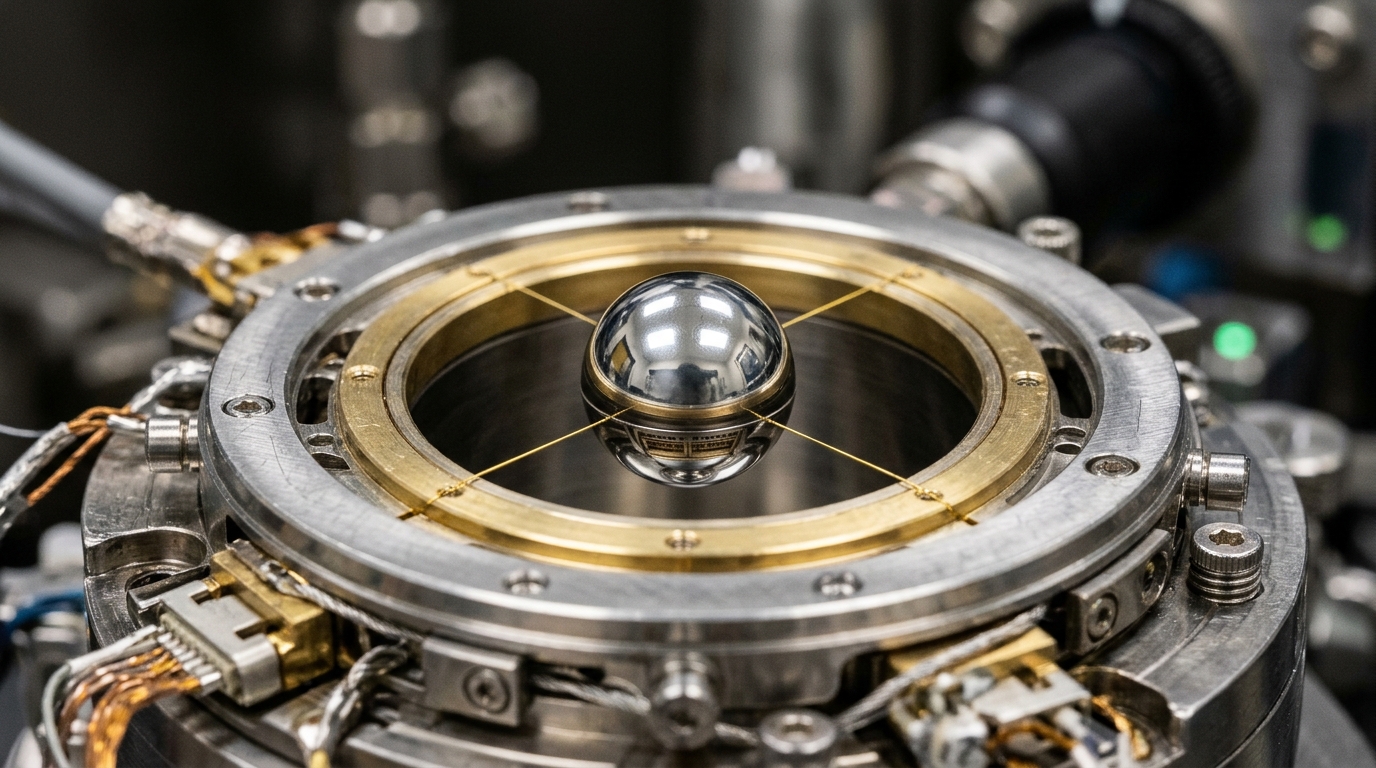
Researchers investigating inertial confinement fusion have established analytical rocket models describing the hydrodynamic evolution of indirect-drive double-shell capsules at China’s 100 kilojoule laser facility. Published in AAPPS Bulletin, the study introduces differential equations derived from hydrodynamic conservation principles to track unablated mass, average implosion velocity, and ablation front radius across acceleration and deceleration phases. Concurrently, the investigators formulated a corrected rocket model for the inner shell, resolving expressions for outer surface trajectory, center-of-mass radius, and velocity profiles. Linking maximum implosion velocity and residual unablated mass to initial capsule parameters and radiation temperature, these formulations clarify target dynamics. Validated against one-dimensional multi-group radiation-hydrodynamics simulations using the MULTI code, the analytical results demonstrated close agreement, offering a predictive framework to understand underlying physics and optimize capsule designs for high neutron yield.
Achieving inertial confinement fusion requires delivering extreme energy flux and pressure to implode capsules containing fusion fuel, pursued through direct, indirect, or hybrid laser drive schemes. In the indirect-drive approach, laser beams enter a high-Z hohlraum where light converts into an x-ray bath driving capsule ablation. Direct drive illuminates spherical targets directly with laser beams, whereas hybrid approaches couple both by using indirect-drive shocks to produce a spherical corona plasma before direct lasers drive an electron thermal wave establishing an extended high-density plateau. In each scheme, energy flux absorbed by ablated plasma transfers kinetic energy inward, compressing central deuterium-tritium fuel through shocks and spherical compression toward thermonuclear ignition. Thermonuclear conditions occur when local heating from captured alpha particles overcomes losses from thermal conduction, mechanical expansion, and radiation.
Conventional central-spot ignition relies on accelerating a single shell inward during an initial acceleration phase where driver energy converts into capsule kinetic energy. This phase begins when the rarefaction wave returns to the ablation surface and terminates when shell velocity reaches its maximum as central gas pressure balances incoming shell pressure. Subsequent adiabatic compression, wherein gas pressure scales inversely with the fifth power of radius, decelerates the shell and forms a high-temperature central hot spot. However, alternative laser fusion concepts decouple hot-spot formation from hydrodynamic shell acceleration. Approaches including shock ignition, fast ignition, triple-shell configurations, and double-shell ignition isolate these processes, relaxing the severe implosion velocity and convergence constraints of conventional central-spot designs while introducing distinct fabrication and diagnostic challenges.
In double-shell target architectures, two middle or high-Z layers maintain hydrodynamic efficiency during implosion. Because gold and deuterium-tritium fuels possess different specific internal energies, a gold inner layer requires an implosion velocity of approximately 220 kilometers per second, compared to 370 kilometers per second for a deuterium-tritium layer. This lower required velocity reduces Rayleigh-Taylor instability growth across acceleration and deceleration phases. Furthermore, because high-density compressed shell pressure scales with electron Fermi degeneracy, a gold inner shell achieves ignition conditions with a hot-spot convergence ratio of roughly 10, whereas cryogenic fuel requires a ratio near 60. The high-Z inner shell also traps radiative losses within the hot spot and mitigates hot-electron preheating, although high shell opacities prevent direct radiographic diagnosis of core trajectories and shapes.
Hydrodynamic investigations of double-shell implosions have expanded across laser research facilities, including evaluations at the National Ignition Facility and direct-drive burning-plasma platforms. Experimental data using a one-megajoule laser drive showed that 22 percent, with an uncertainty of plus or minus 3 percent, of ablator kinetic energy couples into inner shell kinetic energy, while simulations identified heightened sensitivity to fill tubes. At China’s 100 kilojoule laser facility, earlier indirect-drive double-shell implosions generated neutron yields close to ten to the tenth power, achieving a one-dimensional yield-over-clean ratio of roughly 27 percent. Additional experiments using cone-inserted targets at the SG-II Upgrade facility recorded time-resolved hard x-ray radiographs to evaluate areal densities. Building on these foundations, the authors developed analytical models tailored to the 100 kilojoule facility.
China’s 100 kilojoule laser facility operates with 48 laser beams at an ultraviolet wavelength of 351 nanometers, providing a maximum output energy of 180 kilojoules in 3 nanoseconds. In the typical indirect-drive architecture evaluated by the authors, 48 beams irradiate a vacuum cylindrical gold hohlraum measuring 4250 micrometers in length and 2500 micrometers in diameter, featuring laser-entrance holes measuring 1400 micrometers across both ends. The facility delivers 101 kilojoules of total energy using square laser pulses lasting 3.2 nanoseconds, corresponding to 2100 joules per beam. This drive generates an internal radiation environment with a peak radiation temperature of approximately 228 electronvolts, which impinges on the central capsule to drive outer shell ablation and launch inward shock waves.
The double-shell target features a 128-micrometer outer shell engineered to mitigate hydrodynamic instability while maintaining drive efficiency. A 90-micrometer plastic hydrocarbon layer serves as the primary ablator, covering an 18-micrometer aluminum layer and an interior 20-micrometer hydrocarbon layer. Integrating the interior hydrocarbon layer aids target fabrication using magnetron sputtering, allowing aluminum particles to be deposited uniformly. This multi-layer design acts as multiple tamper layers, decreasing the Atwood number and expanding the density scale length at the collisional interface to suppress classical Rayleigh-Taylor instability. Positioned between the two shells is a 325-micrometer cushion layer composed of hydrocarbon foam with a density of 15 milligrams per cubic centimeter. The inner shell consists of 8 micrometers of aluminum and 4 micrometers of silicon dioxide enclosing deuterium fuel gas at 100 atmospheres.
Tracking shock and rarefaction trajectories through Lagrangian density derivative plots reveals radiation-hydrodynamics within the capsule. Incident radiation ablates outer shell material, launching an inward ablative shock through the hydrocarbon ablator. Upon reaching the aluminum interface, this first shock reflects a shock toward the ablation surface, relaxing into a rarefaction wave, while the transmitted shock strengthens due to aluminum’s greater density and sound speed. As the primary shock breaks across successive material interfaces, rarefaction waves emerge when shocks enter lower-density regions, including the foam cushion and deuterium gas. Simultaneously, a second strong shock originates when an outward rarefaction wave reaches the ablation front, creating a steepening compression wave that catches the initial shock inside the deuterium fuel, merging into a strong shock that heats and compresses the core.
To describe outer shell dynamics, the authors established a rocket model combining integral mass and momentum conservation equations that explicitly account for cushion back-pressure. The outer shell mass ablation rate scales with radiation temperature raised to the power of 2.78 multiplied by 1.092. The momentum conservation equation balances inward radiation ablation pressure against outward resistance from the hydrocarbon foam cushion. Radiation ablation pressure is approximated as 6.7 times ten to the negative sixth multiplied by radiation temperature to the power of 2.98. By setting the ablation surface velocity equal to the average shell implosion velocity across both acceleration stages, the authors formed a closed differential system governing outer shell radius, unablated mass, and velocity under drive pressure and opposing cushion pressure.
Because complex shock interactions hinder analytical descriptions of cushion thermodynamics, the authors fitted hydrocarbon foam cushion pressure to one-dimensional MULTI hydrodynamic simulations. The cushion pressure is expressed as 1.125 times ten to the negative fourth plus nine times ten to the negative eighth multiplied by time to the power of 12.28, in megabars and nanoseconds. Numerical integration of outer shell equations showed close agreement with MULTI simulation outputs across outer shell evolution, reproducing ablation radius, unablated mass, and implosion velocity. The model captures stagnation when cushion pressure matches drive pressure. These calculations involve two approximations: replacing ablation velocity with average shell velocity during early acceleration, and applying cushion pressure at the shell center of mass rather than strictly at its inner surface.
For the inner shell, the researchers developed a separate rocket model driven entirely by foam cushion pressure acting on its outer surface. Lacking radiation ablation, the inner shell maintains constant mass throughout implosion. While outer surface movement follows cushion pressure directly, true kinetic implosion velocity requires evaluating the kinetic energy distribution across the shell volume. Treating the inner shell as an ideal thin shell of constant mass, the authors integrated radial acceleration to show that the square of center-of-mass implosion velocity equals eight pi divided by shell mass, multiplied by the radial integral of cushion pressure weighted by radius squared. This formulation yields differential equations tracking both outer surface displacement and center-of-mass motion during the acceleration phase.
Comparisons between analytical equations and MULTI hydrocode simulations demonstrated that the inner shell rocket model accurately replicates the numerical trajectory for the 100 kilojoule facility target. Both models show that the inner shell begins moving at approximately 4.5 nanoseconds, with center-of-mass velocity substantially exceeding outer surface velocity. Consequently, the center of mass leads the outer surface, causing physical thickness and density of the constant-mass shell to increase as it is driven inward. While the analytical formulation reproduces hydrodynamic evolution throughout acceleration, the authors noted that inner shell deceleration, which begins when deuterium gas pressure matches incoming shell pressure, and subsequent compression heating of the fuel gas were excluded from this analysis. Together, these rocket models provide tractable tools for interpreting experimental data and optimizing double-shell capsule designs.
Subject of Research: Hydrodynamic rocket models for indirect-drive double-shell fusion capsules
Article Title: Rocket models for double-shell capsules at 100 kJ laser facility
Article References: Shang, W. L., Jiang, W., Li, H., Yao, L., Zheng, J. H., Kuang, L. Y., Yuan, Y. T., Tu, S. Y., Pu, Y. D., Miao, W. Y., Huang, T. X., Li, Z. C., Guo, L., Yang, D., & Zhou, W. M. (2025). Rocket models for double-shell capsules at 100 kJ laser facility. AAPPS Bulletin, 35(1), Article 31. https://doi.org/10.1007/s43673-025-00171-9
Image Credits: AI Generated
DOI: 10.1007/s43673-025-00171-9
Keywords: inertial confinement fusion, double-shell capsules, rocket models, indirect-drive implosion, laser facility, hydrodynamics, foam cushion, radiation ablation, Rocket, models, double-shell, capsules
Cite Scienmag News
Katie Riggs. (November 7, 2026). Hydrodynamic Rocket Models Clarify Double-Shell Capsule Implosions at Laser Facility. Scienmag. https://scienmag.com/hydrodynamic-rocket-models-clarify-double-shell-capsule-implosions-at-laser-facility/
Katie Riggs. "Hydrodynamic Rocket Models Clarify Double-Shell Capsule Implosions at Laser Facility." Scienmag, 7 November 2026, https://scienmag.com/hydrodynamic-rocket-models-clarify-double-shell-capsule-implosions-at-laser-facility/. Accessed 8 November 2026.
Katie Riggs. "Hydrodynamic Rocket Models Clarify Double-Shell Capsule Implosions at Laser Facility." Scienmag. November 7, 2026. https://scienmag.com/hydrodynamic-rocket-models-clarify-double-shell-capsule-implosions-at-laser-facility/




