


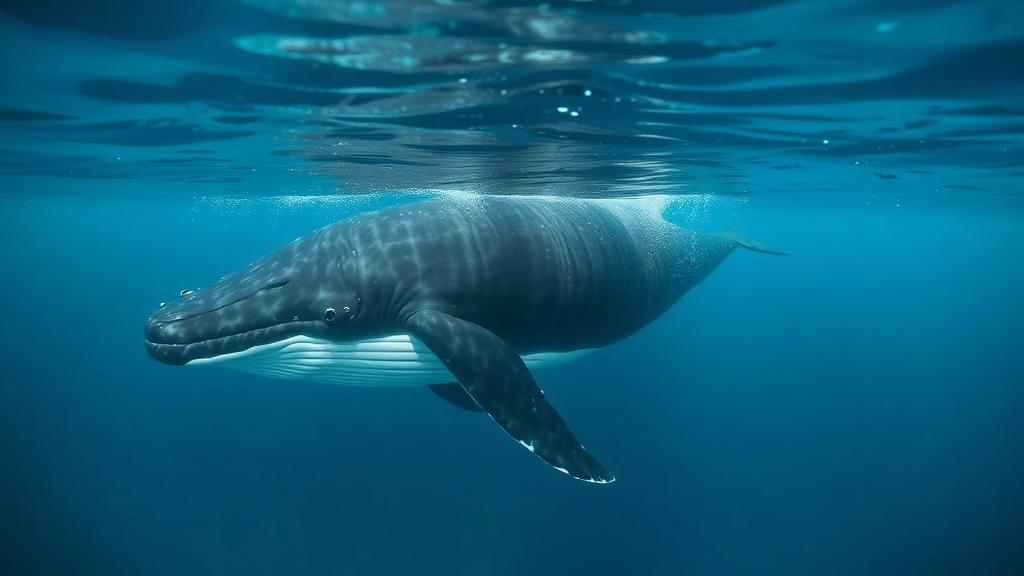
A female humpback whale observed off the southern Gold Coast in 2025 has provided scientists with one of the first documented cases of a baleen whale attending to a stillborn calf, a behaviour that researchers interpret as consistent with grief-like responses more commonly recorded in toothed whales. The observation, led by Griffith University’s Whales and Climate Research Program in collaboration with the Sea World Foundation, involved a mother whale that remained with her presumed deceased calf for several hours and possibly even days, accompanied by an escort whale. The findings, published in the journal Discover Animals, offer a rare window into how some of the ocean’s largest mammals respond to the death of their offspring, a subject that has long remained poorly understood for filter-feeding cetaceans.
Dr Olaf Meynecke, who leads the research program at Griffith University, explained that post-mortem attentive behaviour in cetaceans has been documented predominantly among toothed whales and delphinids, the group known scientifically as odontocetes. Among these species, including dolphins, orcas and sperm whales, mothers have repeatedly been seen lifting dead calves toward the surface, sometimes in what observers describe as prolonged attempts to keep them breathing. By contrast, equivalent records for baleen whales, or mysticetes, the group that includes humpbacks, blue whales and fin whales, have remained largely absent from the published scientific literature. That gap has made the Australian observation particularly significant, because it suggests that the emotional and cognitive capacities underlying death-related responses may extend across both major branches of the cetacean family tree rather than being confined to the smaller, more socially studied odontocetes.
What distinguished this case from the familiar toothed whale accounts was the nature of the mother’s behaviour. Rather than lifting the calf to the surface, the humpback mother showed prolonged post-mortem behaviour and attention toward her deceased calf beneath the water. According to Dr Meynecke, she remained close to the calf, maintaining eye contact and positioning herself next to it over several hours and possibly even days. The research team noted that these observed behaviours were consistent with care-giving or nurturing actions and post-mortem attentive responses that have been documented in other socially complex mammals, and they indicated a strong, inherent maternal attachment to the calf. Such sustained proximity to a dead neonate carries no obvious survival benefit, which is precisely why scientists consider it a candidate for grief-like behaviour rather than simple biological reflex.
The encounter itself was witnessed at sea by Andrew Mulville, a rescue boat captain with the Sea World Foundation, whose account helped ground the scientific interpretation in direct observation. He described his initial impression as one of two whales simply resting at the surface, a common sight during the annual humpback migration along Australia’s east coast. Only after watching for some time did he realise that something unusual was unfolding. He recalled being totally surprised once he worked out what was happening, noting that the animals’ behaviour was unusual and definitely not what he had been expecting to see out at sea that day. His video footage, recorded in 2025 off the southern Queensland coast, shows the mother returning to the seafloor where her stillborn calf lay, providing the visual evidence that underpins the published case study.
Humpback whales undertake one of the longest migrations of any mammal, travelling thousands of kilometres between productive polar feeding grounds and warm tropical breeding waters. Calves are typically born in the sheltered coastal waters of eastern Australia during the winter migration season, and the period immediately surrounding birth is one of the most vulnerable in a whale’s life. Stillbirths and neonatal deaths occur in the population, but they are rarely observed directly, because dead calves sink quickly and mothers generally do not linger in ways that attract human attention. The fact that this mother remained at the site, returning repeatedly to the calf on the seafloor, made the event visible and documentable, transforming a private moment of loss into a scientific record that can now inform broader questions about cetacean cognition and emotion.
The study, titled First documentation of humpback whale (Megaptera novaeangliae) post-mortem attendance of a still born, adds to a small but growing body of evidence that death-related responses are not unique to humans or even to the great apes and elephants with which they are most often associated. In socially complex mammals, post-mortem attendance is thought to reflect the strength of maternal bonds and the cognitive machinery that supports them, including recognition of individuals, attachment, and the capacity to register that something has changed in a dependent offspring. Dr Meynecke emphasised that understanding how non-human animals respond to death provides insight into their emotional lives, social bonds, and cognitive capacities, framing the observation not merely as a poignant anecdote but as a data point in the comparative study of animal minds.
For the researchers, the emotional weight of the encounter was inseparable from its scientific value. Dr Meynecke acknowledged that observations of deceased calves, including the 2025 case, are incredibly sad, but stressed that they are also rare and add to the limited current understanding of the cognitive and emotional dimensions of death-related responses in baleen cetaceans. Because each documented event is so uncommon, every new record carries disproportionate weight in the literature. A single well-documented case cannot by itself establish that humpback whales experience grief in the way humans understand it, but it does establish that the behavioural raw material for such interpretations, prolonged attendance, close positioning, and sustained visual attention to a dead offspring, exists in a species where it had not previously been systematically recorded.
The case also highlights the practical role that trained observers and coastal response teams play in modern whale science. Along the Australian east coast, organisations such as the Sea World Foundation respond to whale entanglements, strandings and other marine emergencies, placing their crews in a position to witness events that research vessels would rarely encounter. Captain Mulville’s footage and observations were central to the study, illustrating how collaboration between academic institutions and frontline marine response organisations can convert chance encounters into peer-reviewed evidence. As whale populations along the east coast continue to recover from historical whaling, interactions between migrating whales and coastal observers are increasing, creating more opportunities for rare behaviours to be seen, recorded and verified.
Looking forward, Dr Meynecke argued that the case study underscores the need for continued systematic documentation of rare neonatal mortality events in large whales. Only by accumulating a body of standardised observations, he noted, can researchers begin to assess the cognitive, emotional, and evolutionary significance of post-mortem behaviour in baleen whales and compare it meaningfully with the richer records available for toothed species. The evolutionary stakes are considerable: if maternal attendance of dead young is widespread across cetaceans, it may represent an ancient mammalian inheritance tied to the biology of prolonged parental care, rather than a trait that emerged independently in smaller-brained odontocetes. For now, the image of a humpback mother holding vigil beside her stillborn calf on the Queensland seafloor stands as both a sobering reminder of the costs of migration and reproduction in the ocean’s giants, and a compelling invitation to keep watching, recording and questioning what whales feel when they lose their young.
Subject of Research: Post-mortem attendance behaviour of a humpback whale mother toward her stillborn calf
Article Title: Weeping whales: stillborn humpback whale grieving documented
Article References: Weeping whales: stillborn humpback whale grieving documented. (n.d.). Original publication
Image Credits: AI Generated
DOI: Not provided
Keywords: humpback whale, grief, post-mortem behaviour, baleen whales, cetacean cognition, maternal attachment, stillbirth, Griffith University, Sea World Foundation, Discover Animals, animal emotion, whale migration
Cite Scienmag News
Violet Maxwell. (October 3, 2026). Humpback whale mother documented staying with her stillborn calf off Australia. Scienmag. https://scienmag.com/humpback-whale-mother-documented-staying-with-her-stillborn-calf-off-australia/
Violet Maxwell. "Humpback whale mother documented staying with her stillborn calf off Australia." Scienmag, 3 October 2026, https://scienmag.com/humpback-whale-mother-documented-staying-with-her-stillborn-calf-off-australia/. Accessed 4 October 2026.
Violet Maxwell. "Humpback whale mother documented staying with her stillborn calf off Australia." Scienmag. October 3, 2026. https://scienmag.com/humpback-whale-mother-documented-staying-with-her-stillborn-calf-off-australia/


