


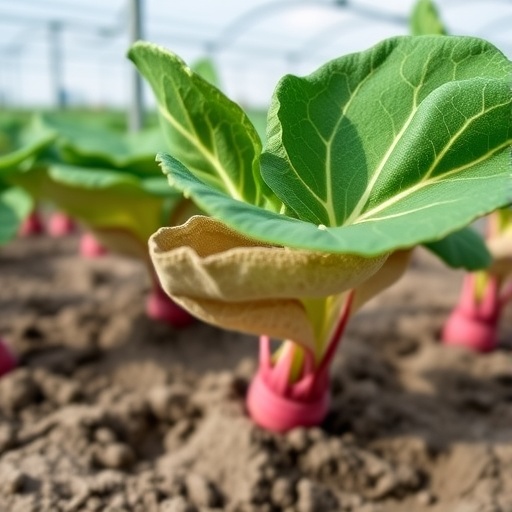
The relentless quest for agricultural resilience in the face of climate change has led researchers to focus on novel approaches to enhance the drought tolerance of crops. One such groundbreaking study, recently published in BMC Genomics, delves into the intricate world of sugar beet genetics, providing crucial insights into the mechanisms that confer drought resistance. He, Sun, and Li et al. have identified the HSP70 gene family and screened for drought resistance genes, a step that holds tremendous potential for boosting sugar beet’s adaptability to arid conditions, thus securing food supply and economic stability for sugar beet farmers.
Drought is a significant concern for agriculture globally, affecting crop yield and quality, ultimately impacting food security and farmer livelihood. Sugar beet, a vital source of sugar and animal feed, is particularly threatened by prolonged dry spells. The researchers aimed to unravel the complexities associated with drought tolerance mechanisms in sugar beet, encouraging a more resilient agricultural framework. The research underlines the vital need for innovative strategies to combat the effects of climate change on crop production.
The study meticulously cataloged the HSP70 gene family in sugar beet, a group of proteins instrumental in plant stress responses. The HSP70 proteins function as molecular chaperones, assisting in the proper folding of proteins and helping combat damage caused by environmental stressors such as heat and drought. By identifying and characterizing these genes, researchers are opening up new avenues for genetic improvement strategies that could enhance the resilience of sugar beet against drought conditions.
In their exploration, the researchers employed a comprehensive screening approach that included genomic analyses, expression profiling, and bioinformatics tools. They aimed to assess the interaction between various HSP70 family members and other drought-responsive genes. This integrative approach sheds light on the complex regulatory networks that govern drought tolerance, facilitating a deeper understanding of sugar beet’s adaptive mechanisms.
Furthermore, through their groundbreaking work, He et al. succeeded in pinpointing specific drought resistance genes that exhibited heightened expression during drought stress. This discovery not only highlights the genetic potential existing within sugar beet but also serves as a guiding framework for future breeding programs aimed at developing drought-resistant cultivars. The study’s findings suggest that these identified genes can be targeted in breeding strategies, enhancing the resilience of sugar beet varieties against climate-induced stress.
The implications of this research reach far beyond theoretical knowledge. For farmers, the adoption of drought-resistant sugar beet varieties could ultimately translate into higher yields and reduced financial risk in arid conditions. Moreover, as climate change continues to challenge traditional agricultural practices, the ability to cultivate resilient crops becomes increasingly crucial. It is this direct connection between research and real-world application that makes such studies immensely valuable to the agricultural community.
As agricultural scientists and breeders engage with these findings, the potential for significant advancements in crop science takes shape. The focus on the HSP70 family and drought resistance genes provides a clear pathway for developing sugar beet varieties that can withstand harsh climatic conditions. This research embodies the finer points of agricultural innovation, demonstrating how cutting-edge genomic studies can facilitate sustainable practices in crop production.
Additionally, the study emphasizes the importance of collaborative efforts in addressing global agricultural challenges. The interdisciplinary nature of this research showcases the valuable contributions from molecular biologists, geneticists, and agronomists, paving the way for comprehensive solutions. By merging their expertise, researchers can tackle complexities that single-discipline approaches may overlook.
Looking ahead, the research opens numerous questions and avenues for further investigation. Understanding the interplay between genetic factors and environmental stressors could lead to enhanced predictive models for crop performance under varying climatic conditions. As the agricultural landscape evolves, the need for adaptive strategies will become increasingly paramount, and insights from studies like this will be crucial in preparing for the unpredictable nature of climate change.
The world stands at a critical juncture where the demand for food is rising, paralleling the challenges posed by environmental conditions. The findings presented by He et al. serve as a beacon of hope for sugar beet farmers facing the specter of drought. By unveiling the genetic secrets behind drought resistance, the research plays a pivotal role in creating a more sustainable and efficient agricultural system that can withstand the trials of a changing climate.
To sum up, the study not only advances our understanding of sugar beet genetics but also pioneers a path toward developing resilient cultivars tailored for arid environments. By integrating cutting-edge genomic insights with practical agricultural applications, this research defines a transformative approach to crop improvement. The focus on HSP70 genes and associated drought resistance highlights the essential balance between scientific inquiry and tangible benefits for farmers worldwide.
In conclusion, the emergence of such studies underscores the urgency for continued research and investment in agricultural sciences. As the repercussions of climate change loom ever closer, initiatives that unveil genetic resilience become vital. The journey from laboratory discovery to field application is not merely a scientific endeavor; it is a necessary pathway to ensure food security and economic sustainability in the face of environmental challenges.
He, F., Sun, Y., Li, N. et al. Identification of HSP70 family and screening of drought resistance genes in sugar beet.
BMC Genomics 26, 1052 (2025). https://doi.org/10.1186/s12864-025-12261-x
Cite Scienmag News
Juliet Wilcox. (November 19, 2025). HSP70 Family and Drought Resistance Genes in Sugar Beet. Scienmag. https://scienmag.com/hsp70-family-and-drought-resistance-genes-in-sugar-beet/
Juliet Wilcox. "HSP70 Family and Drought Resistance Genes in Sugar Beet." Scienmag, 19 November 2025, https://scienmag.com/hsp70-family-and-drought-resistance-genes-in-sugar-beet/. Accessed 4 September 2026.
Juliet Wilcox. "HSP70 Family and Drought Resistance Genes in Sugar Beet." Scienmag. November 19, 2025. https://scienmag.com/hsp70-family-and-drought-resistance-genes-in-sugar-beet/


