


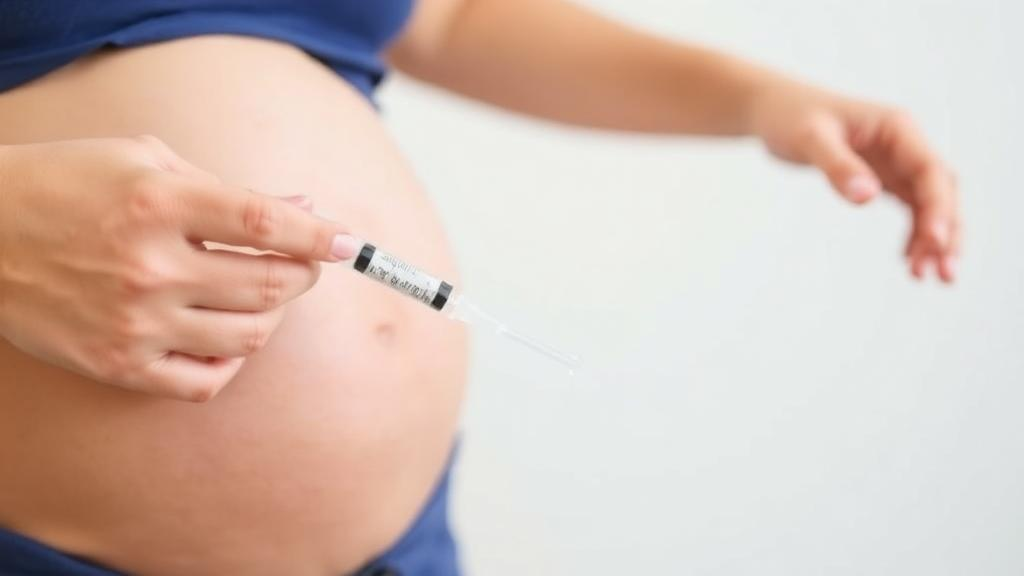
A large Swedish study published in The BMJ has found that women who received the quadrivalent human papillomavirus (HPV) vaccine before becoming pregnant were less likely to experience major adverse pregnancy outcomes, including preterm birth, very preterm birth, preterm prelabor rupture of membranes, and delivering a severely small baby. The association was strongest among women vaccinated at younger ages, particularly before age 17, suggesting that timing of vaccination may play an important role in the magnitude of the protective effect. The findings, drawn from more than six hundred thousand births across nearly two decades of national health records, point to a potential benefit of HPV vaccination that extends well beyond its established role in cancer prevention.
HPV is one of the most common sexually transmitted infections worldwide, and most sexually active people will acquire at least one genital HPV infection at some point in their lives. While many infections clear spontaneously without consequence, persistent infection with high-risk types can drive the development of cervical lesions and, ultimately, cervical cancer. The quadrivalent vaccine used in the Swedish study targets four HPV types, including types 16 and 18, which are together responsible for roughly seventy percent of all cervical cancer cases. Since vaccination programmes began rolling out in the mid-2000s, countries with high coverage have documented steep declines in vaccine-type infections, genital warts, and precancerous cervical lesions, providing the epidemiological foundation for the vaccine’s cancer-prevention credentials.
What has become increasingly clear in recent years, however, is that HPV infection may matter for pregnancy as well as for cancer. A growing body of evidence indicates that HPV infection itself, and the clinical procedures used to treat cervical lesions caused by the virus, are linked to an increased risk of pregnancy complications. Treatments such as excisional procedures on the cervix can compromise its structural integrity, a recognised contributor to preterm birth and preterm prelabor rupture of membranes. Direct viral effects on placental and fetal tissues have also been proposed as possible mechanisms. Preventing HPV infection in the first place, the reasoning goes, could therefore reduce the downstream cascade of treatments and complications that jeopardise pregnancy.
To test this hypothesis at scale, researchers in Sweden turned to the country’s nationwide health registers, which link individual-level records across vaccination programmes, antenatal care, and birth outcomes. Their study took the form of a population-based case-control analysis nested within a cohort of 624,713 singleton, first-time births among women aged 16 to 35 years in Sweden between 2006 and 2023. Of these women, 92,620, or about fifteen percent, had received the quadrivalent HPV vaccine before pregnancy. Cases were defined as women who experienced at least one adverse pregnancy outcome, spanning preterm birth before 37 weeks, very preterm birth between 28 and 31 weeks, preterm or prelabor rupture of membranes, delivery of a small or severely small baby, stillbirth, or newborn death.
Each case was matched with up to ten control women of the same age and year of conception, a design that helps control for calendar-time effects such as changing vaccination coverage and evolving clinical practice. The researchers then adjusted for a wide range of potentially confounding factors, including self-reported cigarette smoking and body mass index at the first antenatal visit, maternal diagnoses and use of assisted reproduction, the mother’s country of birth, and family income and education level. These socioeconomic and behavioural variables are critical in this field, because vaccination uptake and pregnancy outcomes are both patterned by social factors, and failure to account for them can generate spurious associations in either direction.
After these adjustments, quadrivalent HPV vaccination before pregnancy was associated with lower odds of all the adverse pregnancy outcomes included in the analysis compared with no vaccination. Statistically significant associations were observed specifically for preterm and very preterm birth, spontaneous preterm birth, preterm prelabor rupture of membranes, and delivery of a severely small baby. Notably, the risk reduction was generally more pronounced among women who had been vaccinated before the age of seventeen, a pattern consistent with the idea that vaccination is most protective when it prevents infection before first exposure to the virus. The same age gradient has been observed in cancer-prevention studies, where younger vaccination correlates with higher seroconversion rates and greater reductions in cervical lesions.
The biological plausibility of these findings rests on several mechanisms. By preventing persistent cervical HPV infection, vaccination may reduce the incidence of high-grade cervical lesions and, with them, the need for excisional treatments that weaken the cervix during pregnancy. There is also emerging interest in whether HPV infection can affect the intrauterine environment more directly, with viral particles or the inflammatory responses they provoke potentially influencing placental function and fetal growth. While the Swedish study did not dissect these clinical pathways in detail, its authors acknowledge that the underlying mechanisms warrant further investigation. What the study establishes is a robust population-level association that is consistent with these mechanistic hypotheses.
As with any observational study, no firm conclusions about cause and effect can be drawn, and the researchers are careful to note the limitations. Information on spontaneous abortions was incomplete, and the underlying clinical pathways linking vaccination to better outcomes were not extensively examined. The authors also cannot rule out the possibility that other unmeasured factors may have influenced the results, a persistent challenge in studies comparing vaccinated and unvaccinated populations. Nevertheless, they argue that the study’s scale, its foundation in high-quality national register data, its long follow-up period in a real-world setting, and its case-control design minimised bias and misclassification, enabling assessment of both common and rare adverse pregnancy outcomes. Results remained similar across further sensitivity analyses, suggesting the findings are robust.
The researchers place their results in the context of the accumulating safety literature on HPV vaccination in pregnancy. Although vaccination is not routinely recommended during pregnancy, inadvertent exposure has occurred in large numbers of women through vaccination programmes and surveillance studies, and this body of evidence has found no signal of harm to pregnancy outcomes. Against that backdrop, the new findings shift the framing: rather than merely being safe with respect to pregnancy, HPV vaccination may actively confer additional benefits by reducing the risk of adverse events. The authors state that, together with previous research showing the safety of HPV vaccination during pregnancy, their results suggest the vaccine is not only safe but may also protect against adverse pregnancy outcomes.
Taken together, the evidence strengthens the case for the global strategy of HPV vaccination and its continued implementation in routine immunisation programmes, the researchers conclude. For public health policymakers, the study adds a pregnancy-outcomes dimension to a benefit calculus already dominated by cancer prevention, potentially strengthening the economic and clinical argument for vaccinating children and adolescents at the youngest recommended ages. For clinicians counselling patients, the message is that timely HPV vaccination may offer protection that reaches into reproductive health years later. As national immunisation schedules continue to expand and newer vaccines extend coverage to additional HPV types, studies of this kind will be essential for quantifying the full spectrum of benefits that population-level HPV control can deliver, from the cervix to the delivery room.
Subject of Research: Association between pre-pregnancy quadrivalent HPV vaccination and adverse pregnancy outcomes
Article Title: HPV vaccination before pregnancy linked to lower risk of preterm birth and other major complications
Article References: HPV vaccination before pregnancy linked to lower risk of preterm birth and other major complications. (n.d.). Original publication
Image Credits: AI Generated
DOI: Not provided
Keywords: HPV vaccination, preterm birth, pregnancy complications, quadrivalent vaccine, cervical cancer, The BMJ, Swedish registers, case-control study, prelabor rupture of membranes, fetal growth restriction, immunisation programmes, observational study
Cite Scienmag News
Harold Sullivan. (October 8, 2026). HPV Vaccine Before Pregnancy Tied to Lower Risk of Preterm Birth, Major Complications. Scienmag. https://scienmag.com/hpv-vaccine-before-pregnancy-tied-to-lower-risk-of-preterm-birth-major-complications/
Harold Sullivan. "HPV Vaccine Before Pregnancy Tied to Lower Risk of Preterm Birth, Major Complications." Scienmag, 8 October 2026, https://scienmag.com/hpv-vaccine-before-pregnancy-tied-to-lower-risk-of-preterm-birth-major-complications/. Accessed 8 October 2026.
Harold Sullivan. "HPV Vaccine Before Pregnancy Tied to Lower Risk of Preterm Birth, Major Complications." Scienmag. October 8, 2026. https://scienmag.com/hpv-vaccine-before-pregnancy-tied-to-lower-risk-of-preterm-birth-major-complications/


