


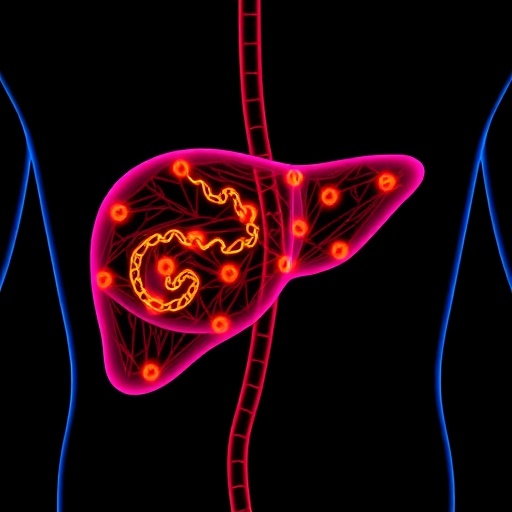
In a groundbreaking study conducted at the Salk Institute, scientists have unveiled a pivotal molecular mechanism governing the liver’s circadian rhythm for fat secretion, shedding new light on the intricate interplay between metabolism and the body’s internal clock. This research reveals that Fibroblast Growth Factor 1 (FGF1), a protein previously recognized for its roles in cellular growth and repair, operates as a crucial circadian timekeeper, orchestrating the daily export of fat from the liver into the bloodstream. This discovery not only advances our understanding of fundamental liver physiology but also carries profound implications for tackling metabolic disorders such as Metabolic Dysfunction-Associated Steatotic Liver Disease (MASLD).
The liver’s role as an energy supplier is well-documented—it packages triglycerides and other fats and releases them into circulation, thus fueling vital organs including the heart and muscles during periods of increased activity. Intriguingly, this process does not occur haphazardly but follows a tightly regulated 24-hour cycle, synchronizing with the body’s circadian rhythms. Until now, however, the molecular signals linking the circadian clock to this lipid trafficking remained elusive. The Salk Institute’s latest investigations identify FGF1 as the missing molecular link that sets the timing of hepatic fat secretion, coordinating energy delivery precisely when peripheral tissues demand it most.
FGF1 production in the liver exhibits robust circadian oscillations, maintaining rhythmic expression even in the absence of external cues like feeding timing and light exposure. Through its interaction with specific receptors on hepatocyte membranes, FGF1 initiates a signaling cascade that surprisingly involves the activation of a protein traditionally characterized as a cellular stress sensor. Rather than indicating cellular distress, this sensor’s activation forms part of a healthy, rhythmic metabolic signaling pathway, challenging previous assumptions and highlighting a novel physiological role in maintaining lipid homeostasis.
To directly investigate the functional significance of FGF1 in liver metabolism, the researchers engineered mouse models lacking FGF1 expression exclusively in hepatic tissues. The abrogation of this molecular clockwork resulted in disrupted circadian fat secretion, causing pathological fat accumulation within the liver. This pathological state predisposed animals to accelerated progression of MASLD, mirroring disease pathogenesis observed in human metabolic syndrome. Conversely, therapeutic reintroduction of FGF1 in mice with established MASLD arrested further disease advancement, offering a tantalizing prospect for novel intervention strategies that target the underlying temporal orchestration of liver fat metabolism.
The intricate intracellular signaling pathways uncovered involved crosstalk between the FGF1 receptor signaling axis and cellular metabolic sensors, redefining the conceptual landscape of how physiological timing cues intersect with metabolic regulation. The involvement of what was formerly understood as a stress-activated protein indicates that circadian rhythmicity in hepatocyte function may depend on reinterpreted roles of canonical stress response elements, suggesting a broader, more integrative model of cellular metabolism synchronized with systemic energetics.
Importantly, this research provides a mechanistic framework that explains clinical observations linking circadian rhythm disruption—with causes ranging from shift work to chronic sleep deprivation—to increased susceptibility to metabolic diseases. The molecular chronobiology of liver fat secretion uncovered here underscores the biological imperatives of maintaining circadian integrity for metabolic health and opens new avenues for temporal-precision medicine aimed at restoring or mimicking these endogenous timing signals.
The implications of this study are far-reaching. By dissecting the molecular basis of hepatic lipid rhythmicity, the work paves the way for fundamentally new approaches to prevent and treat disorders characterized by dysregulated lipid metabolism. Such conditions include not only MASLD but also related pathological states like steatohepatitis and metabolic syndrome, which collectively represent a growing global health burden. Targeted modulation of FGF1 signaling or its downstream pathways could offer precise therapeutic windows tailored to the body’s natural biological rhythms, enhancing efficacy and minimizing side effects.
This study was propelled by the collaborative efforts of a multidisciplinary team, including postdoctoral researchers Benan Pelin Sermikli and Sihao Liu, and was led by eminent molecular biologist Ronald Evans, PhD, at the Salk Institute. The robustness of their approach combined high-resolution temporal gene expression analyses with sophisticated genetic manipulation and metabolic phenotyping, providing an unparalleled depth of insight into circadian regulation of liver function.
Funding from the National Institutes of Health and the Larry L. Hillblom Foundation supported this breakthrough, underscoring the significance attributed to mechanistic studies at the intersection of circadian biology and metabolic disease. Such integrative research underscores a vital shift in biomedical science from descriptive symptom management toward precision targeting of molecular networks that undergird disease states.
As the medical community continues to grapple with the epidemic of metabolic disorders, elucidating endogenous regulatory codes like the FGF1-driven fatty acid export mechanism heralds a promising paradigm. It integrates chronobiological principles with pathophysiological insights, proposing molecular chronotherapy as a frontier in combating prevalent diseases linked to the modern lifestyle’s disruption of natural biological rhythms.
In sum, the discovery that FGF1 functions as a circadian regulator of liver fat secretion not only fills a critical void in our comprehension of metabolic timing mechanisms but also charts a course toward innovative treatments that align with the body’s intrinsic biological clocks—ultimately transforming the management of metabolic and liver diseases worldwide.
News Publication Date: April 20, 2026
Web References:
Cite Scienmag News
Drew Townsend. (April 20, 2026). How the Liver’s Internal Clock Regulates Daily Fat Secretion. Scienmag. https://scienmag.com/how-the-livers-internal-clock-regulates-daily-fat-secretion/
Drew Townsend. "How the Liver’s Internal Clock Regulates Daily Fat Secretion." Scienmag, 20 April 2026, https://scienmag.com/how-the-livers-internal-clock-regulates-daily-fat-secretion/. Accessed 4 September 2026.
Drew Townsend. "How the Liver’s Internal Clock Regulates Daily Fat Secretion." Scienmag. April 20, 2026. https://scienmag.com/how-the-livers-internal-clock-regulates-daily-fat-secretion/


