


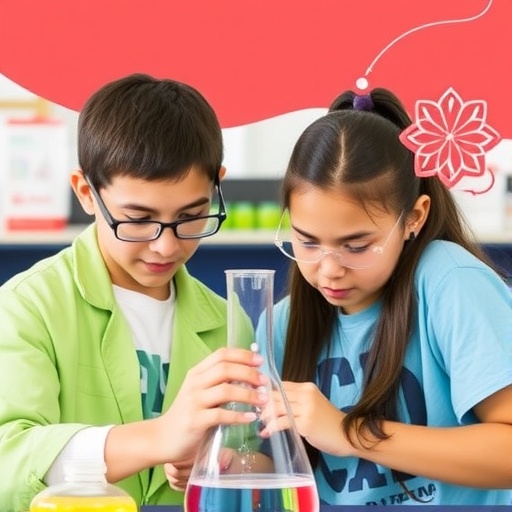
In an era where STEM (Science, Technology, Engineering, and Mathematics) fields are increasingly shaping the global economy and innovation landscape, understanding the factors that influence young people’s engagement and identity in these disciplines has become more critical than ever. Groundbreaking research published recently in the International Journal of STEM Education sheds new light on how both formal and informal science learning experiences during high school collectively shape students’ career interests and development of STEM identity, a crucial determinant for STEM persistence and success.
The comprehensive study by Sonnert, Reid, and Sunbury, among others, explores the nuanced interactions between structured educational environments and extracurricular scientific engagement. Formal science learning—the curriculum delivered in classrooms—traditionally emphasizes theoretical foundations and methodological rigor, providing students with standardized knowledge and skills. Conversely, informal science learning, which occurs in museums, clubs, science fairs, or through media and personal exploration, offers experiential, often more personalized and motivational encounters with science. This research distinguishes itself by delving into how these two learning modes not only coexist but synergistically influence students’ evolving perceptions of themselves as science learners and potential future scientists.
One of the pivotal findings of this study is the demonstrated amplification effect when formal and informal science experiences are integrated. Students who participate extensively in both spheres are more likely to develop a strong STEM identity, which is a multidimensional construct encompassing competence, interest, recognition, and a sense of belonging within the STEM community. The multidisciplinary approach of the research team utilized mixed-methods analysis, combining quantitative surveys of student engagement with qualitative interviews, thereby capturing a rich, contextual understanding of how learning environments foster or hinder STEM identity formation.
The technical underpinnings of the study leveraged structural equation modeling to parse out the direct and indirect effects of various learning experiences on career interest trajectories. Students exposed to rigorous formal curricula and complemented by informal settings showed not only heightened interest in STEM careers but also a remarkable resilience in overcoming common barriers such as stereotype threat and self-doubt. The data suggest that informal science environments provide critical emotional and social supports that reinforce classroom learning, thereby strengthening students’ self-efficacy in scientific endeavors.
Furthermore, the investigation rigorously interrogated the role of contextual factors including gender, socioeconomic status, and school resources. The results indicate that informal science experiences can serve as equalizers, mitigating disparities in access to quality formal education, particularly in under-resourced schools. By fostering creative problem-solving and collaborative learning in informal contexts, students from diverse backgrounds can develop a more empowered STEM self-concept, which in turn influences their career aspirations and academic persistence.
The study also highlights the importance of timing and developmental readiness in science identity formation. High school, a critical period marked by identity exploration and cognitive maturation, emerges as an optimal stage for interventions that bridge formal and informal learning. This aligns with neurodevelopmental research indicating adolescence as a prime window for cultivating executive function and critical thinking skills, both essential for thriving in STEM disciplines.
Intriguingly, the researchers noted significant variations in how students interpreted their experiences depending on factors such as teacher support and peer influence. Educators who actively encourage curiosity and real-world application within formal settings enhance the motivational impact of informal experiences. Simultaneously, peer groups engaged in science activities contribute to a shared social identity that normalizes STEM participation and reduces feelings of marginalization.
The implications of this study for policy and practice are monumental. Educational institutions and policymakers are urged to foster partnerships between schools and informal science organizations, promoting seamless integration of these domains. Investments in afterschool programs, STEM clubs, and community science initiatives could yield substantial returns in diversifying the STEM pipeline by attracting and retaining underrepresented groups.
Additionally, curriculum designers are called to rethink traditional science instruction paradigms by incorporating elements that reflect the dynamism and interdisciplinary nature of contemporary science. Emphasizing inquiry-based learning, real-world problem-solving, and cross-disciplinary connections will resonate well with students’ informal learning experiences, creating a more cohesive and engaging science education ecosystem.
Emerging from this research is also the recognition of identity as fluid and socially constructed rather than fixed. Interventions aimed at reinforcing STEM identity should therefore focus on continuous support throughout adolescence, embracing a holistic view that integrates cognitive, emotional, and social dimensions. Mentorship programs and role models featured within both formal and informal environments can play a crucial role in this ongoing identity development.
Future research directions highlighted by Sonnert and colleagues include longitudinal investigations to track STEM identity evolution from early adolescence through postsecondary education and career entry. Such studies will elucidate the long-term impacts of varied learning experiences and further refine strategies to nurture diverse STEM talent pipelines.
Moreover, the digital age presents new frontiers for informal science learning through virtual laboratories, online communities, and interactive media. Understanding how these platforms can complement classroom learning and contribute to STEM identity represents an exciting domain for future exploration.
This research encapsulates a vital paradigm shift, emphasizing that fostering STEM identity is not solely the responsibility of the classroom but a collaborative endeavor leveraging the full spectrum of learning opportunities available to students. By embracing both formal and informal science learning, educators and communities can better prepare the next generation of innovators and problem-solvers.
Ultimately, Sonnert et al.’s work reminds us that science education transcends content delivery—it is about shaping identities, nurturing curiosity, and building inclusive pathways for young people to see themselves as capable contributors to the scientific enterprise. As STEM fields continue to evolve and expand, this holistic understanding will be instrumental in ensuring broad-based student engagement, equity, and excellence.
Cite Scienmag News
Courtney Benton. (October 15, 2025). How Science Experiences Shape Teens’ STEM Identity. Scienmag. https://scienmag.com/how-science-experiences-shape-teens-stem-identity/
Courtney Benton. "How Science Experiences Shape Teens’ STEM Identity." Scienmag, 15 October 2025, https://scienmag.com/how-science-experiences-shape-teens-stem-identity/. Accessed 4 September 2026.
Courtney Benton. "How Science Experiences Shape Teens’ STEM Identity." Scienmag. October 15, 2025. https://scienmag.com/how-science-experiences-shape-teens-stem-identity/


