


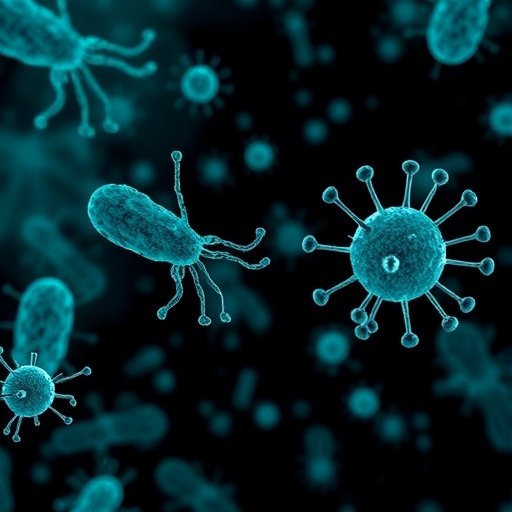
Urinary tract infections are commonly treated as infections that unfold in an exposed, fluid-filled environment. Yet some of the bacteria responsible for recurrent disease can retreat into bladder cells, where they are shielded from immune surveillance, antibiotics and, potentially, bacteriophages. A new study in npj Viruses examines how phages behave in this concealed setting and explores the mechanisms that may allow them to overcome intracellular bacterial reservoirs. The work by S. C. Lieberknecht-Jouy, D. Pavlovic, C. Aguilar and colleagues focuses on a central challenge in phage therapy: a virus that efficiently destroys bacteria outside host cells may not automatically reach or eliminate bacteria hiding inside mammalian tissue.
The problem is clinically important because recurrent urinary tract infections are often not caused by repeated exposure to a new bacterial strain. Instead, surviving populations may persist in protected niches and later repopulate the urinary tract. Uropathogenic bacteria can attach to and invade bladder epithelial cells, establish intracellular communities and enter physiological states that make them less vulnerable to conventional treatment. These reservoirs can function as a source of relapse even after symptoms disappear and bacterial counts in urine fall. Antibiotics may penetrate host tissues to varying degrees, but their activity can be reduced when bacterial metabolism slows or when organisms are organized in dense communities. Phages introduce a different set of biological possibilities, but they also face barriers that are specific to viral infection.
A bacteriophage must complete several sequential steps before it can eliminate a bacterial target. It must encounter the correct cell, recognize a surface receptor, attach, inject its genome and redirect the bacterium’s machinery toward viral replication. Newly produced phage particles then have to exit the infected cell, usually by breaking the bacterial envelope, and reach additional susceptible hosts. Each stage is influenced by bacterial growth rate, receptor expression, spatial organization and the surrounding environment. Inside a bladder cell, the situation becomes more complex. The bacterium is physically separated from phages in the extracellular space by a eukaryotic plasma membrane and intracellular compartments. A phage may therefore be highly potent in a liquid culture while showing limited activity against the same bacterium after it has entered a host cell.
The study’s mechanistic perspective is built around this distinction between phage activity and phage access. Intracellular bacterial reservoirs are not simply smaller versions of extracellular populations. They can differ in metabolic state, surface architecture and susceptibility to viral entry. Some bacteria alter or reduce the receptors used by phages, while others become dormant enough to support little or no viral replication. In addition, the host cell can influence the outcome by directing internalized material toward endosomal or degradative pathways, changing membrane traffic or activating innate defenses. Understanding phage dynamics therefore requires tracking not only whether bacteria die, but also where phages are located, how long they remain infectious and whether one round of infection can generate enough progeny to spread through the reservoir.
One of the study’s key implications is that intracellular phage therapy may depend on a balance between penetration, persistence and replication. A phage that remains outside the host cell may continue to attack bacteria released into the urinary tract, limiting the extracellular population without directly reaching every intracellular bacterium. If a small fraction of phage particles can enter host cells, however, even limited access could become important if those particles encounter bacteria capable of supporting productive infection. Viral amplification inside or near a reservoir could convert a relatively small initial dose into repeated waves of antibacterial activity. Conversely, if phages enter host cells but fail to reach bacteria, they may be trapped, degraded or cleared before contributing to treatment.
These dynamics help explain why the timing of phage exposure may be as important as the total dose. An actively growing bacterial population is generally more favorable for many lytic phages because it provides the molecular resources needed to produce viral genomes and structural proteins. Intracellular bacteria may alternate between growth and persistence, creating windows in which they become more vulnerable. The release of bacteria from infected epithelial cells could also create temporary extracellular targets, allowing phages to act during a transition that is otherwise difficult to exploit. Such processes may produce non-linear treatment effects: a modest change in bacterial physiology or host-cell trafficking could sharply alter the number of successful infections and the extent of reservoir clearance.
The research also highlights why phage performance cannot be predicted solely from standard laboratory measurements. Plaque assays and liquid-killing experiments are essential for determining host range, adsorption and lytic capacity, but they do not reproduce the physical barriers of mammalian tissue. In a host-cell model, investigators must distinguish between phages that remain in the surrounding medium, particles associated with the cell surface, phages internalized by the host cell and viral progeny released after infection. They must also determine whether a reduction in intracellular bacterial numbers reflects direct phage-mediated killing, host-cell defense, altered bacterial growth or the combined action of several mechanisms. These distinctions are critical for translating an apparent antiviral-like effect against bacteria into a credible therapeutic strategy.
The findings support a treatment concept in which phages are selected and administered according to their behavior across multiple compartments rather than their activity in a single culture condition. A useful therapeutic phage may need to retain infectivity in urine, tolerate the chemical environment of the urinary tract, recognize bacterial variants expressed during infection and interact productively with host cells. Cocktails could broaden coverage against receptor changes and reduce the likelihood that resistant bacteria dominate. Combining phages with antibiotics may offer additional advantages if one treatment increases bacterial growth or exposes receptors needed by the other. Such combinations would require careful design, because antibiotics can also suppress the bacterial metabolism needed for phage reproduction.
Resistance remains an important constraint. Bacteria can escape phage infection by modifying surface receptors, producing extracellular barriers, changing restriction systems or activating defense pathways that destroy incoming viral genomes. Yet resistance may carry a biological cost. A receptor used by a phage can also contribute to motility, adhesion, nutrient uptake or virulence, meaning that phage escape could produce bacteria that are less fit or less capable of maintaining an intracellular reservoir. The study’s emphasis on mechanism is valuable in this context because it points toward measurable vulnerabilities. If intracellular persistence, receptor expression and phage replication are linked, therapeutic strategies could be designed to exploit trade-offs rather than relying on a single highly active virus.
For patients, the broader significance is that successful phage therapy for urinary tract infection may require more than delivering a bacteriophage to the urinary tract. The treatment must address the spatial biology of infection: bacteria suspended in urine, organisms attached to tissue, cells embedded in communities and populations hidden inside epithelial cells. The work by Lieberknecht-Jouy and colleagues frames phage dynamics as a problem of movement, access, replication and timing. By identifying the conditions under which phages can influence intracellular bacterial reservoirs, the study contributes to a more realistic view of how bacterial viruses might be used against recurrent infection. It also reinforces a central principle of modern phage research: the most effective therapy will come not simply from finding a virus that kills a bacterium, but from understanding where, when and by what mechanism that killing can occur inside the living host.
Cite Scienmag News
Kristina Jarvis. (August 22, 2026). How Phages Target Hidden Intracellular Bacteria Behind Persistent Urinary Tract Infections. Scienmag. https://scienmag.com/how-phages-target-hidden-intracellular-bacteria-behind-persistent-urinary-tract-infections/
Kristina Jarvis. "How Phages Target Hidden Intracellular Bacteria Behind Persistent Urinary Tract Infections." Scienmag, 22 August 2026, https://scienmag.com/how-phages-target-hidden-intracellular-bacteria-behind-persistent-urinary-tract-infections/. Accessed 4 September 2026.
Kristina Jarvis. "How Phages Target Hidden Intracellular Bacteria Behind Persistent Urinary Tract Infections." Scienmag. August 22, 2026. https://scienmag.com/how-phages-target-hidden-intracellular-bacteria-behind-persistent-urinary-tract-infections/


