


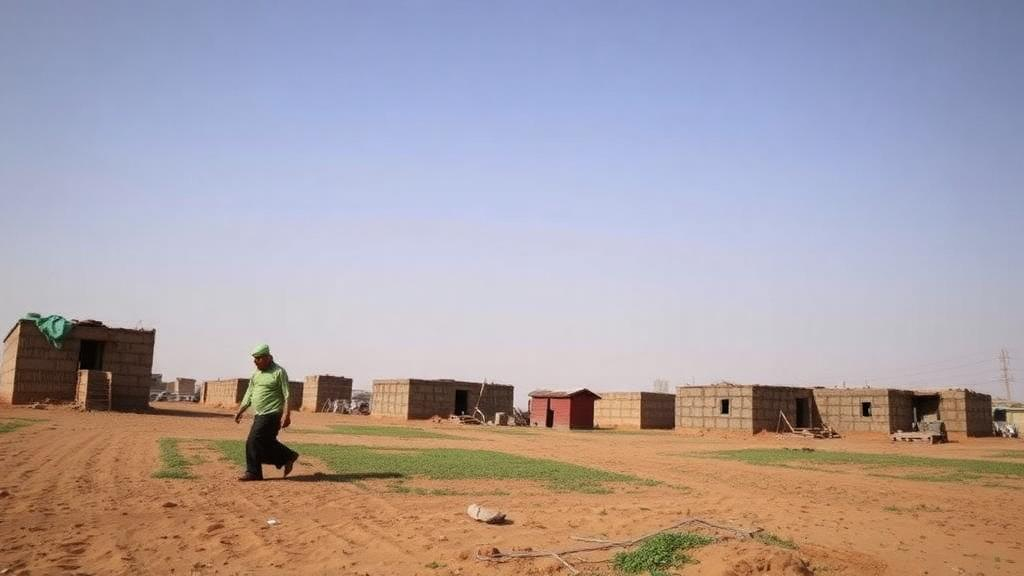
In the rural districts of Shushtar County, in Iran’s southwestern province of Khuzestan, the flavors served at a family table may do far more than satisfy hungry travelers. A new study published in Humanities and Social Sciences Communications suggests that the decision by domestic tourists to eat local food is not a random act of curiosity but a predictable psychological process, one that can be modeled, measured, and ultimately harnessed to strengthen the micro-economies of struggling village communities. The research, led by Zeinab Hematian Larki and Moslem Savari of the Agricultural Sciences and Natural Resources University of Khuzestan, together with Masoud Yazdanpanah of Eberswalde University for Sustainable Development and several international institutions, offers one of the most detailed quantitative portraits to date of what makes tourists willing to consume regional dishes, and by extension, what makes food a viable engine for rural development.
The appeal of food tourism has grown dramatically worldwide. Travelers increasingly seek authentic experiences, and few experiences feel more authentic than tasting dishes that have been prepared in a region for generations. Beyond introducing visitors to local culture and traditions, the researchers note, village food tourism can reinforce the rural micro-economy, support smallholder farmers, and sustain family businesses that might otherwise collapse under economic pressure. Local foods also play a significant role in destination branding, giving rural areas a distinctive identity that can attract repeat visitors. Yet, despite this potential, the psychological drivers behind tourists’ willingness to eat local food have remained underexplored, particularly in developing countries where rural livelihoods are often most fragile.
To fill this gap, the team turned to one of the most widely used frameworks in behavioral science: the Theory of Planned Behavior, or TPB. Developed originally to explain how human actions arise from measurable psychological antecedents, the TPB holds that behavior is driven by three factors. The first is attitude, the individual’s overall evaluation of the behavior, in this case whether a tourist believes eating local food is a good and rewarding thing to do. The second is subjective norm, the perceived social pressure from family, friends, and fellow travelers to engage in the behavior. The third is perceived behavioral control, the tourist’s sense of whether eating local food is easy and within their power, which depends on factors such as availability, affordability, and hygiene.
What makes the new study innovative is that the authors did not stop with the classic model. They extended it with two additional psychological variables that are rarely incorporated into food tourism research: risk perception and benefit perception. Risk perception captures the concerns a tourist might harbor about unfamiliar rural cuisine, including worries about food safety, hygiene standards, or the possibility of an unpleasant culinary experience. Benefit perception, by contrast, reflects the perceived advantages of eating locally, from supporting village economies to enjoying fresher, more distinctive flavors. By adding these two constructs, the researchers aimed to capture the full mental calculus a tourist performs before deciding whether to sit down to a traditional meal in a village setting.
The empirical work was carried out through a structured questionnaire survey targeting tourists visiting the rural areas of Shushtar County. The statistical population consisted of domestic tourists, and a sample of 400 participants was selected using the Krejcie and Morgan table, a standard tool in survey methodology for determining adequate sample sizes relative to population size. Data collection took place between January and May 2022, with participation voluntary and anonymous, and informed consent obtained from all respondents, in written form where possible and verbally for participants with limited literacy. The study was reviewed through the departmental academic and supervisory processes of the authors’ university, which at the time had no formal institutional review board, and was conducted in accordance with internationally recognized ethical principles for research involving human participants.
Once the questionnaires were collected, the team analyzed the data using structural equation modeling, or SEM, a statistical technique that allows researchers to test complex networks of cause-and-effect relationships among latent psychological variables that cannot be observed directly. SEM is particularly well suited to studies like this one, because attitudes, norms, and perceptions are all internal states that must be inferred from multiple survey items rather than measured with a single question. By fitting the extended model to the survey data, the researchers could estimate both the strength and the statistical significance of each pathway leading to the final outcome: the tourist’s willingness to consume local food.
The results were striking. The original Theory of Planned Behavior model alone explained 56.6 percent of the variance in tourists’ willingness to eat local food, with all three of its core variables, attitude, perceived behavioral control, and subjective norms, exerting significant effects. In plain terms, tourists who viewed local eating positively, who felt social encouragement to do so, and who believed it was practically feasible were substantially more willing to choose village cuisine. But the real headline came from the extended model. When risk perception and benefit perception were added, the model’s explanatory power increased by 14.4 percentage points, a substantial gain in a field where even modest improvements in predictive accuracy are considered meaningful. This demonstrates that tourists’ decisions about rural food are shaped not only by attitudes and social norms but also by a careful weighing of potential dangers against potential rewards.
The implications of this finding extend well beyond academic theory. For rural communities in Iran and similar contexts, the enriched model provides a diagnostic tool: it identifies precisely which psychological levers policymakers and tourism planners can pull to increase demand for local food. If risk perception is a barrier, for example, interventions might focus on visible hygiene improvements, food safety certification, or transparent preparation practices that reassure visitors. If benefit perception is underdeveloped, marketing campaigns could emphasize how every meal purchased directly supports farming families and keeps culinary traditions alive. Because the model quantifies the contribution of each factor, resources can be directed toward the variables with the greatest influence rather than spread thinly across generic promotional efforts.
The study also carries a broader message about the economics of authenticity. In many developing countries, rural depopulation and agricultural decline are intertwined problems: as young people leave villages for cities, local food systems weaken, and the cultural heritage embedded in regional cuisine erodes with them. Food tourism offers a potential feedback loop in the opposite direction. When tourists value and pay for local dishes, demand rises for local ingredients, which supports farmers, which in turn sustains the knowledge and practices that make the cuisine distinctive in the first place. Destination branding built on food can amplify this loop, giving a region like Shushtar a recognizable culinary identity that competes for attention in a crowded tourism market.
Of course, the research has boundaries that should temper enthusiasm. It examined domestic tourists in a single county of southwest Iran, and psychological drivers of food choices may differ across cultures, regions, and international visitor segments. The survey design captures willingness, which is a strong predictor of behavior but not behavior itself; longitudinal and observational studies would be needed to confirm that increased willingness translates into actual spending in village restaurants and homes. Nevertheless, the authors argue that their enriched framework, integrating the Theory of Planned Behavior with risk and benefit perceptions, offers a more comprehensive foundation for understanding tourist behavior than existing approaches, and can serve as a basis for developing effective marketing strategies and destination branding initiatives in rural tourism. For communities whose livelihoods hang in the balance, that combination of rigorous modeling and practical application may prove to be a recipe worth savoring.
Subject of Research: Psychological modeling of domestic tourists' willingness to consume local food as a driver of rural livelihood improvement in southwest Iran
Article Title: Modeling the improvement of the livelihoods of local communities in Iran through the development of local food tourism
Article References: Modeling the improvement of the livelihoods of local communities in Iran through the development of local food tourism. (n.d.). https://doi.org/10.1038/s41599-026-09399-8
Image Credits: AI Generated
DOI: 10.1038/s41599-026-09399-8
Keywords: food tourism, rural livelihoods, Theory of Planned Behavior, risk perception, benefit perception, structural equation modeling, Iran, Shushtar County, destination branding, rural development, tourist behavior, local cuisine
Cite Scienmag News
Courtney Benton. (October 13, 2026). How Local Food Could Transform Rural Livelihoods in Southwest Iran. Scienmag. https://scienmag.com/how-local-food-could-transform-rural-livelihoods-in-southwest-iran/
Courtney Benton. "How Local Food Could Transform Rural Livelihoods in Southwest Iran." Scienmag, 13 October 2026, https://scienmag.com/how-local-food-could-transform-rural-livelihoods-in-southwest-iran/. Accessed 13 October 2026.
Courtney Benton. "How Local Food Could Transform Rural Livelihoods in Southwest Iran." Scienmag. October 13, 2026. https://scienmag.com/how-local-food-could-transform-rural-livelihoods-in-southwest-iran/


