

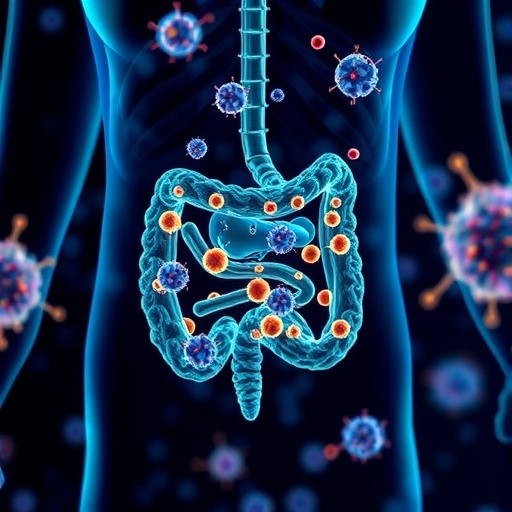
Cancer immunotherapy has transformed the landscape of oncology, offering groundbreaking approaches to treating malignancies by harnessing the patient’s own immune system to target and eradicate tumors. Despite these advances, a significant proportion of patients either fail to respond initially or develop resistance to immune checkpoint inhibitors, particularly those targeting the programmed death-1 (PD-1) and programmed death-ligand 1 (PD-L1) axis. This clinical challenge has propelled an intense scientific focus on systemic factors beyond tumor genetics that influence therapeutic outcomes. Among these, the gut microbiota—the complex, diverse population of microorganisms inhabiting the human gastrointestinal tract—has emerged as a pivotal mediator in modulating cancer immunotherapy efficacy.
Recent comprehensive reviews and original research have shed light on the intricate interplay between the gut microbiome and host immune responses, elucidating mechanisms by which commensal bacteria influence anti-tumor immunity. These studies collectively underscore the gut microbiome’s role as a critical metabolic-immune organ that shapes the tumor microenvironment, systemic immune activation, and checkpoints of immune tolerance. Notably, gut microbes metabolize dietary components such as fibers and mucins, generating immunomodulatory metabolites including short-chain fatty acids (SCFAs) and tryptophan derivatives. These metabolites orchestrate immune modulation by mechanisms involving histone deacetylase (HDAC) inhibition, activation of G protein-coupled receptor 43 (GPR43), and aryl hydrocarbon receptor (AHR) signaling, which collectively regulate T-cell differentiation, enhance dendritic cell function, and improve cytotoxic CD8⁺ T-cell mitochondrial fitness.
The bidirectional crosstalk between the gut microbiota and host immunity not only augments anti-tumor responses but also influences the expression of PD-L1 in the tumor milieu, thereby modulating the checkpoint blockade efficacy. Disruption of gut microbial balance, or dysbiosis, impairs these metabolic-immune axes and has been correlated with diminished responses to PD-1/PD-L1 inhibitors. Insights from both preclinical models and clinical settings have demonstrated that restoring microbial equilibrium via nutritional interventions, probiotics, or fecal microbiota transplantation (FMT) can revive therapy responsiveness. For example, administration of beneficial bacterial strains such as Akkermansia muciniphila, Bifidobacterium, and Lactobacillus has been associated with improved immune activation and delayed immune exhaustion, crucial for sustained immunotherapy success.
Further, emerging research has identified microbial metabolites as spatially graded immune regulators within the gut and tumor environments, underscoring their role in orchestrating precise immunological landscapes conducive to effective tumor eradication. These metabolites enhance antigen presentation capabilities of dendritic cells, prime effector T-cell populations, and concurrently mitigate excessive immune checkpoint ligand expression, thus balancing immune activation with tolerance to minimize adverse events. Intriguingly, experimental models demonstrate that introduction of responder-associated microbiota can convert resistant tumors into immunotherapy-sensitive phenotypes, highlighting the gut microbiome’s potential as a manipulable factor in oncologic precision medicine.
Clinical translation of these findings has begun to materialize. Notably, fecal microbiota transplantation from immunotherapy responders to refractory cancer patients has shown promise in re-establishing treatment sensitivity and reducing immune-related toxicities. This approach exemplifies the paradigm shift from viewing immunotherapy as a tumor-centric treatment toward considering it as an ecosystem-level intervention that integrates host metabolic states, microbial community structure, and immune functionality. The identification of microbial biomarkers capable of predicting treatment outcomes with high accuracy, especially when used in conjunction with multi-omics and machine learning approaches, further propels personalized medicine forward.
Beyond natural microbial populations, synthetic biology offers novel opportunities for engineering live bacterial therapeutics designed to deliver targeted immunomodulatory signals within the tumor microenvironment. These engineered microbes can be equipped with safety features such as “kill switches” to control their persistence and function, enabling customizable, on-demand immune modulation. Patient-derived autologous bacterial strains may also serve as next-generation probiotics, tailored to individual microbiome profiles, further enhancing treatment precision.
As our understanding deepens, it becomes clear that the gut microbiota’s impact on cancer therapy extends beyond PD-1/PD-L1 blockade, with implications for a broad spectrum of immuno-oncology applications. The systemic nature of microbial-immune interactions suggests potential roles in modulating adverse effects, resistance mechanisms, and even responses to combination therapies. Importantly, this evolving paradigm advocates for integrating microbiome profiling into clinical workflows to stratify patients based on microbiome-derived metrics of immune competence, thereby advancing personalized treatment algorithms.
Looking ahead, microbiota-guided immunotherapy heralds a transformative era in oncology. Incorporating microbial diagnostics and targeted interventions—ranging from dietary modulation to microbiota transplantation and synthetic biology—may not only optimize therapeutic efficacy but also mitigate immune-related toxicities and enhance patient quality of life. The convergence of microbiology, immunology, and computational biology will be instrumental in harnessing the gut microbiome as a controllable therapeutic platform to fine-tune immune responses.
The implications of this research transcend oncology, presenting avenues to address autoimmune and inflammatory diseases by exploiting microbial-immune crosstalk. As the microbiome shifts from an enigmatic internal ecosystem to a programmable biological tool, it promises to revolutionize not only cancer immunotherapy but also a broader spectrum of immune-mediated conditions. This conceptual transition epitomizes the emerging field of precision ecosystem-based medicine, where therapeutic success depends on a holistic understanding of host-microbe-tumor interactions, rather than singular molecular targets.
In conclusion, the gut microbiota stands as a central figure in determining the fate of cancer immunotherapy, reshaping long-held notions about the systemic regulation of immune checkpoints. By elucidating the metabolic-immune pathways mediated by gut microbes, clinicians and researchers gain powerful insights and actionable strategies to overcome therapeutic resistance, personalize treatments, and ultimately transform cancer care into a dynamic interplay of microbial and immune ecosystems. This frontier of microbiome-enabled precision oncology offers hope for more durable responses, fewer side effects, and expanded access to life-saving immunotherapies worldwide.
Subject of Research: Not applicable
Article Title: Gut microecology empowers cancer immunotherapy: commensal microbiota-mediated mechanisms and translational prospects of PD-1/PD-L1 therapy
News Publication Date: 29-Jan-2026
References: DOI: 10.20892/j.issn.2095-3941.2025.0347
Image Credits: Cancer Biology & Medicine
Keywords: Gut microbiota, cancer immunotherapy, PD-1/PD-L1 therapy, immune modulation, short-chain fatty acids, tryptophan derivatives, dendritic cells, CD8+ T cells, fecal microbiota transplantation, synthetic biology, immune checkpoint inhibitors, metabolic-immune axis


