


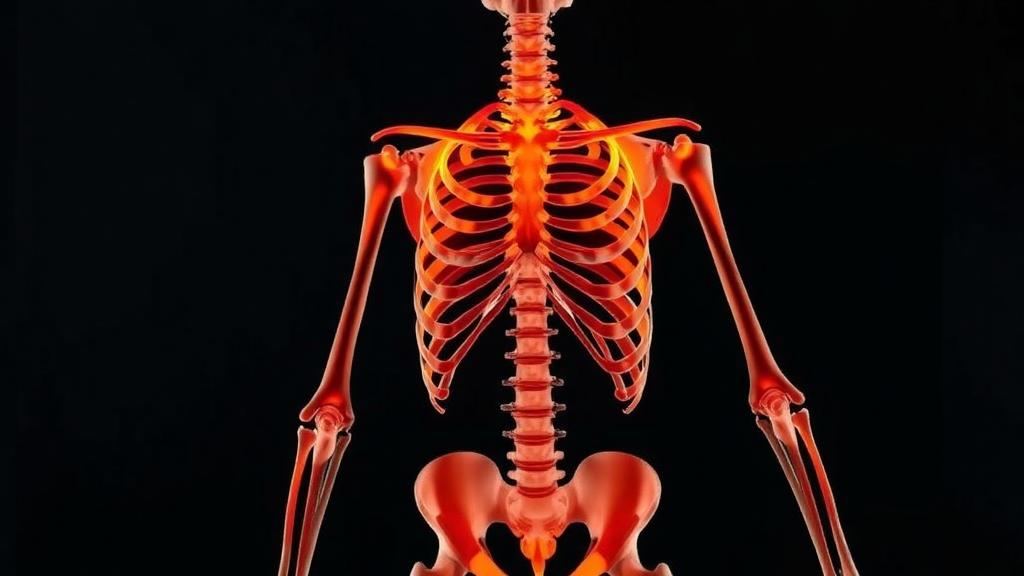
When a human body burns, the skeleton does not simply blacken and crack at random. It undergoes a sequence of structural and chemical transformations that forensic anthropologists have spent decades learning to read, and a new systematic review published in the International Journal of Legal Medicine has now pulled that scattered knowledge into a single, evidence-based picture. Nimet Cevahiroglu of Ankara University’s Institute of Forensic Sciences and Arda Buyuksungur of Ankara University’s Faculty of Dentistry systematically combed the literature on heat-induced alterations in human bone, following the PRISMA 2020 reporting guidelines and restricting their analysis to studies of thermally altered human skeletal remains while excluding animal and archaeological material. Their conclusion is both reassuring and cautionary: fire leaves predictable fingerprints on bone, but reading those fingerprints correctly depends on far more than temperature alone.
The review’s central finding is that thermal exposure produces a recognizable progression of macroscopic and microscopic changes. As heat intensifies, bone shifts in color from brownish and blackened hues toward gray, then chalky white as organic components burn away and the mineral phase calcines. Alongside this chromatic journey come shrinkage, warping, and a characteristic suite of fractures. These changes are not governed by peak temperature alone. The authors emphasize that oxygen availability, the duration of combustion, and the overall burning conditions all shape the final appearance of the remains, which helps explain why two bodies exposed to the same nominal fire can emerge with markedly different skeletal damage.
That multi-factorial picture matters because forensic anthropologists routinely try to reconstruct fire circumstances from burned remains. Color, for instance, has long been treated as a rough thermometer, and the review highlights work using spectrophotometric and colourimetric analysis to make that assessment more objective. Studies cited in the review measured bone color quantitatively to estimate the temperature of exposure in cortical and medullary bone, while other research examined how prolonged heating affects both color and crystallinity. The mineral crystals of bone grow and reorganize as heat destroys the collagen scaffold, and techniques such as FTIR-ATR spectroscopy and X-ray diffraction can track those crystal-size changes, offering a chemical complement to visual inspection.
The microscopic scale tells an equally important story. Histological studies of heated compact bone, including work on human rib tissue, show that the microstructure of bone degrades in ways that can interfere with established methods of age estimation, which often rely on examining bone remodeling features under the microscope. The review notes that research has tested whether histological age estimation remains viable in burned ribs, and that the survival of age-at-death diagnostic features under heat is a genuine concern. One cited study found that heat-induced changes affect the skeletal features used for age-at-death estimation, underscoring that fire does not merely damage bone superficially but can erase or distort the very markers anthropologists depend upon.
Warped and shrunken bone poses a parallel problem for the biological profile, the set of estimates covering age, sex, ancestry, and stature that anchors identification efforts. The review draws on experimental work showing that heat-induced dimensional changes in bone have direct consequences for metric analysis, since measurements taken after burning no longer match the pre-burning skeleton. Yet the news is not uniformly grim. Studies on osteometric sex determination of burned remains and performance tests of stature estimation methods in burned skeletal material, including a Portuguese population sample, suggest that metric approaches can still perform usefully when their limitations are understood. Research into the pre-burning condition of remains aims to correct for shrinkage and distortion, effectively reconstructing what the skeleton looked like before the fire.
Perhaps the most forensically charged question the review addresses is trauma analysis: can investigators still distinguish a perimortem fracture, inflicted around the time of death, from a fracture caused by the fire itself? The literature assembled here says it is sometimes possible, though never straightforward. Classic work on differentiating traumatic from heat-related fractures established diagnostic criteria, and more recent studies have tested the differentiation of mechanical versus thermal damage as causes of bone fractures. Researchers have examined whether cranial perimortem fractures remain identifiable in cremated remains, whether perimortem traits survive on burnt long bones, and even whether dismemberment-related toolmarks and pre-existing ballistic trauma can be detected after burning. The review’s verdict is that trauma examination remains feasible in some cases, but fragmentation and calcination may obscure the diagnostic features on which such determinations depend.
Underlying all of these applications is the basic material science of bone as a composite. Bone combines a flexible organic phase, dominated by collagen, with a stiff mineral phase of hydroxyapatite. Heat attacks both. Vibrational spectroscopy studies cited in the review explored how the collagen content of human bone influences heat-induced warping, capturing the idea that bone with more surviving collagen tends to deform by yielding rather than shattering. As temperatures rise, water and organic matter are driven off, the mineral recrystallizes, and the bone becomes brittle and calcined. Scanning electron microscope observations of incinerated human femoral bone documented these microstructural transformations in detail, and comparative work on burning under oxidizing versus reducing conditions showed that the chemical atmosphere of the fire itself leaves detectable signatures in the bone.
The review also situates burned-bone analysis within the broader operational world of fatal fire investigation. Forensic anthropologists are increasingly involved in the search and recovery of victims from structure fires and wildland fires, and in disaster victim identification, where burned and fragmented remains are common. Studies on the degree of bodily destruction relative to the duration of the fire, and postmortem computed tomography findings of thermal bone injuries in actual cases, illustrate how anthropological interpretation now intersects with imaging and fire-science expertise. Classification systems that categorize thermal damage by body segment aim to standardize how investigators document and communicate burn patterns, and experimental work on accidental versus deliberate burning scenarios explores whether bone can reveal whether a fire was intentional.
What emerges from the systematic review is a discipline maturing toward methodological self-awareness. The authors conclude that the effects of thermal alteration vary according to the component of the biological profile being assessed, the methods employed, and the degree of skeletal preservation, a formulation that effectively warns against one-size-fits-all interpretation of burned remains. Understanding the mechanisms of heat-induced skeletal change, they argue, improves the examination of burned human remains and supports more reliable forensic anthropological analysis in fire-related investigations. For a field whose conclusions can shape criminal prosecutions and identification of fire victims, that mechanistic grounding is not academic luxury. It is the difference between reading the skeleton’s fiery testimony accurately and mistaking the fire’s own handiwork for evidence of violence.
Subject of Research: Heat-induced structural and chemical alterations of human skeletal remains and their implications for forensic anthropological analysis
Article Title: Thermal alteration of skeletal remains in forensic anthropology: a systematic review
Article References: Cevahiroglu, N., & Buyuksungur, A. (2026). Thermal alteration of skeletal remains in forensic anthropology: a systematic review. International Journal of Legal Medicine. https://doi.org/10.1007/s00414-026-03995-8
Image Credits: AI Generated
DOI: 10.1007/s00414-026-03995-8
Keywords: forensic anthropology, burned bone, thermal alteration, calcination, biological profile, trauma analysis, heat-induced fractures, bone color, systematic review, fire investigation, age estimation, shrinkage
Cite Scienmag News
Ophelia Keating. (October 4, 2026). How Fire Rewrites Bone: Systematic Review Maps Heat Damage in Human Skeletons. Scienmag. https://scienmag.com/how-fire-rewrites-bone-systematic-review-maps-heat-damage-in-human-skeletons/
Ophelia Keating. "How Fire Rewrites Bone: Systematic Review Maps Heat Damage in Human Skeletons." Scienmag, 4 October 2026, https://scienmag.com/how-fire-rewrites-bone-systematic-review-maps-heat-damage-in-human-skeletons/. Accessed 4 October 2026.
Ophelia Keating. "How Fire Rewrites Bone: Systematic Review Maps Heat Damage in Human Skeletons." Scienmag. October 4, 2026. https://scienmag.com/how-fire-rewrites-bone-systematic-review-maps-heat-damage-in-human-skeletons/


