

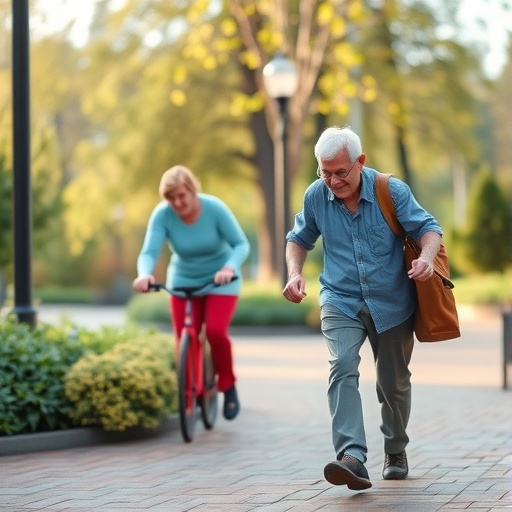
In the realm of geriatric research, a compelling study by Wang, Mao, and Wang sheds light on the intricate relationship between environmental factors and life-space mobility in community-dwelling older adults. Life-space mobility, defined as an individual’s ability to move and engage in activities within various environments, is critical for maintaining independence and overall quality of life in seniors. As the global population ages, understanding the variables that influence life-space mobility becomes increasingly important, given its profound implications for health outcomes and societal engagement among older adults.
The researchers begin by outlining the theory that the external environment—comprising both physical and social elements—plays a pivotal role in shaping life-space mobility. Deteriorating physical spaces such as inaccessible buildings, poorly maintained streets, or a lack of recreational areas can significantly hinder mobility, particularly for older adults with mobility limitations. Conversely, well-designed, accessible environments can facilitate movement and encourage engagement in community activities, thereby supporting better physical and mental health outcomes.
Moreover, the researchers highlight intrinsic capacity as a potential mediator in this relationship. Intrinsic capacity refers to an individual’s physical and mental capabilities, encompassing aspects such as strength, balance, cognitive function, and emotional well-being. The interplay between intrinsic capacity and the external environment is vital, as a supportive environment can enhance intrinsic capacity while a challenging one can diminish it. Understanding this nexus provides opportunities for designing interventions that effectively promote mobility and independence.
In their comprehensive examination, Wang and colleagues utilize a robust methodological framework to analyze data collected from a diverse cohort of community-dwelling older adults. Their approach involves quantitative measures of mobility, alongside assessments of environmental attributes and individual intrinsic capacity. By employing advanced statistical techniques, the research aims to elucidate the connections among these complex variables, paving the way for actionable insights that can inform policymakers and urban planners.
The findings of this research are particularly timely, given the ongoing urbanization trends and the pressing need for age-friendly communities. The implications extend beyond mere academic interest; they hold significant potential for shaping public health policies aimed at enhancing the well-being of older adults. As city planners grapple with the challenges of accommodating aging populations, insights from this study could inform strategies for creating more accessible urban environments that promote mobility and, by extension, a higher quality of life.
Furthermore, the study underscores the necessity of interdisciplinary collaboration in addressing the challenges faced by older adults. By integrating perspectives from gerontology, urban design, public health, and social work, stakeholders can develop a holistic approach to fostering environments that enhance life-space mobility. Such collaboration might involve engaging with older adults themselves to better understand their experiences and needs, which can inform subsequent policy initiatives.
While the research presents a substantial body of evidence linking the external environment to life-space mobility through intrinsic capacity, it also invites further investigation into the roles of additional factors such as social support and cultural norms. The interplay of these elements with mobility underscores a multifaceted approach to understanding how seniors navigate their environments. Future studies might explore how different social dynamics influence the relationship between environment and mobility, providing a richer understanding of the lived experiences of older adults.
As the study concludes, it emphasizes the urgent need for interventions that address both environmental improvements and the enhancement of intrinsic capacity among older adults. By investing in community resources and programs that promote physical activity and social engagement, we stand to improve life-space mobility on a larger scale. This initiative could manifest through programs that encourage outdoor activities, provide transportation options, or create community centers that serve as hubs for social interaction.
In essence, the research by Wang et al. paves the way for a paradigm shift in how we approach the concept of aging in place. Emphasizing life-space mobility as a crucial determinant of quality of life challenges traditional views that often focus solely on medical outcomes. Understanding older adults not merely as patients but as active participants in their communities calls for a reimagining of the infrastructure that supports their daily lives.
As we move forward, it becomes vital to harness the insights from this research to enact meaningful change within our communities. By prioritizing age-friendly designs and fostering environments that support mobility, society can not only improve the quality of life for older adults but also benefit from their contributions to community life. After all, vibrant, engaged older residents enhance the social fabric of our neighborhoods and cities, exemplifying the value of intergenerational connections.
In summary, Wang, Mao, and Wang’s findings illuminate a path toward improved life-space mobility for community-dwelling older adults. By recognizing the significant role of the external environment and intrinsic capacity, we can take proactive steps to create accessible, supportive spaces that facilitate active aging. With an aging population and increasing life expectancy, this research is not just timely, but essential for a society that seeks to value and uplift its senior members.
Through such impactful research, we not only gain a better understanding of the dynamics at play concerning older adults’ mobility but can also leverage this knowledge to design interventions that foster healthier, more engaged communities. Embracing the findings from Wang and colleagues, we stand at the precipice of a movement that prioritizes the well-being of older adults and values their place in our communities.
Thus, as we reflect on the implications of this significant research, we are reminded of the crucial intersection between environment, capacity, and mobility in aging. It invites us to be advocates for change, driving efforts that can help ensure that all seniors can navigate their world with confidence and autonomy, participating fully in the rich tapestry of community life.
Subject of Research: The relationship between external environment and life-space mobility in older adults.
Article Title: Associations of external environment with life-space mobility among community-dwelling older adults: the potential mediating role of intrinsic capacity.
Article References:
Wang, G., Mao, S. & Wang, Z. Associations of external environment with life-space mobility among community-dwelling older adults: the potential mediating role of intrinsic capacity.
BMC Geriatr (2026). https://doi.org/10.1186/s12877-026-07050-4
Image Credits: AI Generated
DOI:
Keywords: Life-space mobility, environmental factors, intrinsic capacity, older adults, community-dwelling, age-friendly design, public health, urban planning.


