

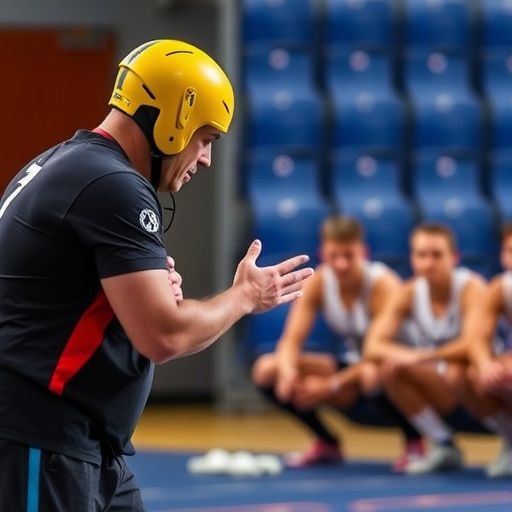
In the evolving landscape of athletic performance, the psychological dimensions that underlie an athlete’s perception of their own capabilities have garnered increasing attention. Recent research sheds light on how coaching behaviors, psychological safety, self-efficacy, and resilience intertwine to shape these perceptions, revealing complex dynamics that could redefine training and performance paradigms in the sports world. This comprehensive exploration not only underscores the critical role of mental frameworks in athletic success but also proposes novel pathways for enhancing athlete development through targeted psychological interventions.
Central to this investigation is the concept of performance perception, which refers to how athletes internally evaluate their abilities and outcomes during competitive and practice scenarios. Such self-assessment is not merely a reflection of actual performance but is deeply influenced by psychological factors that either bolster or undermine confidence. The study emphasizes that coaching behaviors—ranging from supportive and constructive feedback to authoritarian and critical approaches—have a profound influence on these perceptions, often serving as catalysts or barriers to an athlete’s mental resilience and motivation.
Psychological safety emerges as a pivotal factor within this dynamic. Originally conceptualized in organizational psychology, psychological safety in sports contexts refers to an athlete’s sense of being able to take interpersonal risks, make mistakes, and express concerns without fear of negative consequences. This environment of acceptance and trust encourages experimentation, learning, and ultimately, higher performance. The research elucidates how athletes who perceive a high level of psychological safety under their coaches are more likely to report positive performance perceptions and maintain motivation under pressure.
Self-efficacy, another cornerstone of this psychological matrix, relates to an individual’s belief in their capacity to execute specific tasks successfully. This construct influences goal-setting, effort expenditure, and persistence. The research highlights that coaching strategies emphasizing mastery experiences and verbal persuasion significantly enhance athletes’ self-efficacy. Furthermore, the interplay between self-efficacy and resilience—the ability to recover from setbacks—forms a feedback loop reinforcing an athlete’s overall psychological robustness and shaping their ongoing performance perception.
The nuanced role of resilience is particularly noteworthy, as it mediates the impact of coaching behaviors on performance perception. Athletes equipped with higher resilience interpret critical feedback less detrimentally and are better equipped to utilize it constructively. This psychological fortitude not only buffers against stress-induced performance decrements but also fuels adaptive coping mechanisms that sustain engagement and optimism in the face of adversity, as detailed in the study.
Methodologically, this research employed a mixed-methods approach, combining quantitative assessments through validated psychological scales with qualitative interviews to capture rich subjective experiences from a diverse cohort of athletes across multiple sports disciplines. Such a comprehensive strategy enabled the identification of subtle yet significant patterns linking coaching behaviors with shifts in psychological safety, self-efficacy, and resilience, culminating in variations in performance perception.
One of the groundbreaking revelations of this work is the identification of specific coaching behaviors that consistently promote positive psychological outcomes. These include demonstrating empathy, providing clear and consistent feedback, fostering autonomy-supportive environments, and openly acknowledging athletes’ emotional experiences. When coaches engage in these behaviors, athletes report increased trust and feel psychologically safer, which in turn enhances their self-efficacy and resilience capacities.
The implications extend beyond individual athlete development to organizational strategies within sports teams and institutions. Encouraging coaching education programs to integrate psychological principles could revolutionize traditional training paradigms. By prioritizing psychological safety and resilience-building, sports organizations might not only improve performance outcomes but also support athletes’ mental health and career longevity.
Moreover, the study’s findings resonate profoundly in high-stakes competitive environments, where performance pressure can exacerbate psychological vulnerabilities. Athletes in such contexts often face an intricate balancing act between striving for excellence and managing stress. The demonstrated importance of coaching behaviors in cultivating a supportive psychological milieu suggests that targeted interventions at the coaching level could mitigate anxiety and burnout risks, facilitating sustainable peak performance.
In the realm of athlete-coach relationships, the research advocates for an evolution from directive to collaborative models. Such models acknowledge athletes as active agents in their development, where open communication and mutual respect underpin the coaching process. This shift aligns seamlessly with contemporary sports psychology principles advocating for empowerment over control, aligning with broader societal trends valuing psychological well-being.
The interaction effects identified between self-efficacy and resilience also suggest that psychological training programs aimed at athletes should adopt multifaceted approaches. Enhancing self-belief is crucial, but fostering resilience ensures that this belief is maintained under duress. Training in stress management, cognitive reappraisal, and emotional regulation could thereby act synergistically to fortify athletes’ mental frameworks, promoting more accurate and positive performance perceptions.
Additionally, technological advances in monitoring psychological states, such as wearable sensors and AI-driven mood assessment tools, might be integrated with these insights, offering real-time feedback to coaches and athletes. This could enable dynamic adjustment of coaching strategies tailored to individual psychological profiles, optimizing mental preparedness alongside physical training.
Critically, the research acknowledges the variability across sports and individual differences, emphasizing that psychological interventions must be context-specific. What promotes psychological safety and self-efficacy in team sports may differ from individual disciplines, necessitating adaptive approaches that consider the unique demands and cultures inherent in various athletic domains.
Furthermore, longitudinal studies emerging from this research trajectory could elucidate how these psychological dynamics evolve over athletes’ careers, potentially identifying critical periods for intervention. Early identification of maladaptive coaching interactions or low psychological safety might prevent long-term performance deficits and attrition from sports.
In conclusion, this pioneering research illuminates the intricate psychological underpinnings that shape how athletes perceive their performance. By meticulously mapping the influences of coaching behaviors, psychological safety, self-efficacy, and resilience, it offers a comprehensive framework for enhancing athletic development. These insights hold transformative potential for coaching methodologies, athlete support systems, and the broader sports industry, promising not only improved performance but a more holistic approach to athlete well-being and sustainable success.
Subject of Research: Psychological dynamics influencing performance perception in athletes, focusing on coaching behaviors, psychological safety, self-efficacy, and resilience.
Article Title: Psychological dynamics shaping performance perception in athletes: the influence of coaching behaviours, psychological safety, self-efficacy, and resilience.
Article References:
Sakallı, D., Şenel, E., Menteş, G. et al. Psychological dynamics shaping performance perception in athletes: the influence of coaching behaviours, psychological safety, self-efficacy, and resilience. BMC Psychol (2026). https://doi.org/10.1186/s40359-025-03853-z
Image Credits: AI Generated


