


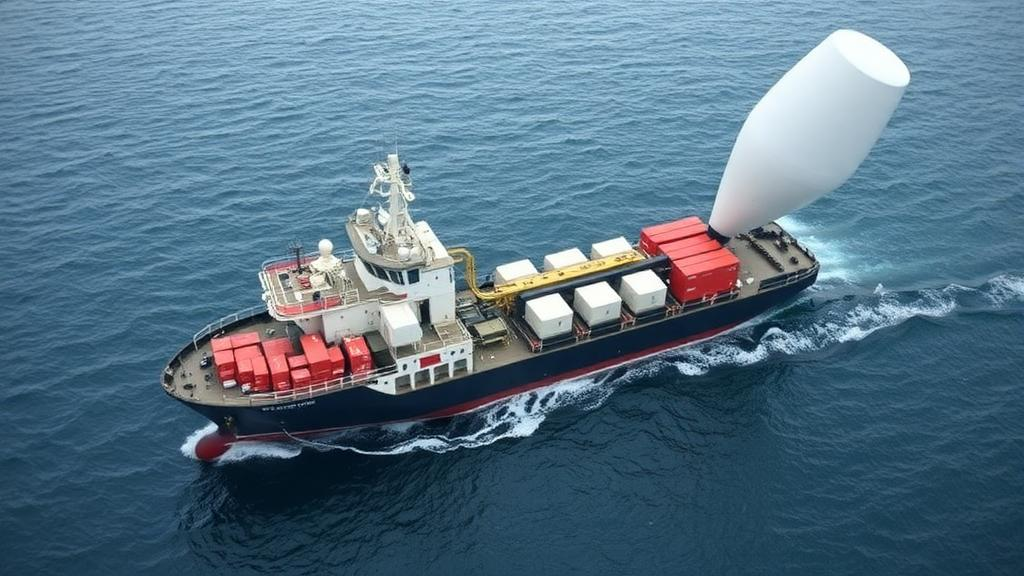
Maritime transport carries the largest share of international trade, moving almost every type of product between continents with a cost efficiency that no other mode can match. Yet even as ship design, navigation technology, and safety regulation have advanced, accidents at sea remain a stubborn safety problem, claiming lives, damaging property, disrupting operations, polluting the environment, and harming marine ecosystems. A new systematic review published in Frontiers in Marine Science argues that the field’s most influential accident-analysis tool, the Human Factors Analysis and Classification System, or HFACS, has quietly undergone a transformation, evolving from a simple classification scheme into the backbone of predictive, system-oriented maritime safety science.
HFACS was born in aviation. Developed from James Reason’s Swiss Cheese Model, it organizes human error into four hierarchical levels: unsafe acts, preconditions for unsafe acts, unsafe supervision, and organizational influences. The logic is deceptively simple. A navigator’s decision error is rarely the true cause of a collision; it is the visible endpoint of a chain that runs upward through fatigue, poor communication, inadequate supervision, and ultimately organizational and regulatory failures. Because the framework is systematic and hierarchical, researchers have repeatedly adapted it to new domains, and the sea has proven to be one of its most fertile testing grounds.
The new review, led by Fehmi Yasin İnan and colleagues at Karadeniz Technical University and Recep Tayyip Erdoğan University in Türkiye, followed the PRISMA 2020 guidelines to systematically map how HFACS has been used in maritime research. The team searched both Web of Science and Scopus, screening records down to 60 eligible studies in each database. Cross-matching by title revealed that 55 studies appeared in both databases, with five unique to each, yielding a combined evidence base of 65 unique studies. The authors then applied content analysis and bibliometric mapping using VOSviewer, examining publication trends, geographic distribution, keyword co-occurrence, citation networks, and the analytical methods paired with HFACS.
The bibliometric picture shows a field that has accelerated sharply. Publication activity was limited between 2009 and 2018, but a clear increase began in 2019, peaking with nine publications in 2024 and remaining high in 2025 and 2026. Geographically, the literature is heavily concentrated: China leads with 28 publications, followed by Türkiye with 17, while most other countries contribute only one or two studies. This concentration, the authors note, limits confidence that the field’s findings transfer unchanged to other regulatory, training, and safety-culture environments.
The citation network reveals the intellectual foundations of the field. The most cited publication is Christine Chauvin and colleagues’ 2013 analysis of collisions at sea using HFACS, with 465 citations in Web of Science and 568 in Scopus. Close behind are Metin Çelik and Selçuk Cebi’s 2009 paper introducing analytical HFACS for shipping accidents, with 242 citations, and Shih-Tzung Chen and colleagues’ 2013 study that launched HFACS-MA, a maritime-specific adaptation, with 219 citations. Among authors, Wang Jin tops the citation rankings in both databases, followed by Özkan Uğurlu, Ma Xiaoxue, and Metin Çelik. Notably, the two databases produced nearly identical keyword rankings—nine of the ten most frequent keywords were shared—but their citation-network structures differed, with Web of Science showing denser direct citation links than Scopus.
Perhaps the most striking finding is how far maritime HFACS research has drifted from the original taxonomy. The original HFACS model remains the most used approach, appearing in 28 of the reviewed studies, but a proliferation of maritime-specific adaptations has emerged: HFACS-MA for general maritime accidents, HFACS-PV for passenger vessels, HFACS-Coll for collisions, HFACS-GT for grounding, and even specialized versions for icebreaker operations, remote-controlled autonomous ships, and maritime surface ship systems. The authors caution that this proliferation creates a comparability problem, since the same causal mechanism may be attributed to different categories across studies, and they call for transparent reporting of modifications and traceability to the original taxonomy.
Equally significant is the methodological hybridization now underway. Bayesian Networks are the most common companion to HFACS, appearing in 17 studies, followed by Association Rule Mining with 7. Researchers have also combined HFACS with fuzzy logic, DEMATEL, the Analytic Hierarchy Process, Structural Equation Modeling, System-Theoretic Process Analysis, fault tree analysis, and machine learning. This shift means HFACS is no longer merely a retrospective coding tool; it increasingly serves as the structural layer of probabilistic models that can quantify dependencies among causal factors, identify recurring combinations, and support scenario-based risk estimation. The authors emphasize, however, that such predictive applications remain sensitive to the quality and consistency of the underlying HFACS coding, demanding transparent category definitions, reproducible protocols, and validation against independent datasets.
Analysis of the ten most-cited studies reveals the multilevel nature of maritime accident causation. Decision errors and regulation violations, such as inappropriate lookout under COLREG Rule 5 and unsafe speed under Rule 6, appear at the Unsafe Acts level, while fatigue-related grounding risk, inadequate manning, and efficiency pressure surface at the Preconditions and Organizational Influences levels. Mitigation strategies mirror this hierarchy, spanning Bridge Resource Management training, improved watchkeeping arrangements, redesigned safety management systems, stronger regulatory enforcement, and organizational safety culture. The message is clear: maritime accidents cannot be reduced to individual blunders, and prevention must address the entire sociotechnical system in which operators are embedded.
The review also identifies emerging frontiers. Studies of Maritime Autonomous Surface Ships, or MASS, are beginning to appear, with researchers developing modified HFACS frameworks for remote-control failure that account for stress, mental fatigue, information overload, cognitive biases, and automation complacency. As automation reassigns rather than removes human responsibility, the authors argue that conventional HFACS categories may need extensions for remote supervision, interface design, and distributed decision making. Database-specific studies further enrich the picture, introducing combinations with Credal Networks, FMEA, evidential reasoning, and CASMET/STAMP across contexts ranging from marine pilotage to Indonesian passenger-ship capsizing.
Looking forward, the authors argue that the most useful next step is not to generate further HFACS variants but to improve transparent taxonomy mapping, coding reliability, external validation across countries and vessel types, and integration with probabilistic and data-driven models tested on independent accident datasets. The evidence assembled in this review supports prevention approaches that treat operator behavior as part of a broader system encompassing supervision, organizational processes, safety management, technology design, and regulatory oversight. In an era of autonomous shipping and intensifying global trade, understanding how human and organizational factors interact across every level of the maritime system has never been more urgent.
Subject of Research: Applications of the Human Factors Analysis and Classification System in maritime accident research
Article Title: Applications of HFACS in maritime accident research: a systematic review and bibliometric analysis
Article References: İnan, F. Y., Bal, A., Dal, Ö., & Altınpınar, İ. (2026). Applications of HFACS in maritime accident research: a systematic review and bibliometric analysis. Frontiers in Marine Science, 13, Article 1978638. https://doi.org/10.3389/fmars.2026.1978638
Image Credits: AI Generated
DOI: 10.3389/fmars.2026.1978638
Keywords: HFACS, maritime accidents, human factors, systematic review, bibliometric analysis, Bayesian networks, maritime safety, accident causation, autonomous ships, safety management, Applications, maritime
Cite Scienmag News
Violet Maxwell. (October 16, 2026). How a Human Error Framework Is Rewriting Maritime Accident Science. Scienmag. https://scienmag.com/how-a-human-error-framework-is-rewriting-maritime-accident-science/
Violet Maxwell. "How a Human Error Framework Is Rewriting Maritime Accident Science." Scienmag, 16 October 2026, https://scienmag.com/how-a-human-error-framework-is-rewriting-maritime-accident-science/. Accessed 16 October 2026.
Violet Maxwell. "How a Human Error Framework Is Rewriting Maritime Accident Science." Scienmag. October 16, 2026. https://scienmag.com/how-a-human-error-framework-is-rewriting-maritime-accident-science/


