For a century and a half, the piano has stood in parlors, conservatories and school halls as both a musical instrument and a social instrument. A new historical study argues that the way piano was taught between 1850 and 2000 offers an unusually clear record of how societies negotiated one of their deepest tensions: the balance between institutional discipline and individual expression. Drawing on pedagogical texts, institutional records, competition programs and cultural commentary, researchers Baiyu Chen and Rongyi Tang of Baoshan University trace piano education across four distinct eras, finding that each generation of teachers and students reimagined the boundaries of personal autonomy within the practice room. The piano lesson, the study suggests, was never only about music. It was a small, weekly rehearsal of society’s ideas about authority, obedience, science, ideology and selfhood.
The research, published in Humanities and Social Sciences Communications, frames piano pedagogy as both a mirror and a mechanism of social transformation. As a mirror, teaching methods reflected the values of the societies that produced them; as a mechanism, the daily routines of scales, etudes and examinations actively trained people into those values. The authors describe a persistent dialectic between technical standardization and artistic individualism. Every era of piano education, they find, had to decide how much conformity to demand and how much self-expression to permit, and those decisions tracked broader negotiations between institutional authority and individual agency far beyond the music studio.
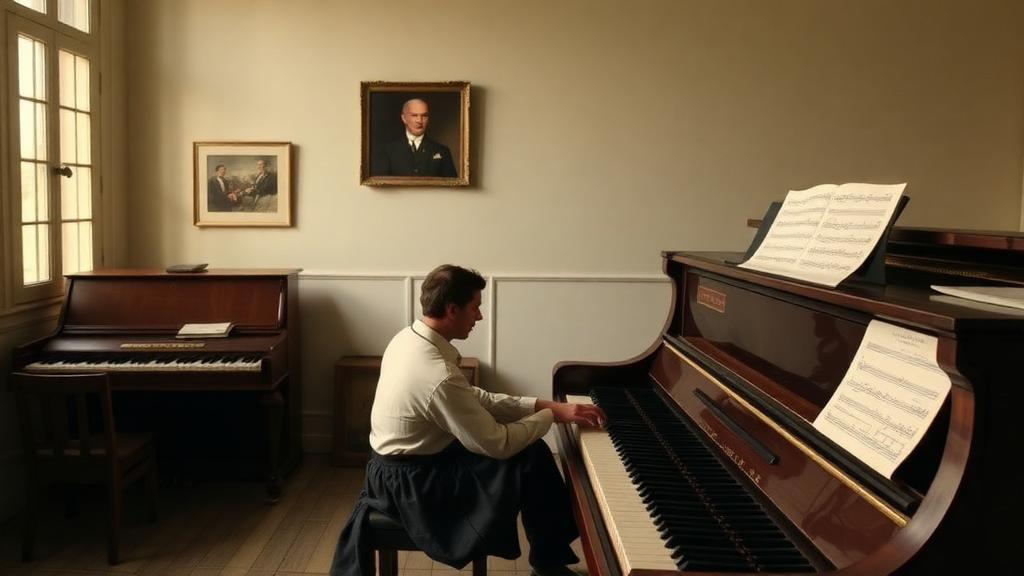
The first period the study identifies, from 1850 to 1900, is characterized as Victorian-era mechanical discipline. In this era, piano teaching emphasized drill, repetition and bodily control. Pedagogical texts of the period treated the hands and fingers as mechanisms to be trained through systematic exercises, with correct posture, finger independence and metronomic regularity presented as moral goods in themselves. The authors connect this approach to the industrial culture of the nineteenth century, in which disciplined labor, punctuality and self-regulation were prized attributes of the respectable middle class. Learning piano was a marker of social standing, and the rigorous, mechanical character of the training reinforced existing social hierarchies. The conservatory and the parlor both functioned as sites where class identity was reproduced, one disciplined student at a time.
Yet even within this regime of mechanical discipline, the study identifies the seeds of a countercurrent. The very act of performing required the student to project feeling, to interpret a composer’s intentions and to display a cultivated sensibility. The tension between the drill of the exercise book and the expressiveness demanded at the recital created a space in which students and teachers negotiated what individual agency could look like inside a framework of strict institutional conformity. The authors argue that this negotiation, repeated in thousands of lessons across the second half of the nineteenth century, made piano education a conservative force that reinforced hierarchy and a progressive medium that opened room for personal expression at the same time.
The second period, from 1900 to 1950, brought scientifically informed modernist approaches. The study shows how the rise of psychology, physiology and systematic pedagogy reshaped piano teaching. Methods became more analytical, drawing on emerging ideas about motor learning, attention and child development. The mechanical drill of the Victorian era did not disappear, but it was reorganized around scientific principles: efficiency of motion, the psychology of practice, and the individual differences of learners. The authors read this shift as part of the broader modernist faith that science could rationalize and improve every domain of life, including the most intimate practices of artistic training. The authority of the teacher was no longer grounded only in tradition and moral standing but in expertise validated by scientific knowledge.
This modernist turn also changed the terms of the old dialectic. If the nineteenth-century lesson had disciplined the body as an industrial machine, the early twentieth-century lesson increasingly aimed to understand and optimize the individual mind and body. The study finds that this opened new space for expressive freedom, since teaching that took the learner’s psychology seriously also took the learner’s individuality seriously. At the same time, scientific standardization created its own forms of control, as graded curricula, standardized examinations and codified methods extended institutional authority into more corners of musical life. The negotiation between conformity and autonomy did not end; it simply moved to new ground, with science as the arbiter.
The third period, from 1950 to 1980, is characterized by Cold War cross-cultural exchanges. Here the study shows piano education becoming entangled with geopolitics. International competitions, touring virtuosos and the circulation of national schools of playing turned the piano into a stage on which ideological rivals displayed cultural achievement. The authors analyze competition programs and cultural commentary from the era to show how pianistic excellence was framed as evidence of the vitality of competing social systems. Pedagogical traditions crossed borders as students traveled between Eastern and Western institutions, and teaching methods absorbed influences from multiple national lineages. The individual virtuoso, celebrated as a symbol of either collective achievement or heroic personal genius depending on the observer’s politics, became the focal point of the discipline-versus-expression dialectic on an international scale.
The fourth period, from 1980 to 2000, covers digital-era transformations. The study documents how electronic keyboards, digital recording, new media and changing patterns of consumption altered how piano was taught and learned. Digital tools made practice more self-directed and diversified access to musical training, loosening the monopoly of the traditional conservatory pathway. At the same time, the authors note, new technologies introduced new forms of standardization, from programmed accompaniments to quantified measures of progress. By the end of the twentieth century, the question that had structured piano education since 1850, how much freedom to allow within a framework of discipline, was being asked again in a digital vocabulary, with individual expression framed against algorithmic and commercial pressures rather than Victorian moral discipline or modernist scientific authority.
Across all four periods, the study’s central finding is the persistence of the dialectic itself. The specific content of the tension changed with each era, but the structure did not: piano education consistently manifested a negotiation between disciplinary control and expressive freedom. Successive generations, the authors write, reimagined the boundaries of personal autonomy within pedagogical frameworks, negotiating the scope for self-expression against the demands of institutional conformity. This continuity, they argue, is what makes piano pedagogy such a valuable historical record. Because the lesson combined technical training, aesthetic judgment and personal relationship in a single recurring ritual, it registered shifts in social values with a sensitivity that few other educational practices can match.
The broader significance of the research lies in its account of how aesthetic practices both reproduce and contest prevailing social values. Piano education, the study concludes, served simultaneously as a conservative force reinforcing social hierarchies and a progressive medium enabling cultural transformation. The same institution that trained compliant, respectable citizens also gave generations of students a language of feeling and a domain of personal achievement that could exceed, and sometimes subvert, the expectations of their teachers and societies. For anyone interested in how culture transmits power and possibility at the same time, the study suggests that the humble piano lesson, repeated weekly across three centuries of social change, deserves a place among the most revealing documents of modern life.
Subject of Research: Historical analysis of piano pedagogy from 1850 to 2000 as a reflection of changing social values
Article Title: Discipline and expression: piano education as a reflection of changing social values, 1850–2000
Article References: Discipline and expression: piano education as a reflection of changing social values, 1850–2000. (n.d.). https://doi.org/10.1038/s41599-026-09266-6
Image Credits: AI Generated
DOI: 10.1038/s41599-026-09266-6
Keywords: piano education, music pedagogy, social values, Victorian era, modernism, Cold War, digital transformation, cultural history, individual expression, institutional discipline, history of education, aesthetic practices
Cite Scienmag News
Courtney Benton. (October 12, 2026). How 150 Years of Piano Lessons Tracked the West’s Shifting Ideas of Freedom and Control. Scienmag. https://scienmag.com/how-150-years-of-piano-lessons-tracked-the-wests-shifting-ideas-of-freedom-and-control/
Courtney Benton. "How 150 Years of Piano Lessons Tracked the West’s Shifting Ideas of Freedom and Control." Scienmag, 12 October 2026, https://scienmag.com/how-150-years-of-piano-lessons-tracked-the-wests-shifting-ideas-of-freedom-and-control/. Accessed 12 October 2026.
Courtney Benton. "How 150 Years of Piano Lessons Tracked the West’s Shifting Ideas of Freedom and Control." Scienmag. October 12, 2026. https://scienmag.com/how-150-years-of-piano-lessons-tracked-the-wests-shifting-ideas-of-freedom-and-control/