

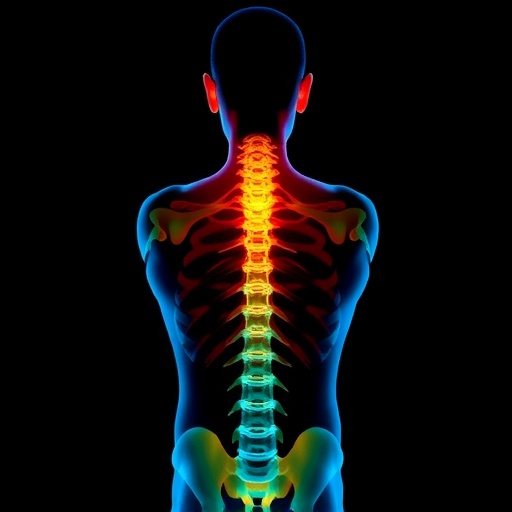
Contemporary advancements in spinal surgery have been transformative in enhancing patient outcomes, particularly through novel approaches combined with anabolic therapies. The recent study by Tominaga et al. sheds light on the impact of such combinatory strategies on vertebral health, specifically post spinal fusion surgery. The examination of changes through Hounsfield Units offers a nuanced window into the relationship between surgical intervention and bone quality. This pivotal study not only broadens the understanding of post-operative recovery but also introduces a sophisticated methodology for assessing bone density changes in surgical patients.
Spinal fusion surgery has long been considered a standard intervention for various spinal disorders, including degenerative disc disease, spinal stenosis, and spondylolisthesis. With surgical methodologies evolving, the integration of anabolic therapy represents a significant leap toward improving fusion success rates. Anabolic agents, primarily focused on stimulating bone formation, have shown promise in countering the adverse effects of bone loss that can occur post-surgery. The unique focus on Hounsfield Units, a radiological measurement derived from computed tomography (CT) scans, serves as a robust metric for evaluating bone density changes.
In this study, the researchers conducted a comprehensive evaluation of vertebrae pre- and post-surgery to assess how the Hounsfield Units varied after the application of anabolic therapy. This intricate process involved measuring the radiodensity of vertebral bodies at multiple intervals following the surgery, thereby allowing for a thorough analysis of the fusion effectiveness and overall bone health. Such assessments are crucial for understanding how the integration of anabolic agents influences bone remodeling and recovery during the post-operative phase.
The significance of Hounsfield Units lies in their ability to provide an objective measure of bone density. By employing this metric, the research overcomes traditional limitations in qualitative assessments of bone health, which often rely heavily on subjective interpretations. The study meticulously analyzed vertebral samples, noting both the baseline and post-operative Hounsfield Unit values. This quantitative approach not only bolsters the credibility of the findings but also paves the way for future research endeavors aimed at optimizing surgical recovery protocols.
Furthermore, the researchers posited that anabolic therapy could play an essential role in enhancing surgical outcomes. By facilitating greater osteoblastic activity, these therapies might reduce the risk of non-union and other complications associated with spinal fusions. The synergy between surgical techniques and pharmacological interventions could foster a paradigm shift in how spinal surgeries are approached, particularly in patients who may be at higher risk for poor bone healing.
The data reveal that patients who received anabolic therapy exhibited higher Hounsfield Unit values compared to their counterparts who did not receive such treatments. This indicates an improvement in bone density and, consequently, a more favorable healing environment for the spinal fusion site. Understanding the dynamic interplay between surgical interventions and systemic anabolic effects underscores the complexity inherent in managing spinal health and recovery.
Through their meticulous work, Tominaga et al. advocate for the application of Hounsfield Unit measurements as a standard practice in post-operative assessments of spinal patients. Not only does this methodology enhance clinical decision-making, but it also fosters a deeper comprehension of the biological processes occurring during the recovery phase. The implications of this research extend beyond immediate surgical outcomes, as improved understanding of post-operative bone changes can lead to enhanced long-term care strategies for spinal surgery patients.
The integration of advanced imaging techniques in conjunction with clinical practice serves as a crucial vector for innovation in spinal surgery. By harnessing the power of Hounsfield Units, healthcare providers can better tailor postoperative care, potentially reducing the incidence of complications while maximizing bone health. As research progresses, the hope is that these findings can be translated into standard clinical protocols, offering patients a more reliable path toward recovery and improved spinal function.
Moreover, this study sparks critical dialogue concerning the roles of anabolic therapy in broader orthopedic practices. While the focus herein is on spinal fusion, the principles may be extrapolated to other surgical contexts where bone healing is paramount. The successes observed in this cohort advocate for larger-scale trials and explorations into the viability of similar interventions across diverse surgical landscapes.
Looking ahead, it appears that the future of spinal surgery is not solely focused on surgical skill but equally on holistic patient care approaches that incorporate innovative pharmacological treatments. With the continued evolution in this field, healthcare professionals must remain cognizant of the collective benefits of combining robust surgical techniques with effective medical therapies to optimize patient outcomes.
In light of these compelling findings, ongoing research efforts must prioritize the exploration of additional anabolic agents and their potential impacts on bone health post-surgery. As the medical community becomes increasingly aware of the interdependencies between surgical and pharmacological interventions, novel hypotheses will undoubtedly emerge, driving further investigation into best practices for enhancing spinal health in patients.
Ultimately, the research conducted by Tominaga and colleagues elevates the narrative surrounding spinal fusion surgery and invites an expansive view of recovery that marries surgical precision with pharmacological innovation. By forging this partnership, the anticipation is to cultivate a future where spinal surgery patients not only recover optimally but also thrive in their post-operative journeys.
Subject of Research: Evaluation of vertebral changes post-spinal fusion surgery with anabolic therapy
Article Title: Vertebral changes evaluated by hounsfield units after spinal fusion surgery with concomitant anabolic therapy.
Article References: Tominaga, A., Wada, K. & Okazaki, K. Vertebral changes evaluated by hounsfield units after spinal fusion surgery with concomitant anabolic therapy. Arch Osteoporos 21, 10 (2026). https://doi.org/10.1007/s11657-025-01644-y
Image Credits: AI Generated
DOI: https://doi.org/10.1007/s11657-025-01644-y
Keywords: Spinal Fusion, Anabolic Therapy, Hounsfield Units, Bone Density, Recovery, Osteoporosis, Surgical Outcomes, Vertebral Health, Spine Surgery Innovation.


