


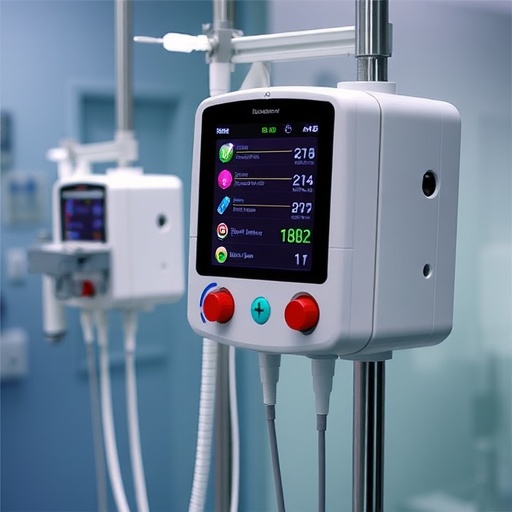
In the rapidly evolving landscape of modern healthcare, infusion pumps (IPs) have emerged as indispensable devices for the precise administration of medications and nutrients. Their critical role spans across diverse hospital settings including emergency rooms, intensive care units (ICUs), and pediatric wards. However, despite their vital function, these devices are not without significant risks. Failures in infusion pumps have been directly linked to adverse clinical outcomes, underscoring an urgent need for rigorous reliability assessment to safeguard patient health and optimize clinical workflows. A recent landmark study conducted in a Brazilian hospital provides a comprehensive analysis of the reliability and performance of these devices, leveraging advanced statistical modeling to inform maintenance strategies and improve operational safety.
This study undertook a detailed examination of infusion pump reliability by analyzing an extensive dataset derived from Clinical Engineering software intrinsic to the hospital’s internal maintenance records. Such a dataset encompassed repair times and failures across various hospital departments, which allowed researchers to carefully model the probability distributions governing device behavior. By focusing on time between failures (TBF) and time to repair (TTR), the study was able to derive crucial parameters such as device availability and reliability. This approach transcended basic failure counting, enabling predictive insights into when and where device failures are most likely to occur, and how swiftly they can be resolved.
One of the most striking observations from the analysis was the identification of the Intensive Care Unit, especially the Neurology section, as a hotspot of recurring failures and prolonged repair times. The ICU understandably houses a high density of infusion pumps given the acuity of patients, but this concentration also highlighted vulnerabilities in the maintenance and operational monitoring processes. The researchers noted that incomplete and vague failure descriptions in maintenance logs often complicated timely diagnosis and repair, contributing to longer downtime for critical devices. These findings advocate for enhanced documentation practices to facilitate proactive and precise interventions by clinical engineering teams.
The application of the Weibull distribution to model both TBF and TTR emerged as a pivotal aspect of the study. The Weibull model’s flexibility in characterizing failure rates and repair durations allowed the researchers to encapsulate complex reliability behaviors that traditional exponential or normal distributions might overlook. This probabilistic modeling revealed that certain infusion pump models, notably the IP A model, demonstrated superior reliability and availability metrics. Such differentiation among device models provides valuable insights for procurement decisions and prioritization of maintenance efforts focused on optimizing patient safety.
In addition to statistical rigor, the study underscored the importance of integrating reliability analysis into hospital asset management protocols. The ability to predict when infusion pumps are likely to fail enables clinical engineers to pre-schedule maintenance activities and reduce the risk of unexpected device downtime during critical patient care scenarios. Moreover, understanding repair time distributions informs resource allocation within maintenance teams, ensuring that bottlenecks do not exacerbate operational disruptions. Strategically, the findings support a shift towards data-driven maintenance policies that can enhance cost-effectiveness while improving device readiness.
Beyond the hospital setting, this case study exemplifies a broader global challenge surrounding medical device reliability and patient safety. Infusion pumps are among the most frequently reported devices involved in adverse event registries, not only in Brazil but worldwide. The insights derived from this study reinforce the universal imperative to prioritize continuous monitoring, thorough failure analysis, and predictive maintenance frameworks. As healthcare systems increasingly rely on complex medical technologies, the integration of reliability engineering principles becomes indispensable to mitigate risks and uphold standards of care.
The study’s meticulous approach also draws attention to the role of clinical engineering departments as critical mediators between technology and healthcare delivery. By harnessing data analytics and reliability modeling, these specialized teams can transform raw maintenance data into actionable intelligence. This enables targeted interventions that extend device lifespan, minimize unscheduled repairs, and ultimately enhance patient outcomes. Such interdisciplinary collaboration between engineers, clinicians, and administrators is foundational to advancing healthcare technology management.
Furthermore, the demonstrated advantages of the IP A infusion pump model suggest opportunities for manufacturers to refine device design based on empirical performance data. Reliability analysis can drive iterative improvements in hardware robustness, software stability, and user interface ergonomics. Hospitals, armed with such evaluations, can advocate for technology that aligns with their specific context, balancing performance, safety, and economic considerations. Ultimately, this fosters a competitive ecosystem incentivizing innovation in medical device quality.
The study also raises critical questions about data quality and completeness in clinical maintenance records. Vague or incomplete failure notes compromise the potential of advanced analytics and hinder diagnostics. Addressing this requires standardized failure reporting protocols, workforce training, and possibly automated data capture systems. Such enhancements can significantly amplify the benefits of reliability engineering by ensuring the integrity and granularity of input data.
Notably, while this research leveraged data from a single hospital, the methodologies employed are broadly applicable and scalable. Multicenter studies could aggregate larger datasets to refine models further and validate findings across diverse environments. Additionally, integration with real-time monitoring technologies, such as IoT-enabled pumps, could facilitate continuous reliability assessments and predictive alerts, pushing the frontier towards smart maintenance ecosystems.
This reliability analysis serves as a compelling reminder that technology alone does not guarantee safety—it is the synergy of rigorous engineering evaluation, robust data systems, and informed clinical practices that secures dependable medical device performance. In an era where patient safety, cost efficiency, and technological complexity intertwine, such interdisciplinary research provides a roadmap for healthcare institutions striving to mitigate risks associated with life-sustaining devices.
Ultimately, the ongoing quest to optimize infusion pump reliability encapsulates wider efforts to embed resilience within healthcare technology infrastructures. As hospitals globally seek to safeguard vulnerable patients against preventable device failures, adopting innovative reliability assessment techniques becomes not just beneficial, but essential. This study exemplifies how empirical, data-driven approaches can directly translate into improved patient care and institutional operational excellence.
By shining a critical light on the vulnerabilities inherent in infusion pump operations, especially within high-stakes hospital units, this research highlights the path forward. Emphasizing statistical rigor, quality data management, and model-based maintenance planning will equip healthcare providers with the tools to anticipate, prevent, and swiftly rectify device failures. In doing so, they uphold the promise of infusion technologies to deliver safe, precise, and uninterrupted therapeutic interventions.
Cite Scienmag News
Ophelia Keating. (May 9, 2025). Hospital Infusion Pumps: A Reliability Study. Scienmag. https://scienmag.com/hospital-infusion-pumps-a-reliability-study/
Ophelia Keating. "Hospital Infusion Pumps: A Reliability Study." Scienmag, 9 May 2025, https://scienmag.com/hospital-infusion-pumps-a-reliability-study/. Accessed 5 September 2026.
Ophelia Keating. "Hospital Infusion Pumps: A Reliability Study." Scienmag. May 9, 2025. https://scienmag.com/hospital-infusion-pumps-a-reliability-study/


