

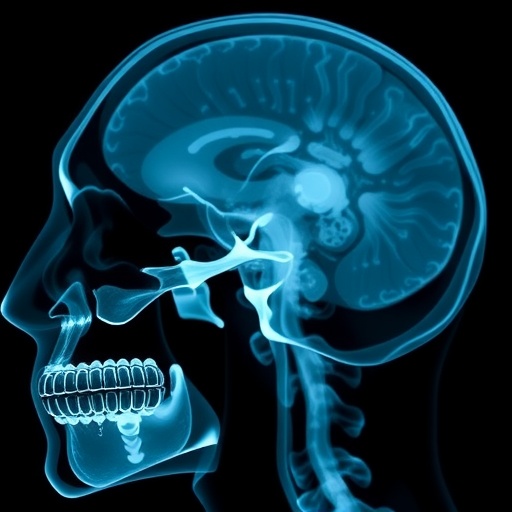
In the realm of medical imaging and scientific exploration, X-ray tomography stands as a cornerstone technique, instrumental in revealing the intricate architecture of objects ranging from human tissues to advanced materials. Despite its profound impact, the pursuit of pristine X-ray tomographic images has been relentlessly challenged by intrinsic limitations such as noise, artifacts, and degradation that can obscure critical details. Particularly under scenarios demanding low radiation doses or constrained data acquisition times, image quality degradation significantly hampers the reliability of subsequent analysis and diagnosis. Conventional restoration methodologies, while beneficial, have been encumbered by their dependence on modality-specific designs and rigid assumptions about the nature of image degradation, consequently restricting their broader applicability.
Breaking away from these limitations, a groundbreaking study by Chu, Y., Zhou, L., Luo, G., and colleagues introduces HorusEye, a pioneering self-supervised foundation model explicitly tailored to revolutionize image restoration in X-ray tomography. This model diverges from traditional paths by conceptualizing image restoration as the task of learning nonparametric, data-driven representations of degradation processes inherent to the image acquisition pipeline. Unlike preceding attempts that rely heavily on paired datasets and prior assumptions about noise models or artifact types, HorusEye harnesses a novel training paradigm that entirely dispenses with such constraints, instead leveraging the statistical and structural regularities present within massive unpaired datasets.
At the heart of HorusEye lies an innovative interslice contrastive pretraining strategy. This approach capitalizes on the inherent spatial coherence between adjacent tomographic slices, enabling the model to internally infer and separate structural features from degradative artifacts. By juxtaposing slices that represent similar anatomical or material structures yet exhibit varying levels of noise or distortion, HorusEye effectively learns priors that capture the underlying true signal and disentangles it from complex degradation phenomena. This methodological design allows the restoration model to be profoundly generalizable, addressing an array of imaging modalities and restoration challenges without explicit retraining or human intervention.
The scale at which HorusEye was trained is unprecedented, involving a dataset exceeding 100 million images across disparate modalities, anatomical regions, and experimental conditions. Such extensive training imbues the model with a remarkably robust understanding of the multifaceted manifestations of degradation, enabling it to restore images with a fidelity that transcends previous state-of-the-art techniques. Impressively, the model maintains consistent performance when applied to previously unseen imaging contexts, a testament to its foundational learning of structural and noise priors rather than superficial pattern recognition.
One of the most transformative implications of HorusEye lies in its capacity to enhance photon efficiency. In X-ray tomography, the balance between sufficient illumination and patient or sample safety is critical; lower dose acquisition reduces radiation exposure but often at the cost of compromised image quality. HorusEye demonstrates a profound ability to recover high-frequency details that are typically lost in low-dose acquisitions, thus preserving diagnostic and analytic value while adhering to safety constraints. This property heralds a new era where clinical and experimental protocols can be optimized for minimal exposure without sacrificing informative content.
Beyond dose reduction, HorusEye excels in recovering minute anatomical structures and features characterized by subtle intensity variations, often lost in traditional restoration pipelines. Clinical validation studies showcased within the research highlight significant improvements in detecting low-contrast lesions and subtle tissue differentiation, areas typically plagued by ambiguity under standard imaging conditions. Such advancements not only promise enhanced diagnostic confidence but also pave the way for more precise and earlier disease identification.
The versatility of HorusEye extends to its utility as a universally applicable postprocessing tool. Unlike task-specific algorithms that require adaptation for each unique imaging scenario, HorusEye’s foundation model approach enables seamless integration across diverse clinical and research environments. Whether in musculoskeletal imaging, oncology, or material science investigations, the model delivers superior restoration outcomes, facilitating more accurate quantitative analyses and improved downstream computational tasks such as segmentation and classification.
Methodologically, HorusEye’s reliance on self-supervised learning represents a paradigm shift in medical image restoration. By circumventing the need for meticulously curated paired training data—often scarce, expensive, or even impossible to obtain—the model democratises access to advanced restoration capabilities. The interslice contrastive training mechanism exploits the intrinsic three-dimensional coherence of volumetric imaging, leveraging natural data redundancies to extract meaningful priors. This innovation democratizes the ability to train powerful restoration models even in data-scarce environments, democratizing high-end interpretive capabilities.
The research team rigorously evaluated HorusEye against an array of established benchmarks and restoration techniques, including supervised deep learning models and traditional denoising algorithms. Across these comparative analyses, HorusEye consistently outperformed competitors, not only in quantitative metrics such as peak signal-to-noise ratio (PSNR) and structural similarity (SSIM) but also in qualitative assessments by expert radiologists and scientists. This dual validation underscores the model’s practical utility and readiness for real-world implementation.
From an engineering perspective, HorusEye’s architecture elegantly balances computational efficiency and modeling complexity. Designed to scale with increasing data volumes, the model utilizes optimized neural network components that handle volumetric data with reduced memory overhead and accelerated convergence rates. This scalability ensures practicality in deployment scenarios ranging from hospital imaging suites to large-scale research facilities, where computational resources and throughput demands vary widely.
Looking ahead, the implications of HorusEye extend beyond immediate restoration gains. The foundational priors it learns about structural and degradation characteristics in X-ray tomography could inform the design of future acquisition protocols and imaging hardware. For instance, adaptive scanning techniques that dynamically adjust exposure or angle acquisition might leverage these learned models to optimize image quality and data completeness in real time. Additionally, integrating HorusEye with computer-aided diagnosis systems could enhance algorithmic interpretations, leading to more reliable clinical decision support.
The societal impact of HorusEye is potentially vast. By improving low-dose imaging quality, it directly contributes to patient safety, reducing cumulative radiation risks associated with diagnostic imaging. Furthermore, its generalizability and self-supervised nature can catalyze widespread adoption in resource-constrained settings, where high-quality paired datasets are unattainable, yet accurate diagnostic imaging is critically needed. This democratization could bridge disparities in healthcare access and research innovation globally.
In summary, HorusEye represents a remarkable leap forward in X-ray tomography restoration by reframing the problem from a narrowly defined task into a comprehensive foundation model challenge. Its self-supervised training regime, enormous scope of data ingestion, and universal applicability mark it as a transformative technology with far-reaching implications. As it moves from research into clinical and industrial practice, HorusEye promises not only clearer images but also clearer pathways toward safer, more efficient, and more insightful imaging in science and medicine.
Subject of Research: X-ray tomography restoration through self-supervised foundation models.
Article Title: HorusEye: a self-supervised foundation model for generalizable X-ray tomography restoration.
Article References:
Chu, Y., Zhou, L., Luo, G. et al. HorusEye: a self-supervised foundation model for generalizable X-ray tomography restoration. Nat Comput Sci (2026). https://doi.org/10.1038/s43588-026-00973-3
Image Credits: AI Generated
DOI: https://doi.org/10.1038/s43588-026-00973-3


