


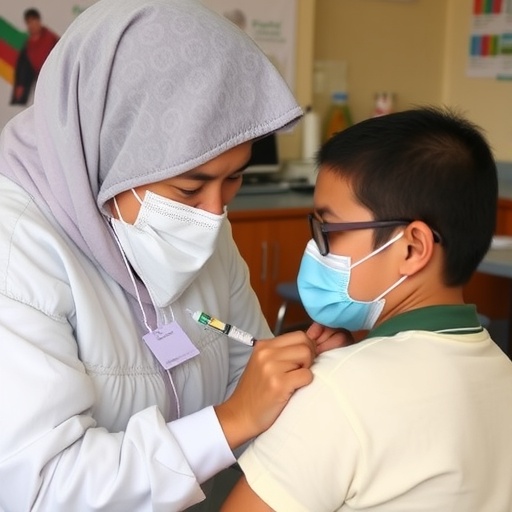
In recent years, public health experts have increasingly turned their attention to the complex and multifaceted barriers that impede childhood vaccination uptake in Indigenous populations. A landmark study led by Haight, Tremblay, Wood, and colleagues has shed new light on this critical issue by examining the effects of a culturally tailored home visiting program designed specifically for a First Nations community. Published in the upcoming 2025 issue of the International Journal for Equity in Health, the research offers compelling evidence that direct, community-sensitive interventions can dramatically improve vaccination rates among children in historically underserved groups.
The global challenge of achieving widespread childhood immunization is particularly pronounced within First Nations and other Indigenous populations. These communities often face a constellation of hurdles ranging from geographic isolation, systemic mistrust rooted in historical injustices, cultural dissonance with mainstream health services, and socioeconomic disadvantages. Each factor interlocks with the others, creating a formidable barrier to routine immunization efforts. Haight and colleagues’ study embraces this complexity by embedding intervention strategies within the community’s social fabric, emphasizing trust-building and cultural resonance.
At the heart of the intervention evaluated by the researchers is a home visiting program featuring trained healthcare providers, many of whom are Indigenous community members themselves. These professionals conduct regular visits to households with young children, providing vaccine education, addressing concerns in a culturally appropriate manner, and facilitating direct access to immunization services. This approach contrasts with the conventional model where families must navigate often impersonal clinical settings, which can be intimidating or logistically challenging.
The researchers employed a robust mixed-methods design, combining quantitative analyses of vaccine uptake data with qualitative interviews that captured parental attitudes and experiences. This comprehensive framework enabled the team to articulate not only the measurable improvements in immunization coverage but also the nuanced transformations in perception and trust that underpinned such gains. Statistical modeling revealed a significant increase in on-schedule vaccination rates following the implementation of the home visits, demonstrating the program’s efficacy over a standard care comparator.
Importantly, the qualitative components of the study unveiled that many parents initially harbored deep-seated reservations about vaccines, often linked to broader mistrust in government-run healthcare delivery. The home visitors, drawing upon shared cultural backgrounds and sustained relationship-building efforts, helped to dismantle misinformation and fears. Through empathetic dialogue, participants reported feeling empowered and respected, rather than coerced, which in turn fostered greater acceptance of childhood immunization protocols.
The study also highlighted logistical challenges that can hamper vaccination efforts in remote First Nations communities, such as inconsistent clinic hours, transportation difficulties, and language barriers. By bringing healthcare into the home environment, the intervention effectively mitigated these obstacles. This was particularly significant for families with limited mobility or childcare support, for whom clinic appointments can represent a major undertaking. The personalized, flexible scheduling of visits further contributed to enhanced vaccine adherence.
Beyond individual-level impacts, the research underscored a ripple effect within the community. As trust in the vaccine program grew, word-of-mouth endorsements from participating families led to wider community engagement. This phenomenon reflects the vital role of social networks in health behavior change, especially in tightly knit Indigenous societies where communal norms heavily influence personal decisions. The intervention thus not only increased vaccination rates directly but also seeded a broader cultural shift toward proactive immunization practices.
The authors contextualized their findings within a broader framework of equity-oriented healthcare delivery, arguing that interventions must dismantle structural barriers rather than expect marginalized populations to conform to rigid, standardized systems. This includes recognizing the historical traumas inflicted upon Indigenous peoples through forced assimilation and medical experimentation and responding with culturally affirming, community-led initiatives. The home visiting program exemplifies such an approach, prioritizing respect, agency, and collaboration.
From a policy perspective, this study furnishes a persuasive blueprint for scaling up culturally tailored interventions across diverse Indigenous contexts globally. Given the ongoing threats posed by vaccine-preventable diseases, especially in under-resourced regions, the ability to improve coverage through relatively low-cost, community-based programs offers a promising path forward. Policymakers are thus encouraged to allocate resources toward training Indigenous health workers and fostering partnerships that support home visiting schemes.
The interplay between public health goals and Indigenous sovereignty emerges as a critical theme. By empowering community members to lead vaccination initiatives rather than outsourcing to external providers, the program fosters a sense of ownership and self-determination. This empowerment is essential for sustainability, as it builds local capacity rather than dependencies. The research team advocates for continued support for Indigenous-led health governance as a cornerstone of effective immunization strategies.
Technically, the study harnessed detailed immunization registries and innovative data linkage techniques to track vaccination status with high accuracy over time. The integration of electronic health records facilitated real-time monitoring and responsive adjustment of the program. Additionally, sophisticated statistical controls accounted for confounding variables such as socioeconomic status, access to healthcare facilities, and pre-existing attitudes toward vaccination, strengthening the validity of the conclusions.
In considering potential limitations, the authors note that generalizability may be constrained given the specificity of cultural contexts and program design. However, the underlying principles of trust-building, home-based delivery, and community engagement offer adaptable frameworks. Future research directions include longitudinal follow-up to assess the persistence of immunization gains and exploration of how similar interventions might be tailored for other marginalized groups facing vaccine hesitancy.
Moreover, this work holds broader implications for addressing health disparities through culturally informed, grassroots interventions. Vaccination serves as a paradigmatic example of preventive care where overcoming barriers requires more than clinical efficacy—it demands social competence and cultural humility. The success of the home visiting program illustrates the transformative potential when healthcare aligns with the lived realities and values of Indigenous communities.
As the global health community grapples with vaccine equity in a post-pandemic era, insights from this study resonate strongly. They underscore the necessity of abandoning one-size-fits-all models in favor of nuanced strategies that honor diversity and history. By enhancing vaccine uptake among First Nations children, the program contributes not only to disease prevention but also to restoring trust and healing long-standing rifts between healthcare systems and Indigenous peoples.
In sum, Haight and colleagues’ study marks a major advancement in public health research, illustrating how targeted, culturally anchored home visiting interventions can surmount entrenched barriers to childhood immunization in First Nations communities. Their findings pave the way for broader adoption of equity-driven health policies aimed at safeguarding vulnerable populations through respectful, community-centered care. The merging of scientific rigor with cultural sensitivity embodied in this work serves as an inspiring model for future health initiatives worldwide.
Cite Scienmag News
Courtney Benton. (November 22, 2025). Home Visits Boost Vaccination in First Nations Communities. Scienmag. https://scienmag.com/home-visits-boost-vaccination-in-first-nations-communities/
Courtney Benton. "Home Visits Boost Vaccination in First Nations Communities." Scienmag, 22 November 2025, https://scienmag.com/home-visits-boost-vaccination-in-first-nations-communities/. Accessed 3 September 2026.
Courtney Benton. "Home Visits Boost Vaccination in First Nations Communities." Scienmag. November 22, 2025. https://scienmag.com/home-visits-boost-vaccination-in-first-nations-communities/


