

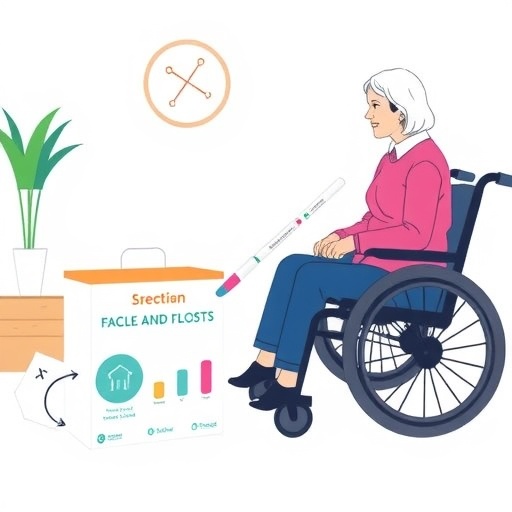
In a groundbreaking development poised to revolutionize cancer prevention strategies, a recent study from the University of Sheffield underscores the potential for home-based testing kits to dramatically improve cervical cancer screening numbers among physically Disabled women. Cervical cancer remains a significant cause of morbidity worldwide, primarily caused by persistent infections with high-risk strains of human papillomavirus (HPV). Despite the availability of established HPV screening programs, many individuals encounter formidable obstacles that deter them from undergoing traditional clinic-based tests. The new findings illuminate how self-sampling kits could break down these barriers, making early detection more equitable and accessible.
Human papillomavirus is the etiological agent responsible for over 90% of cervical cancer cases globally, establishing it as a critical target for screening protocols. Conventional cervical screening typically involves a clinician collecting a sample from the cervix during an in-person visit. These “smear tests,” while effective, present multifaceted challenges for physically Disabled women. These include difficulty in arranging travel to healthcare facilities, limited accessibility within clinical environments, and physical impediments in assuming the necessary testing positions. Additionally, many report encountering healthcare providers who may lack the training or sensitivity required to accommodate their specific needs.
The pivotal innovation now being introduced across the United Kingdom is an at-home HPV self-sampling kit. This kit comprises a simple vaginal swab designed to collect epithelial cells for analysis. The NHS’s 10-Year Health Plan anticipates rolling out this initiative nationwide, targeting individuals who have missed screenings or never attended in-person appointments. The rationale is to provide an autonomous, less invasive, and dignified alternative that circumvents the physical, psychological, and social deterrents traditionally associated with cervical screening.
The University of Sheffield’s research team deployed a cross-sectional survey targeting nearly 1,500 UK-based women and people with cervices who experience physical disabilities or impairments. This survey revealed an overwhelmingly positive reception of HPV self-sampling as a screening alternative. Over 60% of the respondents expressed confidence in their ability to perform the test accurately on themselves. Moreover, more than half stated a preference for home testing over conventional clinical screenings. Such acceptance is pivotal for enhancing screening uptake, which directly correlates with earlier diagnosis and improved survival rates in cervical cancer.
These insights are particularly significant as they bring the perspectives of a historically marginalized group to the fore. Physically Disabled women face unique, and often overlooked, barriers ranging from structural accessibility issues at clinics to the emotional distress of invasive examinations performed in less-than-ideal environments. Professor Sue Sherman, a leading psychologist involved in the study, highlights the transformative potential of self-sampling kits to bridge these gaps, advocating for a paradigm shift in how public health frameworks accommodate diverse populations.
However, the study also surfaced critical concerns that warrant addressing before widespread implementation. A significant majority—over 70%—expressed worry about correctly administering the self-test, underscoring potential issues of user error that could compromise test sensitivity and specificity. Such concerns illuminate the necessity of tailored educational materials and supportive resources to empower confident and effective use of self-sampling kits.
To mitigate these apprehensions, the researchers recommend the development of highly accessible, tailored instructions. These should consider varied physical abilities and literacy levels, possibly integrating multimedia elements such as video tutorials, tactile guides, or caregiver support options. Additionally, improving clinician training remains essential to ensure that healthcare providers are prepared to offer equitable support and seamlessly incorporate self-sampling options into broader screening programs.
The implications of this research extend beyond the individual level, hinting at systemic benefits. Increased screening uptake facilitated by self-testing could alleviate pressure on healthcare facilities, optimize resource allocation, and reduce disparities in cancer outcomes linked to disability. By promoting autonomy and reducing logistical and emotional barriers, self-sampling presents a scalable public health innovation poised to enhance cancer prevention on a population scale.
One of the study contributors, Alycia Hirani, who lives with Osteogenesis Imperfecta, eloquently advocates for expanded testing options. She emphasizes how diversified healthcare choices empower Disabled individuals with greater autonomy and could ultimately be life-saving. This aligns with a wider movement towards patient-centered care and universal design principles within medical service delivery.
In essence, the deployment of HPV self-sampling kits represents a significant stride towards inclusivity in preventive healthcare. It challenges entrenched norms around cervical screening delivery, reframing it through lenses of accessibility, dignity, and practicality. As the NHS prepares to implement this initiative, ongoing evaluation, stakeholder engagement, and adaptive program development will be critical to ensuring that these kits fulfill their promise to bridge health inequities effectively.
This novel approach aligns closely with the principles outlined in the NHS 10-Year Health Plan, which seeks to innovate and modernize healthcare access, especially for underserved populations. The study’s authors advocate for policy adjustments that would routinely offer these kits as an option for physically Disabled women, not only as a remedial measure but as a standard practice, recognizing the diversity of patient needs.
In summation, the University of Sheffield’s research clarifies that home-based HPV self-sampling could be a revolutionary adjunct or alternative to clinician-led cervical cancer screening. It addresses a critical public health gap by opening avenues for Disabled women to engage in potentially life-saving screening without the burden of traditional barriers. Future work will need to ensure robust support structures accompany kit distribution to maximize accuracy, user confidence, and ultimately, health outcomes across diverse populations.
Subject of Research: People
Article Title: Acceptability of, and preference for, human papillomavirus self-sampling for physically Disabled women: A cross-sectional survey
News Publication Date: 12-Mar-2026
Web References: DOI link to the Journal of Medical Screening article
Keywords: Cervical cancer screening, HPV self-sampling, physically Disabled women, health inequalities, NHS 10-Year Health Plan, patient autonomy, public health innovation, accessibility in healthcare, preventive medicine


