


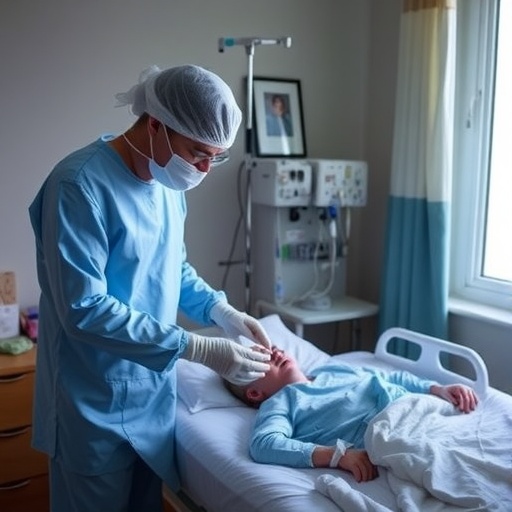
A transformative approach to delivering intravenous (IV) antibiotic treatments at home may revolutionize healthcare delivery by significantly alleviating financial burdens on the National Health Service (NHS) and mitigating the chronic issue of hospital bed shortages. A recent investigation conducted by researchers from the University of East Anglia reveals that patients receiving nurse-prepared antibiotics via elastomeric pumps in the comfort of their homes not only experience positive outcomes but also create substantial cost efficiencies compared to traditional hospital-based or outpatient treatments.
This pioneering study explores the viability and acceptance of administering IV antibiotics through elastomeric devices that are filled and managed in a home setting by qualified nursing professionals. The elastomeric pumps, small single-use mechanical infusion devices, allow continuous antibiotic delivery over 24-hour periods without requiring patients to remain hospitalized or travel to clinics, thereby addressing logistic and economic challenges inherent in standard antibiotic administration.
An elastomeric pump functions through a balloon-like reservoir that contracts at a controlled rate, allowing precise and steady drug infusion directly into the bloodstream. Traditionally, these devices were pre-filled by pharmacists in clinical environments; however, the study’s innovation lies in enabling trained nurses to prepare and fill these pumps at the patient’s residence, a methodological advancement that eliminates numerous procedural bottlenecks and enhances patient autonomy.
Dr. Stephanie Howard Wilsher, spearheading the research from UEA’s Norwich Medical School, emphasized the innovation’s dual potential: securing high-quality care while easing the enduring pressure on NHS infrastructure. Early discharge protocols, or entirely circumventing hospital admissions, become feasible when patients can maintain their antibiotic regimens with professional oversight remotely facilitated by digital health technologies and connected monitoring devices.
The study meticulously observed 24 patients who received rounds of IV antibiotic therapy at home via the B. Braun EasyPump® II elastomeric device, supported by Doccla—a digital health company specializing in virtual wards that integrate connected medical devices enabling remote patient monitoring. Remote monitoring conducted twice daily involved clinical assessments using digital data streams to ensure therapeutic efficacy and detect early indicators of adverse events or treatment failure.
Quantitative economic evaluations present compelling arguments favoring nurse-filled home administered treatment. The cost to the NHS per patient was approximately £2,507.54, a dramatic reduction compared to inpatient care (£6,122.70), outpatient day visits (£3,603.76), or home use of pharmacist-prepared pumps (£4,373.37). These savings manifest partly due to eliminating bed occupancy and reducing the frequency of clinical visits, which are resource intensive for hospitals.
Crucially, qualitative feedback from patients, caregivers, and healthcare workers underscores the acceptability and satisfaction with home treatment protocols. Patients value increased independence and comfort, while clinicians appreciate the potential to optimize resource allocation. The positive response suggests that integrating elastomeric nurse-filled pumps into standard care pathways could be a pragmatic and scalable strategy to address the NHS’s high demand for acute care services.
From a clinical pharmacology and therapeutic perspective, the administration of continuous infusion antibiotics via elastomeric devices sustains steady plasma drug concentrations, which can enhance bacterial eradication and potentially reduce resistance development. At-home antibiotic delivery further reduces patient exposure to nosocomial infections, an increasingly significant concern in hospital environments.
While the evaluation’s sample size was limited, the robust cost-benefit ratio combined with promising patient and clinician acceptance points to the strategic feasibility of expanding home-based IV therapy. The interdisciplinary collaboration involved in the research, spanning universities and NHS trusts, indicates a comprehensive effort toward addressing complex system challenges in healthcare delivery.
Digital health platforms facilitating real-time monitoring and communication represent an essential component in safeguarding the safety and efficacy of this care model. By leveraging connected devices, healthcare providers can respond swiftly to clinical changes, thus preserving treatment quality outside traditional clinical settings.
As healthcare systems worldwide contend with aging populations and escalating chronic disease prevalence, innovations like home-based elastomeric pump antibiotic therapy signify a shift toward personalized, efficient, and patient-centered care models. The integration of such technologies offers promising avenues to enhance health outcomes while simultaneously safeguarding limited healthcare resources.
This groundbreaking research, published in the reputable Journal of Clinical Pharmacy and Therapeutics, underscores the transformative potential of nurse-prepared, home-administered IV antibiotic therapy using elastomeric devices. The study advocates for broader implementation, positing that widespread adoption could yield considerable economic relief for the NHS alongside improved patient experiences and optimized clinical workflows.
Cite Scienmag News
Courtney Benton. (October 29, 2025). Home IV Antibiotic Treatment Could Ease NHS Burden, New Study Suggests. Scienmag. https://scienmag.com/home-iv-antibiotic-treatment-could-ease-nhs-burden-new-study-suggests/
Courtney Benton. "Home IV Antibiotic Treatment Could Ease NHS Burden, New Study Suggests." Scienmag, 29 October 2025, https://scienmag.com/home-iv-antibiotic-treatment-could-ease-nhs-burden-new-study-suggests/. Accessed 3 September 2026.
Courtney Benton. "Home IV Antibiotic Treatment Could Ease NHS Burden, New Study Suggests." Scienmag. October 29, 2025. https://scienmag.com/home-iv-antibiotic-treatment-could-ease-nhs-burden-new-study-suggests/


