


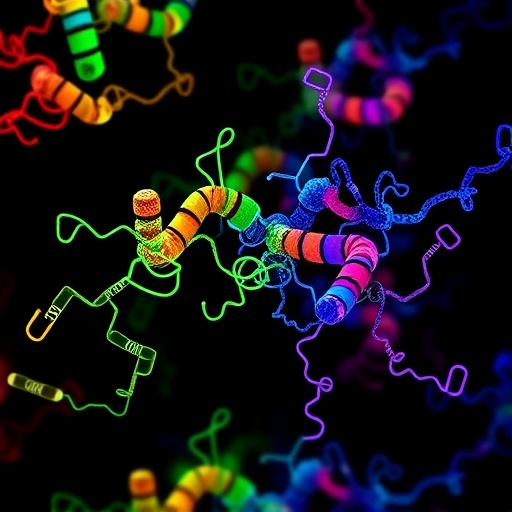
The redox-sensitive protein HMGB1 has emerged as a pivotal player in the intricate dance of cellular fate, impacting not just survival but also various regulated forms of cell death. Extensive research has shed light on its passive and active roles under conditions of stress. Within the confines of our cells, HMGB1 translocates to the cytoplasm where it can exert influence based on its oxidation state—Re-HMGB1, the reduced form, often promotes protective mechanisms, while oxidized HMGB1 (Ox-HMGB1) can trigger apoptosis. This unique duality places HMGB1 at the crossroads of survival and demise, making it an attractive target for therapeutic interventions.
Underlying the release of HMGB1 is the phenomenon of necrosis, which can be induced by a variety of stimuli including hypoxia, DNA damage, and exposure to alkylating agents. Once DNA damage occurs, it activates the enzyme poly(ADP)-ribose polymerase 1 (PARP1), which is crucial for the translocation of HMGB1 from the nucleus into the cytoplasm. Notably, experiments conducted on PARP1-deficient cells indicate that without this enzyme, there is a failure in HMGB1 translocation, underscoring the importance of PARP1 in this pathway. In the early stages of necrosis, HMGB1 is primarily released in its reduced form, but as necrosis progresses and reactive oxygen species (ROS) levels surge, the protein undergoes oxidation, thus altering its functional properties.
Necroptosis, another form of regulated cell death, is initiated by signals such as tumor necrosis factor-alpha (TNF-α), especially in scenarios where caspase activity is inhibited. This triggers a cascade involving receptor-interacting serine/threonine kinases (RIPK1 and RIPK3) and the mixed-lineage kinase domain-like pseudokinase (MLKL). HMGB1 translocation during necroptosis further complicates its role. As mitochondria generate ROS during this death modality, they contribute to the continued oxidation of HMGB1, thus shaping its subsequent activity in the extracellular environment.
Autophagic cell death presents a different challenge, characterized by the release of HMGB1 without significant disruption of membrane integrity. This process has been studied extensively using glioblastoma cells treated with toxins, demonstrating that inhibiting key autophagy genes can obstruct HMGB1 release even after cellular death has occurred. However, research on the oxidation state of HMGB1 in this context remains less defined, prompting questions about how autophagy intertwines with HMGB1 dynamics.
Apoptosis, while traditionally thought of as an immunologically silent process, is marked by the compartmentalization of HMGB1 within apoptotic vesicles. This prevents its premature release into the extracellular milieu, granting a degree of camouflage to dying cells. Intriguingly, apoptosis-associated ROS generation can lead to hyperoxidation of HMGB1, rendering it incapable of inducing an immune response, thereby further contributing to the stealthy nature of apoptosis. In contrast, ferroptosis, a type of cell death characterized by iron dependency and lipid peroxidation, reveals a more intricate interplay with HMGB1. The acetylation of HMGB1 emerges as a critical factor, as it dictates its autophagy-mediated release, but again, the specific consequences of such release are context-dependent.
Pyroptosis, driven by inflammasome activation and the release of pro-inflammatory cytokines, showcases HMGB1’s multifaceted role. During this process, the predominant form released is Ds-HMGB1, which is crucial in amplifying inflammatory signals and facilitating cell death. The connections between HMGB1 and various forms of regulated cell death are further highlighted in response to SARS-CoV-2 infection, which incites a unique form of cell death termed PANoptosis, combining features from pyroptosis and necroptosis. Released HMGB1 interacts with viral components, facilitating an endocytic pathway that enhances viral infectivity and further complicates inflammatory responses.
The diverse roles of HMGB1 manifest in active modulation of cell death pathways. Interestingly, after acetaminophen-induced necrosis in hepatocytes, HMGB1 is released and acts in a feed-forward manner, exacerbating the necrotic process. Its extracellular presence is sufficient to recruit inflammatory cells, thus perpetuating tissue damage and fostering a vicious cycle of injury amplification. The ability of HMGB1 to form complexes with bacterial lipids also underscores its evolutionary role in immune responses, engaging TLR4 signaling pathways to activate necroptotic processes.
Context is key when it comes to HMGB1’s influence on cell fate. For instance, its relationship with autophagy in macrophages demonstrates a delicate balance: initial stimulation can promote protective autophagy, but continued signaling can lead to pyroptosis. Moreover, HMGB1 plays a significant role in modulating senescence and apoptosis, with emerging evidence suggesting that its redox state can tip the balance. For instance, in cancer therapy contexts, reduced HMGB1 has been shown to promote autophagy and therapy resistance, whereas its oxidized form tends to accelerate apoptotic outcomes.
The implications of HMGB1’s redox state and localization on therapeutic strategies cannot be understated. In tumors, for example, M1 macrophages release HMGB1 as a danger signal, potentially changing the tumor microenvironment. By carefully navigating HMGB1’s functions—whether promoting survival or driving cell death—researchers are exploring novel therapeutic approaches that exploit this balance for cancer treatment, autoimmune diseases, and trauma responses.
Despite the progress made in understanding HMGB1 and its diverse roles, important questions still linger, particularly regarding specific mechanisms and interactions governing its effects in various contexts. The balance continues to shift as studies unveil the intricate web of pathways HMGB1 interfaces with, reinforcing its modern prominence as a biomarker and therapeutic target. Ultimately, the context-dependent nature of HMGB1 presents both a challenge and an opportunity in the quest to manipulate its functions for medical advancement.
The research surrounding HMGB1 illustrates a burgeoning field that unravels the complexities of cellular signaling and fate. The striking ability of this protein to act as both a survival factor and a death signal highlights the sophistication inherent in cellular communication. As scientists continue to decode the molecular narratives woven by HMGB1, we inch closer to harnessing its potential in therapeutic interventions, marking a promising frontier in medicine.
Cite Scienmag News
Nathaniel Bowman. (February 13, 2026). HMGB1: Redox-Sensitive Protein’s Dual Roles Unveiled. Scienmag. https://scienmag.com/hmgb1-redox-sensitive-proteins-dual-roles-unveiled/
Nathaniel Bowman. "HMGB1: Redox-Sensitive Protein’s Dual Roles Unveiled." Scienmag, 13 February 2026, https://scienmag.com/hmgb1-redox-sensitive-proteins-dual-roles-unveiled/. Accessed 5 September 2026.
Nathaniel Bowman. "HMGB1: Redox-Sensitive Protein’s Dual Roles Unveiled." Scienmag. February 13, 2026. https://scienmag.com/hmgb1-redox-sensitive-proteins-dual-roles-unveiled/


