


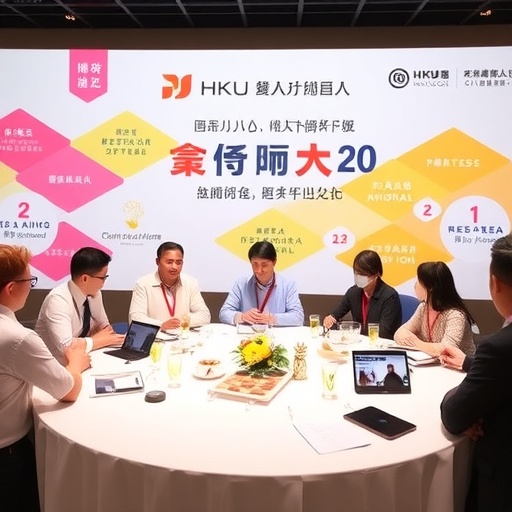
The University of Hong Kong (HKU) recently hosted a landmark event, the Super Angel & Going Global Innovation Forum, on June 12 in the dynamic financial and technological hub of Qianhai, Shenzhen. This assembly marked a critical convergence of academia, industry leaders, investors, alumni, and policy architects intent on fortifying collaboration and accelerating the international expansion of ventures that promise transformative impacts. HKU’s initiative reflects a broadening strategic effort to inject academic excellence into the broader global innovation ecosystem, particularly emphasizing the transition from conceptual research to scalable industrial outcomes.
Organised by the HKU Techno-Entrepreneurship Academy (HKU TEA) and co-hosted by several key university bodies, including the HKU Techno-Entrepreneurship Core (HKU TEC) and the Super Angel Network (HKU SAN), the forum served as a crucible for interdisciplinary networking and knowledge exchange. Participants explored the shifting paradigms in global innovation and economic landscapes, recognizing the imperative for internationalisation amid rapid technological advancements and geopolitical shifts. Distinguished speakers, including Professor Heiwai Tang, Dr Winnie Tang, and Mr Gao Yuan, delivered keynote insights that navigated the complex intersections between academic research, entrepreneurial ecosystems, and corporate innovation practices.
At the opening ceremony, Professor Stephanie Ma, Acting Vice-President and Pro-Vice-Chancellor for Research at HKU, articulated the university’s proactive vision of a vibrant and collaborative innovation ecosystem. She emphasized HKU’s commitment to leveraging its research prowess not only within academic circles but to catalyze real-world applications with global implications. This vision inherently involves bridging interdisciplinary research with market-oriented strategies, enabling entrepreneurial ventures to transcend local confines and achieve sustainable international growth through strategic network-building and resource mobilization.
Ms Liang Ke, Deputy Secretary of the Party Working Committee of the Shenzhen Qianhai Cooperation Zone, underscored the strategic role of Qianhai as a pivotal gateway for Shenzhen-Hong Kong synergistic collaboration and a launchpad for ventures aspiring to global outreach. Since the establishment of the HKU TEA in Qianhai, the tabletop has been laid for the incubation of nearly 100 pioneering technology projects, bolstered by supportive policy mechanisms and robust talent cultivation initiatives. This regional innovation ecosystem continues to expand its capacity to attract investment, facilitate technology transfer, and nurture startups, thereby cementing the zone’s status as a vital node in cross-border technology commercialization and youthful entrepreneurship.
Professor Heiwai Tang provided a measured analysis of the contemporary geopolitical and economic currents shaping the global business environment, specifically cautioning enterprises within China embarking on global ventures. The complex reality of accelerating decoupling trends and diversified supply chain disruptions demands a sophisticated approach towards building resilience. His insights highlighted the necessity for Chinese enterprises to enhance international capabilities, avoid isolationist tendencies, and strategically diversify their production networks to mitigate systemic risks while seizing emerging growth opportunities driven by industrial transformation and advancements in artificial intelligence.
Dr Winnie Tang accentuated the significance of an interconnected and interdisciplinary ecosystem, highlighting the HKU Super Angel Network’s pivotal role in linking elite alumni and experts across diverse disciplines and professional sectors on a global scale. This network acts as a cornerstone for providing tailored resources, fostering synergy, and disseminating critical knowledge to equip its members for the competitive international arena. The goal is to nurture innovative ventures into robust global players equipped to navigate complex market dynamics and sustain long-term growth.
A highlight of the Forum was the HKU Demo Day, a platform designed to bridge cutting-edge academic research with institutional investment. This event showcased fourteen pioneering startups from HKU’s innovation ecosystem, segmented into two critical focus areas: Advanced Technology and Healthcare. The demonstrated projects exemplify how targeted scientific research can be directly translated into commercially viable applications, positioning HKU startups at the vanguard of solving real-world challenges with technological ingenuity.
Among the Advanced Technology track, InterLitho Innovation Limited, led by Professor Wendi Li, presented its groundbreaking work in laser interference lithography and nanoimprint technologies. This enterprise stands out for its pioneering development and manufacturing of the world’s first laser interference nanolithography equipment. Their technology enables unprecedented precision in micro- and nanomanufacturing processes, offering a comprehensive solution that spans from conceptual design to industrial-scale production, fostering advancements in semiconductor fabrication and new material synthesis.
MattVerse Limited, under the leadership of Dr Shuguang Chen, showcased its Battery Design Automation (BDA) platform, a highly engineered integration of artificial intelligence, quantum chemical simulations, and multiscale modeling designed specifically for the energy storage sector. BDA’s end-to-end digitalization capabilities optimize materials discovery, cell design, and battery management systems, addressing critical needs in the rapidly evolving new energy landscape. This platform exemplifies the convergence of computational science and engineering disciplines to expedite innovation pipelines and improve energy efficiency and sustainability.
The Healthcare track featured formidable breakthroughs such as C2iVax Limited, led by Professor Leo Poon and Dr Alex Chin, which are developing innovative vaccine platforms focused on creating broadly protective live-attenuated influenza vaccines. Their technology aims to supersede the limitations imposed by annually updated vaccines by targeting both human and avian influenza strains, thus offering a transformative approach to global influenza prevention, with substantial implications for public health policy and epidemic preparedness.
Oncoimmunostics Limited, directed by Professor Nancy Man, introduced the “Liver-in-Cube” platform, a novel drug screening system that reconstructs patient-specific tumor microenvironments via advanced 3D bioprinting technologies. This platform incorporates patient-specific cells, proteins, and tumor characteristics such as mechanical stiffness and immune profiles, providing unprecedented fidelity in preclinical models. This innovation stands to revolutionize personalized oncology, enabling tailored therapeutic evaluations that could significantly improve treatment efficacy and patient outcomes.
HKU’s commitment to fostering an innovation-driven economy is exemplified through its strategic use of cross-disciplinary talent and extensive global networks. By continuously empowering startups with premier resources, expert mentorship, and strategic funding, HKU reinforces its dedication to nurturing future leaders in technology entrepreneurship. This multifaceted approach not only accelerates local innovation but also propels scalable global ventures capable of disrupting existing markets and contributing to sustainable socio-economic progress worldwide.
In sum, the HKU Super Angel & Going Global Innovation Forum presents a compelling narrative of how academic institutions can act as epicenters for high-impact innovation and international entrepreneurship. The Forum’s emphasis on strategic global engagement, interdisciplinary collaboration, and technology commercialization underscores the critical roles universities must play in shaping the contours of future industrial landscapes in an increasingly complex and interconnected world.
News Publication Date:
June 12, 2024
Web References:
https://mediasvc.eurekalert.org/Api/v1/Multimedia/43ef2d0e-0573-42fb-ab10-97080980b95f/Rendition/low-res/Content/Public
Keywords
Innovation Ecosystem, Technology Startups, Nanolithography, Battery Automation, Vaccine Innovation, 3D Bioprinting, Personalized Medicine, Global Entrepreneurship, Cross-border Collaboration, AI-driven Growth, Shenzhen Qianhai, HKU Techno-Entrepreneurship Academy
Cite Scienmag News
Bethany Barker. (June 24, 2026). HKU Tea Hosts Super Angel and Going Global Innovation Forum in Gianhai to Propel Cross-Border Tech Collaboration and Global Expansion. Scienmag. https://scienmag.com/hku-tea-hosts-super-angel-and-going-global-innovation-forum-in-gianhai-to-propel-cross-border-tech-collaboration-and-global-expansion/
Bethany Barker. "HKU Tea Hosts Super Angel and Going Global Innovation Forum in Gianhai to Propel Cross-Border Tech Collaboration and Global Expansion." Scienmag, 24 June 2026, https://scienmag.com/hku-tea-hosts-super-angel-and-going-global-innovation-forum-in-gianhai-to-propel-cross-border-tech-collaboration-and-global-expansion/. Accessed 3 September 2026.
Bethany Barker. "HKU Tea Hosts Super Angel and Going Global Innovation Forum in Gianhai to Propel Cross-Border Tech Collaboration and Global Expansion." Scienmag. June 24, 2026. https://scienmag.com/hku-tea-hosts-super-angel-and-going-global-innovation-forum-in-gianhai-to-propel-cross-border-tech-collaboration-and-global-expansion/


