


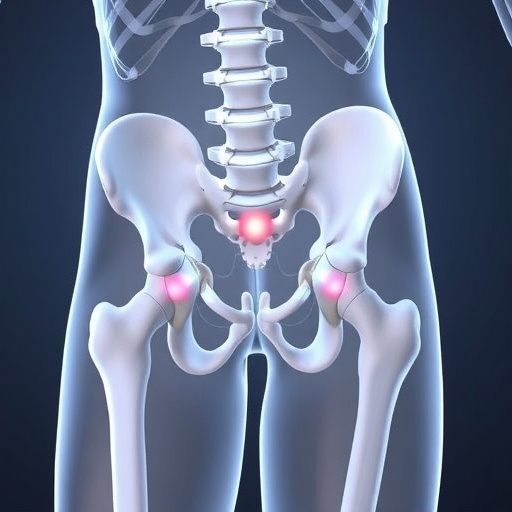
In a groundbreaking study published in the Annals of Biomedical Engineering, researchers led by C.C. Johnson explore the intricate relationship between bony hip congruency and acetabular coverage across various regions and activities in asymptomatic young adults. This research provides profound insights into hip joint mechanics and its implications for long-term joint health. As the prevalence of hip-related disorders rises, understanding these biomechanical aspects becomes increasingly critical for preventing future ailments.
The primary focus of this research hinges on the concept of hip congruency, which refers to the fit between the femoral head and the acetabulum of the pelvis. Congruency plays a vital role in the hip joint’s biomechanics, directly influencing load distribution, movement efficiency, and longevity of the articular surfaces. The findings delineate how this congruency varies significantly depending on specific acetabular regions and the type of physical activity undertaken.
This study involved a comprehensive analysis of a cohort of asymptomatic young adults, with a range of activities systematically assessed to evaluate their impact on bony hip congruency. Researchers utilized advanced imaging techniques and biomechanical simulations to gather precise data on the femoral head and acetabular joint interactions. These high-tech methods enabled them to visualize the complexities of the hip joint under different conditions, something that has previously been a challenge in orthopedic biomechanics.
Notably, this research found that congruency is not uniformly distributed across the acetabulum. Different regions demonstrated varying degrees of coverage and fit, which may lead to differing susceptibilities to joint issues in the future. Insights into these variations challenge existing paradigms that assume a certain degree of universal stability and fit across the acetabular surface. As a result, one can argue that joint health and injury prevention strategies must be tailored to account for these regional differences in hip anatomy.
The implications of this research extend beyond the realm of biomechanics. For athletes, understanding the demands on their hip joints based on the activities they engage in can guide training and rehabilitation practices, potentially lowering the risk of injury. In the realm of preventive medicine, these findings could foster the development of targeted interventions aimed at preserving hip health in younger populations, ultimately reducing the incidence of degenerative joint diseases as these individuals age.
Furthermore, the study underscores the importance of individualized assessments in the realm of orthopedic care. With a growing body of evidence supporting the variability of hip joint congruency, clinicians might need to reconsider standard evaluation protocols. Personalized approaches that analyze the unique anatomical and functional attributes of each individual’s hip joint may serve to optimize treatment outcomes.
The research also hints at the potential for future studies to investigate how these differences in hip joint congruency may correlate with specific athletic activities or lifestyle choices. Further exploration could elucidate which activities promote a healthier hip joint environment and potentially mitigate the onset of degenerative conditions like osteoarthritis in later years.
Additionally, this research could inform the design of orthopedic implants and devices by shedding light on the natural variations in hip anatomy. Engineers and designers in the biomedical field may leverage these findings to create more effective prosthetic hips that can better mimic the natural biomechanics of the hip joint. Such innovations could lead to improved outcomes for individuals undergoing hip replacement surgeries.
As the scientific community delves deeper into the mechanisms of bony hip congruency, the interdisciplinary connections between biomechanics, sports science, and rehabilitation medicine continue to grow stronger. This study exemplifies how collaboration can yield insights that have far-reaching implications not only for academic inquiry but for practical applications in athletic training and orthopedic care.
The findings of this research serve as a clarion call for integrating biomechanical analysis within preventive healthcare models. By embracing a proactive approach that considers the nuances of joint congruency, healthcare providers may enhance their ability to preemptively address potential joint health issues before they escalate into chronic conditions.
In summary, Johnson and colleagues have opened a window into the complex world of hip joint mechanics, challenging long-held assumptions about congruency and coverage. This research is poised to invigorate future studies aimed at unraveling the intricacies of the hip joint, while simultaneously inspiring a new generation of medical professionals to adopt a more nuanced, patient-centered approach to hip health.
As we move forward, the challenge lies in translating these complex findings into actionable insights for both patients and practitioners alike. It is this kind of empirical rigor and commitment to understanding joint mechanics that will hopefully pave the way for innovations that prioritize long-term bony health while enriching the quality of life for countless individuals.
Whether you are a clinician, a researcher, or simply someone interested in the future of orthopedic health, this study is a significant contribution to our understanding of hip biomechanics. The quest for optimized joint health continues, and as science progresses, so too does our potential for improving orthopedic care and outcomes for future generations.
Johnson, C.C., Ruh, E.R., Frankston, N.E. et al. Bony Hip Congruency and Coverage Varies by Acetabular Region and Activity in Asymptomatic Young Adults.
Ann Biomed Eng (2025). https://doi.org/10.1007/s10439-025-03826-8
Cite Scienmag News
Ophelia Keating. (August 27, 2025). Hip Joint Fit and Activity Influence Acetabular Coverage. Scienmag. https://scienmag.com/hip-joint-fit-and-activity-influence-acetabular-coverage/
Ophelia Keating. "Hip Joint Fit and Activity Influence Acetabular Coverage." Scienmag, 27 August 2025, https://scienmag.com/hip-joint-fit-and-activity-influence-acetabular-coverage/. Accessed 5 September 2026.
Ophelia Keating. "Hip Joint Fit and Activity Influence Acetabular Coverage." Scienmag. August 27, 2025. https://scienmag.com/hip-joint-fit-and-activity-influence-acetabular-coverage/


