

Saturday, November 14, 2026
Science
No Result
View All Result
  • Login
  • HOME
  • SCIENCE NEWS
  • CONTACT US
  • HOME
  • SCIENCE NEWS
  • CONTACT US
No Result
View All Result
Scienmag
No Result
View All Result
Home Science News Psychology & Psychiatry

High school students split into four belief profiles about artificial general intelligence

November 10, 2026
in Psychology & Psychiatry
Glenn Wilkins
By Glenn Wilkins Scienmag Editorial Profile - Clinical Psychology
Reading Time: 3 mins read
0
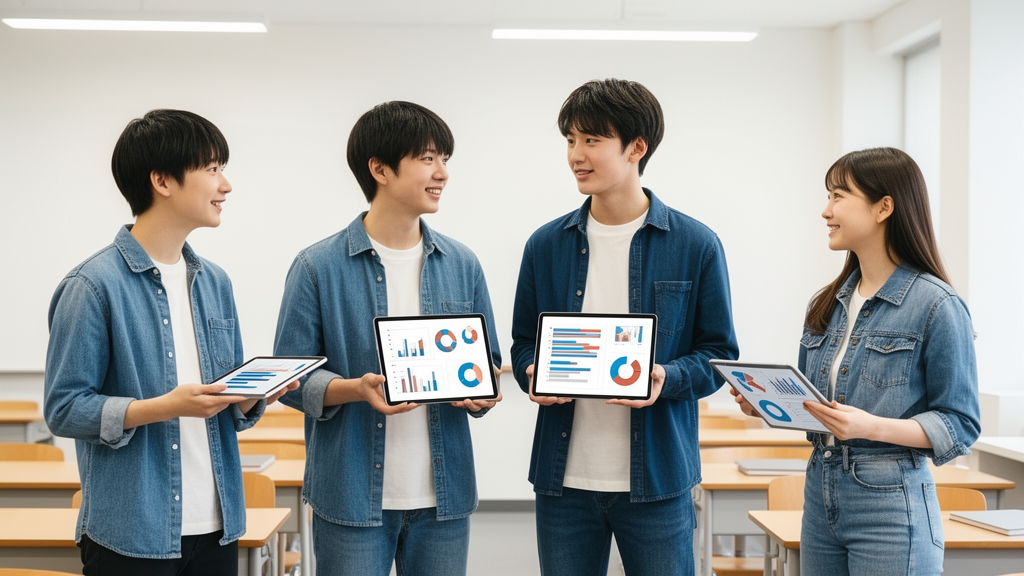
High school students split into four belief profiles about artificial general intelligence

High school students split into four belief profiles about artificial general intelligence

65
SHARES
587
VIEWS
Share on FacebookShare on Twitter
ADVERTISEMENT

Most high school students remain undecided about whether machines will ever think like humans, according to a new study of 658 adolescents that identified four distinct belief profiles about artificial general intelligence, or AGI. The research, published in BMC Psychology, examined how teenagers conceptualize AGI and how those conceptualizations relate to psychological and demographic characteristics.

The study focused on two core beliefs: whether AI will achieve a level of human thinking, and whether emotions will guide it if it does. Using latent profile analysis, a statistical technique that groups people based on their response patterns, the researchers sorted participants into four profiles. The largest group, called “AGI Uncertain,” made up 49.1 percent of students and held balanced, undecided views on both questions.

The three remaining groups held more definite positions. “AGI Futurists,” at 16.3 percent, believed AI will reach human-level thinking and be guided by emotions. “AGI Functionalists,” at 14.4 percent, believed AI will reach the level of human thinking but will not be guided by emotions. “AGI Sceptics,” at 20.2 percent, believed AI will neither achieve human-level thinking nor be guided by emotions.

The four profiles differed across a wide range of psychological and demographic variables. These included gender, intellect, cynical hostility towards humans, the values of tradition and benevolence, the emotions of guilt, sadness and affection, parental expectations, cynical hostility towards AI, and beliefs about how quickly AI will achieve human-level thinking.

The findings build on earlier research showing that people hold mixed feelings about AI and that beliefs about AI are associated with specific attitudes towards it. As AI becomes increasingly central to technological progress and a more prominent part of everyday life, the authors argue that understanding attitudes toward it is vital.

The study’s conclusions underscore the importance of integrating psychological, emotional, and value-based variables to better understand how individuals relate to intelligent technologies. Rather than treating attitudes toward AGI as a single dimension, the profile approach suggests that adolescents’ views cluster into qualitatively different combinations of beliefs about machine intelligence and emotion.

The research was conducted by Oliwia Kosecka, Stanisław Konrad Czerwiński, Wiktor Kornel Wróbel and Paweł Andrzej Atroszko, and published as an open access article in BMC Psychology on 3 November 2026. The article was shared early to provide faster access to peer-reviewed, accepted research, with a version subject to further edits before the final Version of Record.

Because the study measured beliefs at a single point in time among high school students, the findings describe associations between belief profiles and psychological and demographic characteristics rather than causal effects. The distal associations reported in the study link the profiles to variables such as cynical hostility, values and emotions, but the cross-sectional design cannot establish the direction of these relationships.

Subject of Research: Latent profiles of beliefs about artificial general intelligence among high school students and their psychological and demographic correlates

Article Title: Psychological and demographic correlates and distal associations of latent profiles of beliefs about artificial​ general intelligence in high school students

Article References: Kosecka, O., Czerwiński, S. K., Wróbel, W. K., & Atroszko, P. A. (2026). Psychological and demographic correlates and distal associations of latent profiles of beliefs about artificial​ general intelligence in high school students. BMC Psychology. https://doi.org/10.1186/s40359-026-05912-5

Image Credits: AI Generated

DOI: 10.1186/s40359-026-05912-5

Keywords: artificial general intelligence, high school students, latent profile analysis, beliefs about AI, psychological correlates, demographic correlates, AGI Futurists, AGI Sceptics, BMC Psychology, adolescent attitudes, Psychological, demographic

Cite Scienmag News

Glenn Wilkins. (November 10, 2026). High school students split into four belief profiles about artificial general intelligence. Scienmag. https://scienmag.com/high-school-students-split-into-four-belief-profiles-about-artificial-general-intelligence/

Glenn Wilkins. "High school students split into four belief profiles about artificial general intelligence." Scienmag, 10 November 2026, https://scienmag.com/high-school-students-split-into-four-belief-profiles-about-artificial-general-intelligence/. Accessed 14 November 2026.

Glenn Wilkins. "High school students split into four belief profiles about artificial general intelligence." Scienmag. November 10, 2026. https://scienmag.com/high-school-students-split-into-four-belief-profiles-about-artificial-general-intelligence/

Tags: adolescent attitudesAGI FuturistsAGI Scepticsartificial general intelligencebeliefs about AIBMC Psychologydemographicdemographic correlateshigh school studentslatent profile analysispsychologicalpsychological correlates
Share26Tweet16
Previous Post

Robust Fractional Control and Magnetic Storage Stabilize Hybrid Microgrids

Next Post

Serum Exosomal MicroRNA Panel Predicts Nasopharyngeal Carcinoma Metastasis

Related Posts

Child Marriage Linked to Mental Distress Among Harare Adolescent Street Girls
Psychology & Psychiatry

Child Marriage Linked to Mental Distress Among Harare Adolescent Street Girls

November 14, 2026
Baseline Neurophysiological Markers Linked to Depression Treatment Response in Cohort Study
Psychology & Psychiatry

Baseline Neurophysiological Markers Linked to Depression Treatment Response in Cohort Study

November 14, 2026
Study Identifies Distinct Online Risk Profiles and Screening Cutoffs for Adolescents
Psychology & Psychiatry

Study Identifies Distinct Online Risk Profiles and Screening Cutoffs for Adolescents

November 14, 2026
Student Resilience Following Türkiye Earthquakes Relied on Cultural and Psychological Factors
Psychology & Psychiatry

Student Resilience Following Türkiye Earthquakes Relied on Cultural and Psychological Factors

November 14, 2026
Low Health Literacy and Sedentary Time Jointly Linked to Elevated Mental Symptoms
Psychology & Psychiatry

Low Health Literacy and Sedentary Time Jointly Linked to Elevated Mental Symptoms

November 14, 2026
Prompting Judges to Weigh Alternatives Reduces Prosecutor Anchoring in Sentencing Decisions
Psychology & Psychiatry

Prompting Judges to Weigh Alternatives Reduces Prosecutor Anchoring in Sentencing Decisions

November 14, 2026
Next Post
Serum Exosomal MicroRNA Panel Predicts Nasopharyngeal Carcinoma Metastasis

Serum Exosomal MicroRNA Panel Predicts Nasopharyngeal Carcinoma Metastasis

  • Mothers who receive childcare support from maternal grandparents show more optimized

    Mothers who receive childcare support from maternal grandparents show more parental warmth, finds NTU Singapore study

    27656 shares
    Share 11059 Tweet 6912
  • University of Seville Breaks 120-Year-Old Mystery, Revises a Key Einstein Concept

    1061 shares
    Share 424 Tweet 265
  • Bee body mass, pathogens and local climate influence heat tolerance

    682 shares
    Share 273 Tweet 171
  • Researchers record first-ever images and data of a shark experiencing a boat strike

    546 shares
    Share 218 Tweet 137
  • Groundbreaking Clinical Trial Reveals Lubiprostone Enhances Kidney Function

    531 shares
    Share 212 Tweet 133
Science

Embark on a thrilling journey of discovery with Scienmag.com—your ultimate source for cutting-edge breakthroughs. Immerse yourself in a world where curiosity knows no limits and tomorrow’s possibilities become today’s reality!

RECENT NEWS

  • Dual-Stage Algorithm Boosts BeiDou Signal Interference Detection and Suppression in Simulations
  • Domesticated Zhikong Scallops Outgrow Farmed Stocks Across Entire Grow-Out Cycle
  • Interactive Video Platform Enhances Visual Literacy in Hearing-Impaired Middle School Students
  • AI Cervical Screening Shows High Specificity but Limited Sensitivity in Indonesian Study

Categories

  • Agriculture
  • Anthropology
  • Archaeology
  • Athmospheric
  • Biology
  • Biotechnology
  • Blog
  • Bussines
  • Cancer
  • Chemistry
  • Climate
  • Earth Science
  • Editorial Policy
  • Marine
  • Mathematics
  • Medicine
  • Pediatry
  • Policy
  • Psychology & Psychiatry
  • Science Education
  • Science News
  • Social Science
  • Space
  • Technology and Engineering

Subscribe to Blog via Email

Enter your email address to subscribe to this blog and receive notifications of new posts by email.

Join 5,150 other subscribers

© 2026 Scienmag - Science Magazine

Welcome Back!

Login to your account below

Forgotten Password?

Retrieve your password

Please enter your username or email address to reset your password.

Log In
No Result
View All Result
  • HOME
  • SCIENCE NEWS
  • CONTACT US

© 2026 Scienmag - Science Magazine

Discover more from Science

Subscribe now to keep reading and get access to the full archive.

Continue reading

