


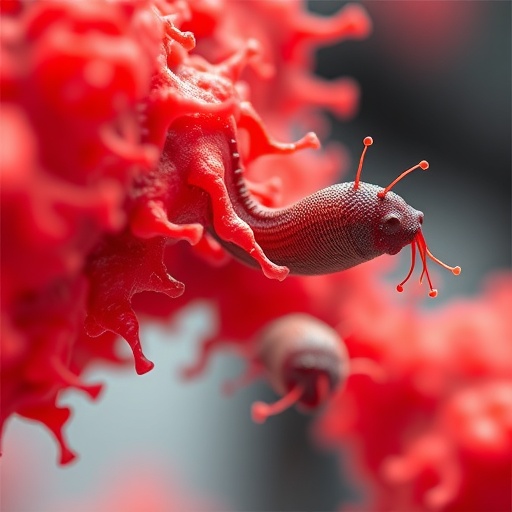
In a groundbreaking study that echoes through the corridors of infectious disease research, scientists have uncovered startling evidence of high seropositivity for helminth infections among immunosuppressed patients presenting with peripheral eosinophilia. This investigation, recently published in the prestigious journal Acta Parasitologica, offers unprecedented insight into the intricate relationship between parasitic helminth infections and immune system compromise, unearthing critical implications for diagnosis, management, and the broader understanding of parasite-host dynamics in vulnerable patient populations.
Helminths, a diverse group of parasitic worms including nematodes, cestodes, and trematodes, have long been recognized for their ability to subvert human immunity to establish chronic infections. However, their seroprevalence in immunosuppressed individuals, particularly those exhibiting peripheral eosinophilia—a hematologic hallmark often indicative of parasitic infection—has remained poorly characterized until now. The recent extensive cohort study spearheaded by Mewara, Sharma, Pandiarajan, and colleagues delves systematically into this nexus, employing robust serological assays designed to detect anti-helminth antibodies in patients undergoing immunosuppressive therapy.
The plethora of medical conditions that necessitate immunosuppression—organ transplantation, cancer chemotherapy, autoimmune diseases—render patients uniquely vulnerable to opportunistic infections, helminthiasis included. By meticulously analyzing blood samples from such individuals, researchers found a strikingly elevated rate of seropositivity for helminth antigens, suggesting either active or prior exposure at levels far exceeding those anticipated in the general population. Peripheral eosinophilia further served as a critical clinical marker, signifying active immunologic engagement against parasitic antigens in these compromised hosts.
This association implies a bidirectional interplay: immunosuppression may facilitate enhanced susceptibility or diminished clearance of helminthic infections, while persistent parasitic antigens may, in turn, provoke eosinophilic responses despite the dampened immune surveillance. The study emphasizes that peripheral eosinophilia, traditionally interpreted with caution in this context, should be re-evaluated as a potent clinical sign warranting thorough parasitic screening among immunosuppressed patients.
Technological advancements in serological testing were crucial to these revelations. Employing highly sensitive and specific enzyme-linked immunosorbent assays (ELISAs) tailored to distinguish between helminth species, the researchers circumvented the limitations of direct parasitological evidence, which is often elusive in immunosuppressed individuals due to atypical clinical presentations and low parasitic loads. This serodiagnostic approach permitted a broader detection spectrum, unveiling hidden reservoirs of infection that may otherwise evade clinical suspicion.
Moreover, the implications of these findings resonate deeply within clinical practice and public health strategies, especially in helminth-endemic regions where the burden of parasitic disease intersects with increasing utilization of immunosuppressive modalities. Clinicians are urged to integrate routine helminth serology into diagnostic algorithms for patients with unexplained eosinophilia, particularly those with compromised immunity. Early identification may inform targeted anthelmintic therapies that mitigate morbidity and potentially life-threatening complications, while also guiding prophylactic interventions.
Intriguingly, the research draws attention to the complex immunological milieu present in helminth-infected immunosuppressed hosts. Helminths are known to orchestrate a delicate immune modulation, often skewing host responses toward a Th2-dominated pathway that favors eosinophil activation and antibody production. This immunomodulatory effect may paradoxically lessen inflammatory tissue damage while allowing parasite persistence—a fact that complicates the clinical course and therapeutic decisions in immunosuppressed patients battling coexisting infections.
The study’s comprehensive methodology included parallel analysis of various immunosuppressive states, including those induced by pharmacological agents such as corticosteroids and biologics, as well as disease-driven immune dysfunction. The nuanced understanding developed highlights differential risks and seropositivity rates contingent on the immunosuppressive regimen and underlying pathology, offering a tailored perspective for precision medicine.
Beyond its immediate clinical impact, this investigation revitalizes interest in the epidemiological landscape of helminthiasis in modern medicine’s evolving context. As immunosuppressive therapies become more prevalent globally, particularly in aging populations and in regions endemic for helminths, the findings underscore the need for global health policies that address parasitic infections as a critical comorbidity in immunosuppressed individuals.
Importantly, the high seropositivity rates documented raise poignant questions about latent helminth infections and their potential to reactivate or exacerbate disease once immunosuppression commences. Such reactivations could precipitate severe complications including hyperinfection syndromes, which are notoriously underdiagnosed yet carry substantial mortality risks.
The study investigators advocate for multidisciplinary collaboration, integrating parasitology, immunology, and clinical medicine to unravel the latent burden of helminth infections and optimize patient outcomes. Future research trajectories include longitudinal assessments to track infection dynamics during immunosuppression, and the development of therapeutic protocols that balance immunosuppressive efficacy with parasitic control.
Furthermore, the data prompt a reevaluation of eosinophilia as a diagnostic phenomenon. Traditionally dismissed as nonspecific or secondary to allergic and drug reactions, eosinophilia in the context of immunosuppression now emerges as a sentinel signal, demanding parasitic serological evaluation rather than reflex dismissal. This paradigm shift holds promise for improving diagnostic accuracy and tailoring interventions more effectively.
The novel insights provided extend beyond the individual patient level. They illuminate the broader immunological conversations occurring at the host-parasite interface, revealing how immune impairment shifts the equilibrium that normally contains helminth infections. These findings challenge existing dogma, reframing our understanding of parasitic persistence and immune evasion in the immunosuppressed milieu.
In summary, the landmark study by Mewara et al. fundamentally advances scientific and clinical knowledge regarding helminth infections in immunosuppressed patients, particularly emphasizing the role of peripheral eosinophilia as a critical, yet underutilized, biomarker. Their work sets the stage for enhanced diagnostic vigilance, refined therapeutic strategies, and renewed research vigor aimed at mitigating the silent burden of helminthiasis in vulnerable populations worldwide.
Cite Scienmag News
Nathaniel Bowman. (January 13, 2026). High Helminth Seropositivity in Immunosuppressed Patients. Scienmag. https://scienmag.com/high-helminth-seropositivity-in-immunosuppressed-patients/
Nathaniel Bowman. "High Helminth Seropositivity in Immunosuppressed Patients." Scienmag, 13 January 2026, https://scienmag.com/high-helminth-seropositivity-in-immunosuppressed-patients/. Accessed 4 September 2026.
Nathaniel Bowman. "High Helminth Seropositivity in Immunosuppressed Patients." Scienmag. January 13, 2026. https://scienmag.com/high-helminth-seropositivity-in-immunosuppressed-patients/


