


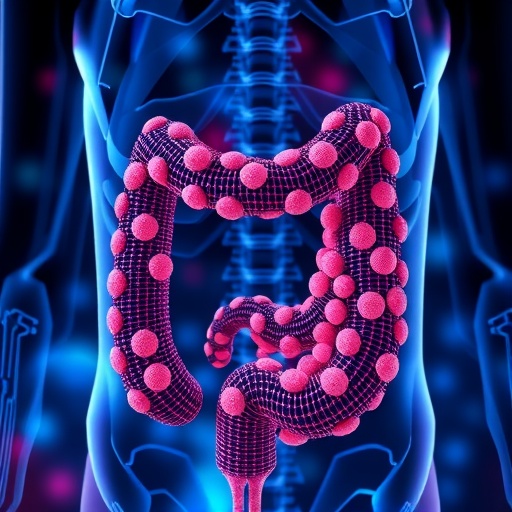
In the rapidly evolving landscape of oncology, where precision medicine is no longer a distant dream but a burgeoning reality, the integration of advanced computational methods with molecular diagnostics represents a paradigm shift in cancer management. A groundbreaking study led by Loeffler, Bando, and Sainath, recently published in Nature Communications, unveils HIBRID—a novel histology-based risk stratification framework that leverages deep learning alongside circulating tumor DNA (ctDNA) analysis to redefine prognostic assessment in colorectal cancer. This innovative approach offers a compelling glimpse into the future of personalized cancer care, where artificial intelligence meets molecular biology to enhance diagnostic accuracy and optimize therapeutic decisions.
Colorectal cancer, being one of the most prevalent malignancies worldwide, demands refined tools for early detection of recurrence and precise risk stratification, which are essential for tailoring patient-specific treatment regimens. Traditional histopathological evaluation, while invaluable, is often limited by subjective interpretation and inter-observer variability. Moreover, circulating tumor DNA, shed into the bloodstream by malignant cells, has emerged as a minimally invasive biomarker, offering real-time insights into tumor dynamics but requiring sophisticated analytical techniques to unlock its full potential. The HIBRID framework innovatively melds these two disparate yet complementary data streams into a cohesive analytical model poised to transform prognostication in clinical practice.
At the heart of HIBRID is a sophisticated deep learning algorithm trained to extract nuanced patterns from digitized histological slides of colorectal cancer tissues. Unlike conventional image analysis methods that rely on handcrafted features, deep learning employs layered neural networks to autonomously learn hierarchical representations from raw pixel data. This enables the detection of subtle morphologic signatures linked to tumor aggressiveness, which might be imperceptible even to seasoned pathologists. The training of these networks necessitates vast annotated datasets and meticulous optimization to prevent overfitting, ensuring the model’s robustness across diverse patient populations and staining variations.
Parallel to histology, the study harnesses ctDNA metrics derived from blood plasma samples, analyzing variant allele frequencies and fragment size distributions reflective of tumor burden and clonal heterogeneity. Quantitative assessment of ctDNA provides a dynamic snapshot of tumor evolution and minimal residual disease that conventional imaging might fail to capture in early disease progression or post-treatment scenarios. The integration of ctDNA data introduces an orthogonal dimension to histological insights, enriching the model’s discriminative power for risk assessment.
The HIBRID model intricately combines these multimodal inputs through a fusion architecture, which synergistically infers risk scores that stratify patients into prognostic categories with unprecedented precision. This integrative method surmounts the limitations of isolated data modalities, avoiding pitfalls associated with single-source biases or noise. Validation cohorts encompassing diverse clinical stages and treatment backgrounds demonstrated that HIBRID outperformed existing risk stratification algorithms, exhibiting superior sensitivity and specificity in predicting recurrence-free survival.
A salient aspect of this study lies in its methodological rigor, including cross-validation protocols, external validation datasets, and comprehensive statistical analyses to assess model calibration and decision curve benefits. These steps underpin the clinical translatability of HIBRID, reassuring clinicians and regulatory bodies alike about its reliability and utility. Importantly, the model’s interpretability mechanisms facilitate pathologists’ understanding of the histologic features driving risk predictions, fostering trust and enabling collaborative human-AI decision-making.
From a technological standpoint, the use of convolutional neural networks (CNNs) in HIBRID capitalizes on their prowess in image recognition tasks, adeptly capturing architectural and cytological attributes critical in malignancy grading. The authors innovatively tailored the network to accommodate the unique challenges posed by histopathology images, such as high resolution and heterogeneity, by employing patch-based analysis and attention mechanisms. These approaches enable the model to focus on diagnostically relevant regions within complex tissue landscapes, enhancing performance.
Moreover, the ctDNA analytical pipeline integrates next-generation sequencing (NGS) data processed through error-correction algorithms to detect low-frequency mutations amidst a high background of normal cell-free DNA. This level of sensitivity is crucial for early detection of micro-metastases and relapse, stages where clinical intervention can dramatically alter prognosis. By correlating these molecular signals with histological patterns, HIBRID provides a holistic view of tumor biology, encompassing both static morphological context and dynamic genomic evolution.
The clinical implications of HIBRID are profound. Beyond prognostication, the model holds promise for guiding adjuvant therapy decisions and surveillance strategies, potentially sparing low-risk patients from overtreatment while ensuring high-risk individuals receive intensified care. Furthermore, its noninvasive nature facilitates longitudinal monitoring, allowing clinicians to track treatment responses and emergent resistance mechanisms in real time, thereby enabling adaptive therapy modifications.
Another remarkable facet of the study is its demonstration of generalizability across multiple institutions, overcoming the ubiquitous challenge of batch effects inherent in histological preparation and sequencing platforms. The use of domain adaptation techniques and harmonized protocols ensured the model’s robustness in real-world clinical settings, a critical requirement for widespread adoption. The researchers also addressed ethical considerations surrounding AI in medicine, emphasizing transparency, data privacy, and equitable access.
The HIBRID framework is positioned at the intersection of computational pathology, molecular diagnostics, and clinical oncology, exemplifying the integrative approach needed to unravel cancer’s complexity. Its success underscores the transformative potential of combining deep phenotyping and genotyping to realize truly personalized medicine. Future directions may involve expanding this methodology to other tumor types and incorporating additional omics data, such as transcriptomics or proteomics, to further refine risk models.
In conclusion, the study by Loeffler and colleagues propels the field of colorectal cancer risk stratification into a new era defined by synergy between artificial intelligence and liquid biopsy. HIBRID exemplifies how cutting-edge technologies can converge to transcend traditional diagnostic limitations, offering patients and clinicians a powerful tool to confront the challenges of cancer heterogeneity and treatment resistance. As this technology moves toward clinical implementation, it heralds a future where data-driven, nuanced understanding of tumor biology drives decisions, improving outcomes and quality of life for millions affected by colorectal cancer annually.
The implications of HIBRID extend beyond clinical practice into research and healthcare systems. Its deployment could standardize risk assessment protocols, reduce diagnostic ambiguity, and streamline patient management pathways. Moreover, its scalable digital pathology platform aligns with ongoing digitization trends in healthcare infrastructure, enabling continuous learning and refinement through real-world data accrual.
Importantly, the success of HIBRID invites a broader discussion on the role of artificial intelligence in medicine, spotlighting the need for multidisciplinary collaboration among oncologists, pathologists, bioinformaticians, and data scientists. This integrated ecosystem is essential to translate algorithmic innovations into actionable clinical insights, safeguard patient welfare, and navigate regulatory landscapes.
Finally, as personalized cancer care accelerates, frameworks like HIBRID exemplify the potential harnessed by combining diverse biological data types through machine learning. This model sets a new benchmark for precision oncology, demonstrating that the fusion of histological information with liquid biopsy can unlock deeper understanding of tumor biology and improve prognostic accuracy, ultimately guiding more effective, individualized therapeutic interventions.
Cite Scienmag News
Nathaniel Bowman. (August 14, 2025). HIBRID: AI and ctDNA Transform Colorectal Cancer Risk. Scienmag. https://scienmag.com/hibrid-ai-and-ctdna-transform-colorectal-cancer-risk/
Nathaniel Bowman. "HIBRID: AI and ctDNA Transform Colorectal Cancer Risk." Scienmag, 14 August 2025, https://scienmag.com/hibrid-ai-and-ctdna-transform-colorectal-cancer-risk/. Accessed 5 September 2026.
Nathaniel Bowman. "HIBRID: AI and ctDNA Transform Colorectal Cancer Risk." Scienmag. August 14, 2025. https://scienmag.com/hibrid-ai-and-ctdna-transform-colorectal-cancer-risk/


