


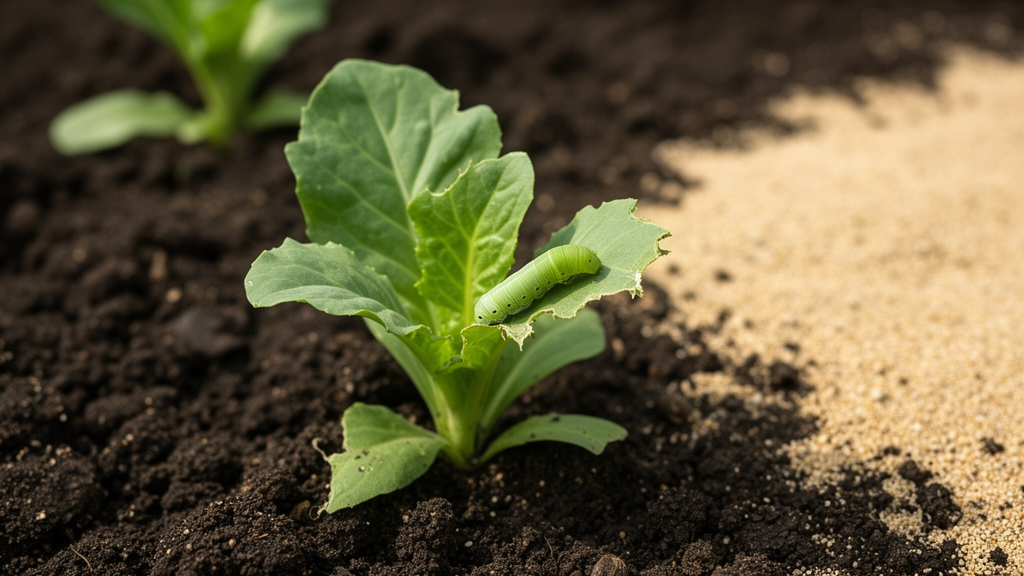
Soil nutrient heterogeneity is a fundamental characteristic of terrestrial ecosystems, creating a patchwork of resource availability that profoundly influences plant performance and community structure. While plants have evolved sophisticated root foraging strategies to exploit these nutrient-rich patches, the effectiveness of such strategies can be significantly modified by aboveground herbivory. A new study published in NeoBiota investigates the complex interplay between soil nutrient heterogeneity, native generalist herbivores, and the performance of both native and alien plant species. The research reveals that the impact of patchy soil nutrients is not uniform across species, with native and alien plants exhibiting distinct responses when subjected to herbivore pressure.
The study, conducted in a controlled greenhouse environment, utilized four plant species from the family Amaranthaceae: two native to China, Alternanthera sessilis and Achyranthes bidentata, and two alien species introduced to the region, Celosia argentea and Amaranthus retroflexus. The experimental design crossed two levels of soil nutrient heterogeneity, homogeneous versus heterogeneous, with the presence or absence of a native generalist herbivore, the moth Spodoptera litura. Plants were grown either alone or in competitive pairs of one native and one alien species. In the heterogeneous soil treatment, nutrients were concentrated in small, discrete patches, simulating the fine-scale spatial variation commonly found in natural soils.
Contrary to the common expectation that plants benefit from nutrient heterogeneity by precisely targeting rich patches, the results indicated an overall negative effect of soil nutrient heterogeneity on the total biomass of both the native Alternanthera sessilis and the alien Celosia argentea. This suggests that the energetic costs of searching for and exploiting small, discrete nutrient patches may outweigh the benefits gained from increased nutrient uptake. The fine-scale nature of the heterogeneity created in the experiment, with patches only one centimeter in diameter, likely imposed a high metabolic burden on the plants, leading to reduced whole-plant growth compared to plants grown in homogeneous soils where nutrients were evenly distributed.
However, post-hoc comparisons uncovered species-specific patterns in how herbivory modified these responses. For the native plant Alternanthera sessilis, the lowest total biomass was observed in heterogeneous soils under herbivory. This plant exhibited clear root foraging behavior in the absence of herbivores, allocating more roots to nutrient-enriched patches. When herbivores were present, this foraging capacity appeared to be constrained, resulting in a dual penalty of reduced nutrient uptake and aboveground damage. In contrast, the alien plant Celosia argentea showed significant biomass differences between homogeneous and heterogeneous soils only in the absence of herbivores. Under herbivore pressure, the suppressive effect of soil heterogeneity on C. argentea was diminished, suggesting a different belowground strategy or greater tolerance to herbivore damage.
The belowground biomass analyses provided further insight into these contrasting responses. In the absence of herbivores, Alternanthera sessilis produced significantly greater root biomass in nutrient-enriched patches compared to low-nutrient patches, confirming its foraging behavior. However, under herbivory, this patch-specific root allocation was no longer significant, indicating that the plant could not maintain its foraging precision when under attack. Celosia argentea, on the other hand, did not show significant differences in root biomass between patch types under either herbivory condition. This lack of strong root foraging response may have limited the costs associated with exploiting fine-scale heterogeneity, allowing the alien plant to maintain growth even when herbivores were present.
These findings highlight the role of co-evolutionary history in shaping plant-herbivore-soil interactions. Native plants like Alternanthera sessilis may be more susceptible to the combined stresses of herbivory and the energetic demands of foraging in heterogeneous soils due to long-term co-evolution with native herbivores. Alien plants, such as Celosia argentea, may benefit from enemy release or greater physiological tolerance, allowing them to cope with herbivore damage while still navigating the challenges of patchy soils. The study suggests that local native generalist herbivores can alter the expression of soil nutrient heterogeneity effects in a species-specific manner, potentially influencing the competitive balance between native and alien plants.
Competition between native and alien plants also played a significant role in the experimental outcomes. When grown together, the aboveground biomass of both native plants was reduced compared to when they were grown alone, while the alien plants were unaffected by competition with natives. This asymmetry in competitive effects is consistent with previous studies showing that alien plants often possess traits that allow them to outcompete native species, such as rapid growth rates or allelopathic capabilities. However, the study found no evidence that competition modified the effects of soil nutrient heterogeneity or herbivory, suggesting that these factors operate independently of interspecific competition in this context.
The magnitude of the effects varied considerably across species and treatments. Competition-induced reductions in aboveground growth were substantial for the native plants, with Alternanthera sessilis experiencing a 49.6 percent reduction and Achyranthes bidentata a 62.2 percent reduction. In contrast, heterogeneity-induced reductions were smaller, around 31 to 33 percent for the affected species. Herbivory had a more variable impact, reducing growth in Alternanthera sessilis by 14.3 percent but actually increasing growth in Achyranthes bidentata by 25.1 percent. These results underscore the complexity of plant responses to multiple environmental stressors and the importance of considering species identity when predicting ecological outcomes.
The study concludes that soil nutrient heterogeneity and native generalist herbivores jointly shape the performance of native and alien plants in a species-specific manner. The negative effects of fine-scale nutrient heterogeneity on plant biomass can be modulated by herbivory, with native and alien plants responding differently due to variations in their foraging strategies and tolerance to herbivore damage. These findings have important implications for understanding plant invasions and ecosystem dynamics, as they suggest that the impact of soil heterogeneity on alien plant success may be contingent on the presence of native herbivores. Further research is needed to explore how these interactions scale up to natural ecosystems and how they may be influenced by other environmental factors.
As climate change and land-use alterations continue to modify soil nutrient patterns and herbivore communities, understanding these intricate interactions will be crucial for predicting and managing plant community composition. The study provides valuable insights into the mechanisms underlying plant responses to patchy soils and herbivory, highlighting the need for integrated approaches that consider belowground and aboveground processes simultaneously. By revealing the species-specific nature of these responses, the research opens new avenues for investigating the role of soil-herbivore-plant interactions in shaping biodiversity and ecosystem function.
Subject of Research: Effects of herbivory on plant responses to soil nutrient heterogeneity
Article Title: Contrasting effects of herbivory on responses of a native and an alien plant to soil nutrient heterogeneity
Article References: Ou-Yang, K., Na, X.-Y., Wu, Y.-N., Huang, L., Xue, W., & Yu, F.-H. (2026). Contrasting effects of herbivory on responses of a native and an alien plant to soil nutrient heterogeneity. NeoBiota, 106, 91-105. https://doi.org/10.3897/neobiota.106.180549
Image Credits: AI Generated
DOI: 10.3897/neobiota.106.180549
Keywords: soil nutrient heterogeneity, herbivory, alien plants, native plants, root foraging, plant competition, Spodoptera litura, ecosystem dynamics, NeoBiota, plant performance, Contrasting, effects
Cite Scienmag News
Gavin Prescott. (October 18, 2026). Herbivores Alter Plant Responses to Patchy Soil Nutrients. Scienmag. https://scienmag.com/herbivores-alter-plant-responses-to-patchy-soil-nutrients/
Gavin Prescott. "Herbivores Alter Plant Responses to Patchy Soil Nutrients." Scienmag, 18 October 2026, https://scienmag.com/herbivores-alter-plant-responses-to-patchy-soil-nutrients/. Accessed 18 October 2026.
Gavin Prescott. "Herbivores Alter Plant Responses to Patchy Soil Nutrients." Scienmag. October 18, 2026. https://scienmag.com/herbivores-alter-plant-responses-to-patchy-soil-nutrients/


