


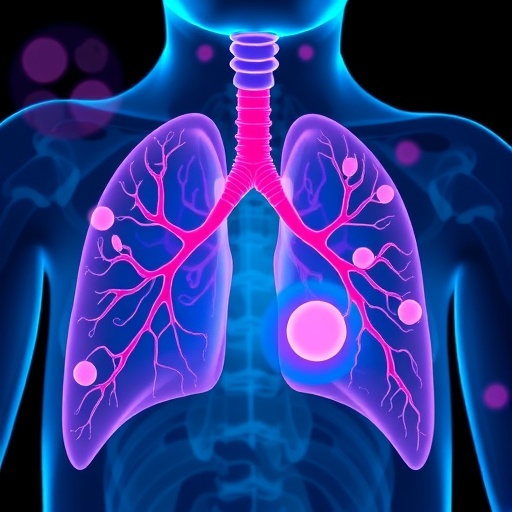
In a groundbreaking study poised to shift the paradigm in pediatric respiratory medicine, researchers have unveiled the potential of heparin-binding protein (HBP) as a powerful biomarker for assessing the severity of community-acquired pneumonia (CAP) in children. This development could revolutionize how clinicians evaluate and manage one of the most prevalent and dangerous infections affecting the pediatric population worldwide. Pediatric community-acquired pneumonia remains a significant cause of morbidity and mortality; hence, innovations in early severity detection bear immense clinical value.
Community-acquired pneumonia in children presents a diagnostic and therapeutic challenge due to the variability in clinical presentation and the difficulty in reliably predicting disease severity. Traditional biomarkers and clinical scoring systems, while helpful, have limitations regarding sensitivity and specificity. The recent study conducted by Saleh, Hassan, Omar, and their colleagues introduces an innovative approach by focusing on the role of HBP—an inflammatory mediator secreted by activated neutrophils—offering new insights into host-pathogen interactions and the inflammatory cascade that dictates the clinical trajectory of pneumonia.
HBP is a multifunctional protein known predominantly for its role in modulating vascular permeability and mediating inflammatory responses. Its elevated levels have been documented in severe bacterial infections and sepsis in adults but remain underexplored in the pediatric context, especially in respiratory infections such as pneumonia. This study emphasizes quantifying serum HBP in pediatric patients diagnosed with CAP and correlating these levels with clinical severity parameters—a methodological leap towards precision medicine in pediatric infectious diseases.
The research utilized a cohort of children diagnosed with CAP, stratifying them based on disease severity into mild, moderate, and severe categories. Serum samples were systematically collected upon admission and analyzed for HBP concentrations alongside conventional markers, such as C-reactive protein (CRP) and procalcitonin (PCT). Remarkably, HBP demonstrated a superior correlation with clinical severity indicators, including respiratory distress scores, need for oxygen supplementation, and length of hospitalization, presenting a robust predictive profile.
Moreover, the investigators applied advanced statistical models to validate the predictive value of HBP. These models incorporated confounding variables like age, comorbidities, and prior antibiotic use, thereby enhancing the reliability and clinical applicability of HBP measurements. The results highlighted HBP’s independence as a predictor, surpassing traditional inflammatory markers known to fluctuate with various systemic conditions and often confounded by other infections or inflammatory states.
The mechanistic underpinnings of HBP’s role in pneumonia severity relate to its capacity to induce endothelial activation and dysfunction, leading to increased vascular permeability and subsequent pulmonary edema—a hallmark of severe pneumonia. This pathophysiological insight aligns with the observed clinical manifestations in the pediatric cohort, where higher HBP levels were linked with more extensive lung involvement and impaired gas exchange.
An intriguing aspect of this study is the temporal dynamics of HBP expression in relation to the clinical course. Serial measurements revealed that HBP levels peaked during the acute phase of infection and gradually declined with clinical improvement, suggesting its utility not just in initial severity assessment but also in monitoring disease progression and therapeutic response. This temporal pattern positions HBP as a candidate biomarker for guiding treatment decisions, including escalation or de-escalation of care intensity.
Furthermore, the study explored the potential of integrating HBP measurement into clinical scoring systems. Existing severity scores often rely on clinical symptoms and nonspecific laboratory parameters, limiting their predictive accuracy. By adding HBP levels into such algorithms, the researchers demonstrated enhanced sensitivity and specificity in predicting outcomes such as intensive care unit admission and need for mechanical ventilation, which are critical determinants of prognosis.
This research carries significant implications for healthcare systems, especially in resource-constrained settings where rapid, reliable, and cost-effective biomarkers are desperately needed to triage pediatric patients effectively. Implementing HBP assays, which can be adapted for bedside testing, could facilitate timely interventions, optimize resource allocation, and ultimately reduce morbidity and mortality associated with pediatric CAP.
Beyond its immediate clinical applications, the identification of HBP as a pivotal biomarker opens new avenues for therapeutic innovation. Targeting the HBP-mediated pathways might yield novel anti-inflammatory strategies aimed at mitigating the deleterious effects of excessive neutrophil activation and vascular leakage, thereby improving patient outcomes and reducing complications like acute respiratory distress syndrome (ARDS).
The contributors to this study include leading pediatric infectious disease experts and clinical researchers who meticulously designed and executed the protocol amidst the challenges inherent in pediatric clinical trials. Their interdisciplinary collaboration underscores the necessity of combining clinical expertise with molecular insights to address complex diseases such as pediatric pneumonia.
While the findings are promising, the authors acknowledge limitations, such as the single-center design and a relatively limited sample size, advocating for multicenter trials to validate the generalizability of HBP as a biomarker across diverse populations and healthcare settings. Furthermore, standardization of HBP assay methodology is crucial before widespread clinical adoption can be recommended.
In conclusion, the elucidation of heparin-binding protein’s predictive value in pediatric community-acquired pneumonia marks a significant advancement in personalized medicine for infectious diseases. By providing a reliable biomarker for severity assessment, this discovery has the potential to enhance clinical decision-making, improve patient outcomes, and inspire future research into targeted interventions, ultimately transforming the pediatric respiratory care landscape.
This pivotal study aligns with ongoing efforts to refine diagnostic tools that yield high clinical utility and exemplifies the integration of immunological research into practical clinical applications. The implications for global child health are profound, particularly considering the prevalence and burden of pneumonia as a leading killer of children under five worldwide.
As the medical community continues to grapple with challenges related to antibiotic resistance and emerging respiratory pathogens, precision tools like HBP measurement will be indispensable. By tailoring treatment intensity to individual patient risk profiles, clinicians can minimize overtreatment and its associated risks, thereby promoting antimicrobial stewardship.
This research heralds a future where biomarkers like HBP will be part of routine pediatric pneumonia assessments, facilitating rapid triage and enabling health practitioners to intervene with unparalleled accuracy. Such advancements are vital milestones in the quest to diminish the global impact of pediatric pneumonia and improve survival and quality of life for millions of children.
Cite Scienmag News
Harold Sullivan. (December 11, 2025). Heparin-Binding Protein Predicts Pediatric Pneumonia Severity. Scienmag. https://scienmag.com/heparin-binding-protein-predicts-pediatric-pneumonia-severity/
Harold Sullivan. "Heparin-Binding Protein Predicts Pediatric Pneumonia Severity." Scienmag, 11 December 2025, https://scienmag.com/heparin-binding-protein-predicts-pediatric-pneumonia-severity/. Accessed 4 September 2026.
Harold Sullivan. "Heparin-Binding Protein Predicts Pediatric Pneumonia Severity." Scienmag. December 11, 2025. https://scienmag.com/heparin-binding-protein-predicts-pediatric-pneumonia-severity/


