


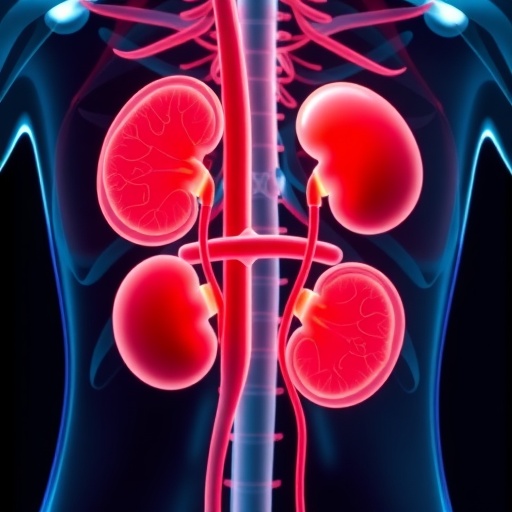
In a groundbreaking advancement that could revolutionize the treatment landscape for patients grappling with end-stage kidney disease (ESKD), a multicenter randomized controlled trial has illuminated the potential mortality benefits of combining hemoadsorption with traditional hemodialysis. Published in Nature Communications in 2026, the study led by Lu, W., Zhang, X., Guo, Z. and colleagues dives deep into the synergy between hemoadsorption — a modality targeting toxin removal from blood — and conventional hemodialysis, revealing compelling data that challenges the current standard of care and opens avenues for improved clinical outcomes.
End-stage kidney disease remains a formidable global health challenge, characterized by the irreversible loss of kidney function necessitating life-sustaining dialysis or transplantation. Despite advancements in dialysis technology, mortality rates in this population remain distressingly high, largely due to the burden of retained toxins and systemic inflammation that contribute to cardiovascular complications, infections, and multi-organ dysfunction. Hemodialysis, while effective at clearing small solutes and electrolyte imbalances, has shown limited efficacy in removing larger molecular weight toxins — a gap that hemoadsorption technology aims to fill.
Hemoadsorption involves the use of highly adsorptive materials integrated into extracorporeal circuits to selectively capture and remove circulating middle molecules, inflammatory mediators, and protein-bound toxins implicated in the pathophysiology of ESKD. The rationale behind combining hemoadsorption with hemodialysis lies in the hypothesis that a dual modality approach could deliver a more comprehensive detoxification process, potentially alleviating systemic inflammation and oxidative stress, and thereby reducing mortality. The trial conducted across multiple high-volume nephrology centers rigorously tested this hypothesis by enrolling a diverse patient cohort undergoing maintenance dialysis.
The study embraced an open-label design with random allocation to either combined hemoadsorption plus hemodialysis or hemodialysis alone. The primary endpoint was all-cause mortality, with secondary outcomes assessing cardiovascular events, hospitalization frequency, inflammatory biomarker profiles, and dialysis-related adverse events. By enrolling hundreds of patients and ensuring meticulous follow-up for over a year, the investigators amassed robust statistical power to discern meaningful differences between the treatment arms, offering unprecedented insight into the clinical utility of hemoadsorption.
One of the most striking findings was a statistically significant reduction in mortality in the cohort receiving hemoadsorption adjunctive to hemodialysis. This result not only signals improved survival but also aligns with marked reductions in key inflammatory markers such as interleukin-6 (IL-6), tumor necrosis factor-alpha (TNF-α), and C-reactive protein (CRP). These biomarkers are closely linked to systemic inflammatory cascades that exacerbate vascular injury and cardiac complications in nephropathic patients. By mitigating this inflammatory milieu, the combined therapy may recalibrate immune responses, reduce endothelial dysfunction, and preserve cardiovascular stability.
Digging deeper into mechanistic underpinnings, the authors elucidate that hemoadsorption cartridges employed in the study utilized porous polymer beads with a high surface area designed to adsorb molecules up to approximately 60 kDa. This size range effectively captures cytokines, endotoxins, and other uremic toxins inadequately cleared by standard dialysis membranes. Moreover, the integration of hemoadsorption did not compromise dialysis session durations or vascular access integrity, underscoring the feasibility and safety of this adjunctive approach in routine clinical settings.
Crucially, the trial also reported a significant decrease in hospitalizations and cardiovascular events within the hemoadsorption group, suggesting broad systemic benefits beyond mere toxin clearance. This observation prompts a paradigm shift in understanding ESKD management by targeting inflammation and immune dysregulation as therapeutic axes. Additionally, patient-reported outcomes hinted at improved quality of life metrics, including fatigue reduction and enhanced functional status — dimensions often overshadowed in clinical trials focused largely on biomedical endpoints.
However, the study is not without limitations. The open-label design, while practical for procedural interventions, introduces potential biases that must be considered when interpreting subjective outcomes. Furthermore, long-term effects beyond the 12-month follow-up remain to be investigated to confirm sustained survival benefits and to exclude late-onset complications. The cost-effectiveness of implementing hemoadsorption broadly also warrants economic analyses given the added expenses associated with cartridge use.
The implications of these findings ripple far beyond nephrology. Hemoadsorption has been previously studied in sepsis, cytokine storm syndromes, and cardiac surgery to attenuate inflammatory cascades. Demonstrating efficacy in ESKD expands its therapeutic arsenal and underscores the pivotal role of extracorporeal blood purification in systemic disease modulation. Future research can explore personalization of hemoadsorption protocols based on biomarker phenotypes or integration with novel pharmacotherapies to synergistically improve outcomes.
In an era where precision medicine is increasingly embraced, this trial exemplifies how targeting pathophysiological processes with sophisticated medical devices can transform chronic disease management. Personalized titration of hemoadsorption parameters, innovation in adsorbent materials, and combination with artificial intelligence-driven monitoring could further refine this technology. Moreover, expanding patient selection criteria to include earlier stages of chronic kidney disease may offer preventive benefit and delay progression.
The study also prompts reconsideration of clinical guidelines for dialysis care. Current frameworks emphasize solute clearance and volume management but may need amendment to incorporate anti-inflammatory strategies as a standardized pillar. This holistic approach could reshape multidisciplinary management involving nephrologists, cardiologists, immunologists, and intensivists to optimize survival and quality of life in end-stage kidney disease.
Critically, patient education and shared decision-making remain paramount as technological complexity increases. Understanding the nuances of hemoadsorption, balancing benefits versus procedural burdens, and addressing equity in access to advanced dialysis modalities will be essential to realizing clinical impact. Health systems must prepare for infrastructural adaptations and training to integrate hemoadsorption seamlessly.
Finally, the broader scientific and medical community will keenly watch for results from ongoing or future trials validating these findings across diverse populations and healthcare settings. Replication studies, meta-analyses, and registries capturing real-world data will further confirm the role of hemoadsorption combined with hemodialysis as a new standard in ESKD care. If these results withstand scrutiny and implementation challenges, this innovation heralds a new chapter that promises to fundamentally shift the prognosis of one of nephrology’s most refractory conditions.
Cite Scienmag News
Jerry Hayes. (March 28, 2026). Hemoadsorption Plus Dialysis Cuts Mortality in Kidney Disease. Scienmag. https://scienmag.com/hemoadsorption-plus-dialysis-cuts-mortality-in-kidney-disease/
Jerry Hayes. "Hemoadsorption Plus Dialysis Cuts Mortality in Kidney Disease." Scienmag, 28 March 2026, https://scienmag.com/hemoadsorption-plus-dialysis-cuts-mortality-in-kidney-disease/. Accessed 4 September 2026.
Jerry Hayes. "Hemoadsorption Plus Dialysis Cuts Mortality in Kidney Disease." Scienmag. March 28, 2026. https://scienmag.com/hemoadsorption-plus-dialysis-cuts-mortality-in-kidney-disease/


