


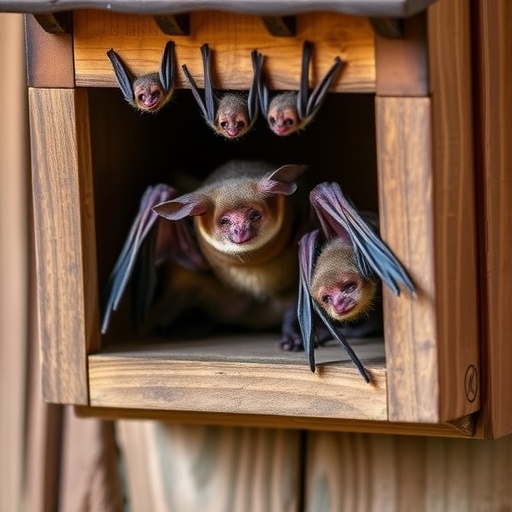
The increasing intensity and frequency of heatwaves due to climate change have become a focal point in ecological research, particularly concerning the survival rates of small organisms. Among these creatures, nocturnal animals like bats may experience acute challenges during extreme heat events. Ruvinda de Mel, a researcher at the University of New England in Australia, highlights that roosting bats face the risk of experiencing dangerously high body temperatures, which could prove fatal. This concern is exacerbated by the design of many artificial bat boxes, which are often intended to retain heat, inadvertently increasing the risk of heat stress for bats that use them as roosts.
Recent research conducted by de Mel and her colleagues, Dylan Baloun and Zenon Czenze, delves into the potential dangers posed by poorly placed bat boxes. Their study, set to be published in the Journal of Experimental Biology, reveals alarming findings. The researchers discovered that bat boxes situated under direct sunlight can reach temperatures exceeding 50°C, potentially leading to severe dehydration and death for the bats inside. This issue raises significant concerns for conservationists and wildlife managers, who must consider the implications of artificial habitats they provide for these vulnerable species.
To gather empirical data for their investigation, de Mel’s team traveled to Lillooet, located in the unceded territory of the St’át’imc Nation in Canada, during August 2023. Here, they gently collected a sample of 22 big brown bats (Eptesicus fuscus) — a widely distributed North American species — from the surrounding forested areas. They meticulously measured the metabolic rates of the bats by calculating the carbon dioxide exhaled and determining water loss through evaporation at various temperatures ranging from 28 to 48°C. After conducting their measurements, the researchers carefully returned the bats to their roosts, ensuring minimal disturbance to the animals.
In addition to monitoring the physiological responses of the bats, the research team also recorded temperature variations in four artificial roosts in close proximity to their study locations. Two roosts were situated on a building’s roof near Kwotlenemo Lake, where one east-facing roost reached temperatures of 38.5°C while its west-facing counterpart only hit 32°C. However, the team also assessed bat boxes located in direct sunlight in Lillooet, which consistently exceeded 40°C. This range of temperatures provided crucial insights into how elevated heat could affect the bats’ overall hydration status as they roosted.
Utilizing the collected data, the researchers calculated potential water loss for bats roosting in these environments during extreme weather conditions. Fortunately, the summer of 2023 did not pose a significant threat to the bats’ survival, with calculated water loss ranging between 2.5% and 6.2% in the Kwotlenemo Lake roosts, while bats in Lillooet’s exposed bat boxes could lose between 10.8% and 15.3% of their body mass due to evaporation. However, the situation was far graver when analyzing how these bats would have coped during the extreme heatwave of June 2021.
When the team retrospectively applied their findings to the conditions faced during the 2021 heatwave, they discovered alarming insights. During the hottest day of that year, the east-facing roost at Kwotlenemo Lake would have seen temperatures skyrocketing above 50°C for six hours, peaking at a staggering 55.5°C. Such conditions could have resulted in bats losing more than 50% of their body mass, a rate of dehydration that would have likely proven fatal. Similarly, bats in the Lillooet bat boxes would have faced tremendous risks, with potential water losses between 25.5% and 36.7% of their body mass.
These findings sharply illustrate how inadequately situated artificial roosts could transform into death traps for bats during heatwaves. De Mel emphasizes the importance of strategic placement and design of these roosts in order to mitigate the risks associated with extreme temperatures. She advocates for constructing a variety of bat boxes in a single location, with some made from insulating materials that can maintain stable temperatures, while others would be designed to cool down quickly. Furthermore, the placement of roosts in both sunny and shaded areas could also create safe havens for bats depending on seasonal temperature fluctuations.
This research underscores a pressing message for those involved in bat conservation: the importance of carefully considering roost placement and design. As climate patterns evolve and the frequency of heatwaves increases, the survival of roosting bats may hinge on proactive measures and thoughtful strategies to ensure their safety during extreme temperature events. By implementing best practices in bat conservation, we can help secure a future for these nocturnal mammals despite the challenges posed by climate change.
As we continue to uncover the complex interactions between changing climates and wildlife physiology, it becomes increasingly vital to advocate for preventive measures. Efforts to diversify the types of artificial roosts available to bats can significantly impact their resilience against heatwave-induced mortality. Understanding the intricate relationship between bats and their environments sheds light on the broader ecological challenges facing countless species threatened by climate change.
Ultimately, the findings from this study serve as a clarion call for conservationists and wildlife managers alike. The implications of heatwaves for bat populations are profound, and immediate actions are essential for their preservation. As scientists delve deeper into the physiological responses of bats under duress, we must heed their warnings and adjust our conservation strategies accordingly. Failure to do so may result in irrevocable consequences for bat populations already under threat.
In conclusion, the fate of roosting bats in the face of extreme heat events rests largely in the hands of conservationists and researchers dedicated to understanding and mitigating these risks. By fostering innovative approaches and promoting habitat designs that accommodate the needs of these vital mammals, we stand a better chance of ensuring their continued existence amidst an ever-changing climate landscape. This research highlights the urgent need for a comprehensive strategy that embraces both the physiological aspects of wildlife and the protective measures necessary to safeguard them from the increasing threats posed by climate change.
Keywords
heatwaves, bats, conservation, climate change, Eptesicus fuscus, habitat design
Cite Scienmag News
Margaret Porter. (October 16, 2025). Heatwaves Make Overheated Bat Boxes a Deadly Threat to Bat Populations. Scienmag. https://scienmag.com/heatwaves-make-overheated-bat-boxes-a-deadly-threat-to-bat-populations/
Margaret Porter. "Heatwaves Make Overheated Bat Boxes a Deadly Threat to Bat Populations." Scienmag, 16 October 2025, https://scienmag.com/heatwaves-make-overheated-bat-boxes-a-deadly-threat-to-bat-populations/. Accessed 4 September 2026.
Margaret Porter. "Heatwaves Make Overheated Bat Boxes a Deadly Threat to Bat Populations." Scienmag. October 16, 2025. https://scienmag.com/heatwaves-make-overheated-bat-boxes-a-deadly-threat-to-bat-populations/


