

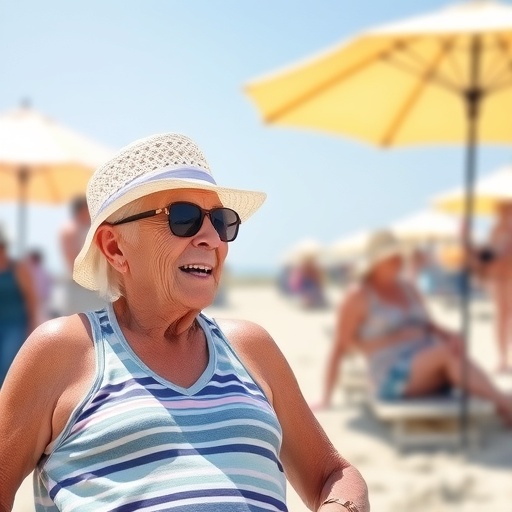
As the climate crisis intensifies, researchers are increasingly focused on the compounding effects of various environmental stressors. A recent study authored by Zhao and Yang sheds light on a growing concern: the combined impacts of heat and ultraviolet (UV) radiation on vulnerable populations, particularly the elderly. Their findings reveal a staggering exacerbation of exposure risks that could have dire implications for public health. With an aging population globally, the urgency for actionable strategies to mitigate these risks has never been higher.
The interplay between heat and UV radiation is complex but critical to understand during heatwaves, which have become more frequent and severe due to climate change. Zhao and Yang’s research identifies that elevated temperatures can enhance the skin’s sensitivity to UV radiation, increasing the likelihood of adverse health effects. This synergy creates a perilous situation for older individuals, whose skin naturally thins and becomes more susceptible to damage. The implications of this combination are profound: hospitals may face surging numbers of cases of heat-related illnesses and skin cancers among seniors.
Elderly populations tend to experience physiological shifts that can compromise their coping mechanisms against environmental stressors. For instance, age-related changes in thermoregulation, the body’s ability to maintain its core internal temperature, place older adults at heightened risk during extreme heat events. When compounded with increased UV exposure, the prospects can turn grim. The study emphasizes that standard health advisories may fall short in protecting these vulnerable individuals, necessitating a re-evaluation of public health policies.
In this study, Zhao and Yang conducted an extensive analysis using climate projections and health data modeling to predict future scenarios. They found that as global temperatures surge and UV exposure increases, the risks will disproportionately impact elderly populations across diverse socio-economic backgrounds. The researchers argue that it is not merely a question of survival but also of quality of life, as these environmental stressors can exacerbate existing health conditions like cardiovascular disease, respiratory illness, and skin disorders.
Moreover, the study illustrates that different geographic regions respond uniquely to heat and UV increases. Areas that were traditionally temperate may experience sudden spikes in heat and UV levels, to which the elderly are particularly vulnerable. This shift could necessitate localized responses calibrated to the specific vulnerabilities of communities. For instance, urban areas with a high density of elderly residents may need to prioritize the creation of shaded spaces, adequate hydration measures, and accessible cooling centers during extreme weather events.
The findings also have significant implications for urban planning and engineering. Zhao and Yang propose that officials should integrate climate resilience into city designs, considering the aging population in future developments. Green spaces, reflective materials, and water features can be not just aesthetically pleasing but crucial in combating the urban heat island effect, thereby reducing overall temperatures in densely populated areas.
Health systems must adapt proactively, implementing preventative measures and timely interventions for the elderly. Awareness campaigns that educate older individuals and their caregivers about the dangers of combined heat and UV exposure may prove essential. The researchers urge policymakers to incorporate this dual threat into emergency response strategies and develop dedicated resources aimed at supporting the well-being of the aging demographic.
A pivotal aspect of the research lies in its call for interdisciplinary collaboration. Environmental scientists, urban planners, healthcare providers, and policymakers must unite to tackle the impending health crisis. By harnessing innovative technologies, such as predictive modeling and early warning systems for extreme weather events, communities can better prepare and respond to heat and UV risks. The research team’s conclusions advocate for a collaborative approach that finds common ground among various stakeholders to foster resilience.
Further emphasizing the far-reaching consequences, Zhao and Yang’s paper raises questions about economic impacts. Increased medical costs associated with heat-related illnesses and skin damage could strain health systems. Elderly individuals may require more frequent medical attention, subsequent hospitalizations, and long-term treatments, creating financial implications for both families and healthcare systems. Attention must be drawn to how often overlooked populations bear the brunt of climate change effects, impacting quality of life and financial stability.
The urgency of addressing these factors cannot be overstated. Zhao and Yang conclude that addressing the compounded risks posed by heat and UV radiation should be an immediate priority for governments worldwide. Policymakers must recognize that a proactive stance is more effective than reactive disaster response. Strategically implemented measures can provide immediate support while also fostering long-term resilience within the elderly demographic.
Ultimately, the study underscores a broader truth: climate change is a public health issue that demands urgent and comprehensive action. The implications of Zhao and Yang’s findings extend beyond academia, underscoring the necessity for global awareness and coordinated efforts in protecting our most vulnerable populations from the compounding threats presented by a warming world.
As the world grapples with these challenges, Zhao and Yang’s research serves as a wake-up call. As temperatures rise and ecological conditions evolve, the imperative for science to guide policy must take precedence. Community engagement, public education, and scientific awareness will be key in mitigating these mounting environmental challenges, ensuring that the health of the elderly is prioritized amid the intensifying climate crisis.
With climate science advancing and the urgency for action amplifying, the time is ripe for discussions and interventions. The future health of our aging populations may depend on the swift adoption of strategies outlined by Zhao and Yang, providing a clearer understanding of the complex dynamics between environmental stressors and human health. The conversation spawned by this research is crucial in weighty decisions that will impact generations to come.
To move forth, we must amplify the voices of those advocating for the health of older populations. The insights provided by this research should fuel not only academic discourse but also mobilize community actions, bridging gaps between policy, science, and the lived experiences of affected individuals. Without decisive action, we may confront an era of unprecedented health crises for our elderly, steered by the dual threats of heat and ultraviolet radiation.
In conclusion, the study by Zhao and Yang not only presents a stark analysis of the future hazards but also cultivates a sense of responsibility for the collective well-being of our communities. The interplay of heat and UV radiation on the elderly population poses significant health risks, but with informed action and engaged communities, we possess the tools to mitigate these dangers effectively.
Subject of Research: The compounded risks of heat and ultraviolet radiation on elderly populations due to climate change.
Article Title: Expanding compound heat and ultraviolet radiation stress amplifies exposure risks for elderly populations.
Article References:
Zhao, R., Yang, Y. Expanding compound heat and ultraviolet radiation stress amplifies exposure risks for elderly populations.
Commun Earth Environ (2025). https://doi.org/10.1038/s43247-025-03070-x
Image Credits: AI Generated
DOI: 10.1038/s43247-025-03070-x
Keywords: heat stress, ultraviolet radiation, elderly health risks, climate change, public health, vulnerability.


