

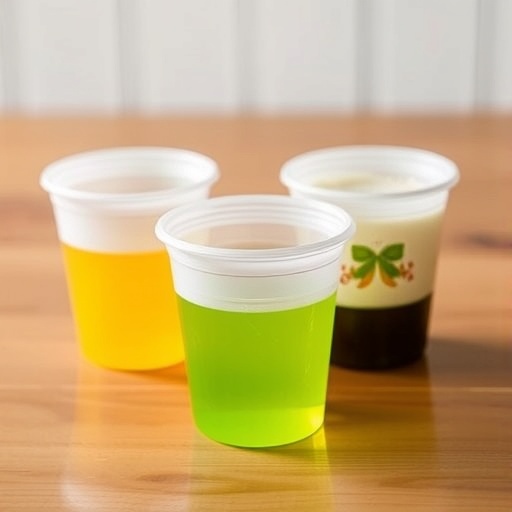
Research into the environmental and health impacts of plastics has intensified in recent years, drawing attention to the hidden dangers associated with ubiquitous materials like disposable cups. A pivotal study led by researchers Li, S., Yang, L., and Meng, X., published in the journal Environmental Engineering, dives deep into how temperature and ethanol work together to effectively increase the release of microplastics from these commonly used products. This issue is not solely academic but poses significant real-world health risks that warrant our immediate attention.
The researchers reveal that the degradation of disposable cups—typically made from plastics such as polystyrene or polypropylene—can be markedly accelerated under specific conditions. By exposing these materials to elevated temperatures often encountered in hot beverages and incorporating ethanol, a substance found in various consumables, they observed enhanced leaching of microplastic particles. These findings are troubling considering that microplastics have become an omnipresent contaminant in our food, water, and air.
Microplastics, defined as plastic particles less than five millimeters in size, have infiltrated ecosystems and human bodies alike. They originate from larger plastic debris that fragments over time, but they can also be released during the manufacturing process and through everyday usage. The study’s insights provide critical data on how seemingly innocuous items—like a takeout coffee cup—can serve as sources of microplastic pollution, ultimately contributing to a cocktail of toxins that may adversely affect health.
With temperatures rising globally due to climate change, the relevance of the study cannot be overstated. The researchers’ findings emphasize that higher ambient temperatures could exacerbate microplastic release into our environments as consumers continue to choose convenient single-use products. This correlation serves as a warning that we must rethink our reliance on disposable plastics, especially in settings that involve heat exposure.
Ethanol, another critical factor in this research, was shown to play a significant role in destabilizing the plastic matrix of these cups, leading to an increase in microplastic generation. Beverage companies that use ethanol in their products, either as a solvent or a flavoring agent, should be particularly aware of the implications of this synergistic effect. The findings suggest that products containing alcohol might contribute to higher microplastic contamination, an area that merits further exploration.
The health risks posed by ingestion or inhalation of microplastics remain an area of active research. While initial studies indicate potential adverse effects on human health, such as inflammation and toxicity, more definitive research is needed to understand the long-term consequences. The study conducted by Li et al. highlights the urgent need for regulatory bodies to assess the safety of materials used in food packaging and serviceware more stringently.
From an environmental perspective, this study underscores the critical nature of addressing plastic pollution, particularly given the dual threat posed by climate change and consumer behavior. Initiatives aimed at reducing plastic waste, coupled with innovations in biodegradable materials, may offer pathways to mitigate the problem brought to light by this research.
As consumers become more environmentally conscious, manufacturers must similarly pivot toward sustainable practices. This study adds to the growing body of evidence suggesting that the materials chosen for consumer products must be evaluated not only for their functional properties but also for their environmental impact over their lifecycle.
The collaborative work of the authors in this study exemplifies how interdisciplinary approaches can shed light on complex issues such as plastic contamination. By combining principles from materials science, health sciences, and environmental studies, the research team was able to provide a comprehensive analysis of how disposable cups contribute to microplastic proliferation.
Public awareness campaigns are essential for educating consumers about these issues. As the study highlights, knowledge of how our daily choices influence environmental health can empower individuals to make informed decisions. Increased awareness can help drive demand for safer, more sustainable alternatives to disposable plastics, thereby influencing manufacturers and policymakers alike.
In summary, the findings of this important study serve as a clarion call to both consumers and industry stakeholders. The synergistic effect of temperature and ethanol on microplastic release from disposable cups illustrates a significant and often overlooked dimension of plastic pollution. Continued research is essential to explore the health implications fully and to develop effective strategies aimed at reducing microplastic contamination in our environment.
As conversations around sustainability and environmental stewardship gain momentum, the findings from Li, S., Yang, L., and Meng, X. pave the way for more comprehensive discussions on the perils of plastic usage, particularly in applications susceptible to degradation under everyday conditions. This important research opens up avenues for regulatory reform and innovation in material science, ensuring that progress does not come at the expense of public health or the environment.
With the increasing incidence of microplastics detected in food sources and environmental samples, the insights from this research are invaluable. They provide a foundation for further studies that will seek to understand the mechanisms driving microplastic release and how best to combat this growing problem. Through such efforts, we may ultimately create a safer future, free from the harmful effects of plastic pollution.
In conclusion, the intersection of temperature, ethanol, and microplastics reveals complex challenges ahead. By recognizing the implications of our everyday behaviors, we can work collectively towards reducing our reliance on harmful plastics and adjusting our consumption patterns to safeguard health and the environment.
Subject of Research: Microplastic release from disposable cups under the influence of temperature and ethanol.
Article Title: Temperature and ethanol synergistically enhance microplastic release from disposable cups: mechanistic insights and health risk assessment of typical plastics.
Article References:
Li, S., Yang, L., Meng, X. et al. Temperature and ethanol synergistically enhance microplastic release from disposable cups: mechanistic insights and health risk assessment of typical plastics.
ENG. Environ. 20, 53 (2026). https://doi.org/10.1007/s11783-026-2153-5
Image Credits: AI Generated
DOI:
Keywords: Microplastics, environmental health, disposable cups, temperature, ethanol, pollution, sustainability.


