


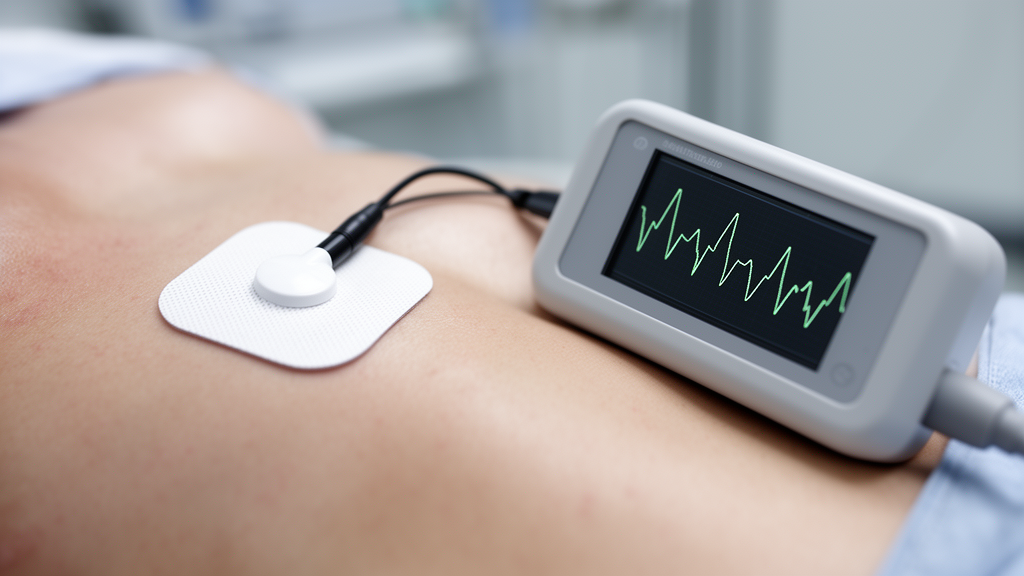
A retrospective cohort study published in Frontiers in Oncology suggests that dynamic changes in heart rate variability (HRV) during the perioperative period may help identify patients at higher risk for complications following radical surgery for gastrointestinal tumors. The research, conducted at the Affiliated Hospital of Nanjing University of Chinese Medicine, analyzed data from 231 patients who underwent elective radical surgery between May 2022 and September 2025. By combining wearable HRV monitoring with standard inflammatory markers, the researchers developed a prediction model that demonstrated strong performance in distinguishing between patients who experienced postoperative complications and those who did not.
The study aimed to investigate the predictive value of dynamic HRV changes for complications following radical surgery. The participants were divided into two groups based on the occurrence of complications during their postoperative hospitalization: a complication group consisting of 41 patients and a non-complication group consisting of 190 patients. All patients wore a long-term wearable dynamic monitoring device that recorded HRV indicators from 24 hours preoperatively until postoperative day 3.
In this study, specific HRV parameters were tracked to assess how the body responded to the physiological stress of surgery. The results indicated that the root mean square of successive differences (RMSSD) on postoperative day 3 was significantly lower in the complication group compared to the non-complication group. The study established a model to identify the association between HRV and the risk of short-term postoperative complications.
Concurrent changes in inflammatory markers were also recorded to provide a broader context for the physiological response. The study found that levels of interleukin-6, white blood cell count, and C-reactive protein were significantly higher in the complication group. By analyzing these serum markers alongside HRV trajectory parameters, the researchers were able to construct a more comprehensive prediction model.
The researchers used univariate and multivariable logistic regression analyses to construct the prediction models. Receiver operating characteristic (ROC) curves were plotted to evaluate the predictive performance of these models. The combined model, which incorporated both HRV trajectory parameters and serum inflammatory markers, demonstrated the highest predictive value. The area under the curve (AUC) for this combined model was 0.832, with a 95% confidence interval of 0.762 to 0.902 and a P-value of less than 0.001.
The study highlights the potential of dynamic perioperative HRV monitoring to reflect the state of autonomic function under surgical stress. By establishing a model that identifies the association between HRV and the risk of short-term postoperative complications, the research offers a pathway for the early identification of high-risk patients.
It is important to note that this was a retrospective cohort study, which means the data was analyzed after the events had already occurred. While the study provides valuable insights into the association between HRV and complications, it does not establish a causal relationship. The study was limited to a single center and a specific population of patients undergoing radical surgery for gastrointestinal tumors, which may limit the generalizability of the results to other surgical populations or settings.
The authors, including Gang Wang and colleagues from the Affiliated Hospital of Nanjing University of Chinese Medicine, conclude that combining HRV with inflammatory markers is a promising strategy for risk stratification.
Subject of Research: Predictive value of perioperative heart rate variability for postoperative complications in gastrointestinal tumor surgery
Article Title: Autonomic function effects on risk of postoperative complications in gastrointestinal tumors: a retrospective cohort study
Article References: Yi, C., Li, H., Wang, H., Shen, D., Pan, H., Jiang, Z., & Wang, G. (2026). Autonomic function effects on risk of postoperative complications in gastrointestinal tumors: a retrospective cohort study. Frontiers in Oncology, 16, Article 1877633. https://doi.org/10.3389/fonc.2026.1877633
Image Credits: AI Generated
DOI: 10.3389/fonc.2026.1877633
Keywords: heart rate variability, postoperative complications, gastrointestinal tumors, retrospective cohort study, autonomic nervous system, inflammatory markers, wearable monitoring, surgical stress, risk prediction, Frontiers in Oncology, Autonomic, function
Cite Scienmag News
Nathaniel Bowman. (November 8, 2026). Heart Rate Variability Predicts Postoperative Complications. Scienmag. https://scienmag.com/heart-rate-variability-predicts-postoperative-complications/
Nathaniel Bowman. "Heart Rate Variability Predicts Postoperative Complications." Scienmag, 8 November 2026, https://scienmag.com/heart-rate-variability-predicts-postoperative-complications/. Accessed 8 November 2026.
Nathaniel Bowman. "Heart Rate Variability Predicts Postoperative Complications." Scienmag. November 8, 2026. https://scienmag.com/heart-rate-variability-predicts-postoperative-complications/




