


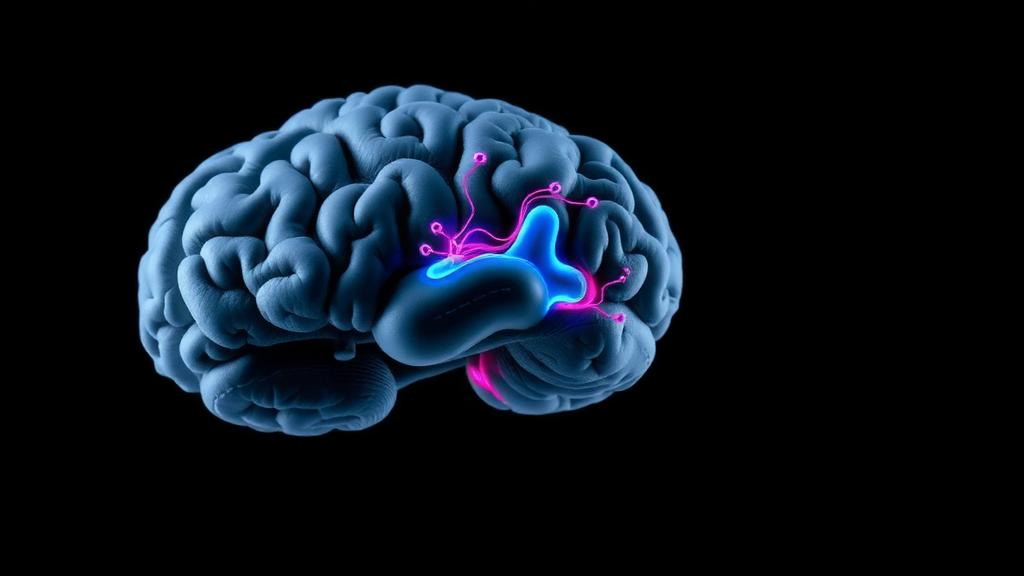
Age-related hearing loss has long been flagged as one of the most significant modifiable risk factors for dementia, yet the biological route connecting a failing inner ear to a struggling mind has remained stubbornly elusive. Now, one of the largest investigations of its kind offers a strikingly detailed map of what happens to the brain’s physical wiring as hearing fades. Drawing on brain scans and hearing tests from 2,402 older adults in the population-based Rotterdam Study, researchers report that age-related hearing loss is associated with measurably weaker structural connections between brain regions, particularly those linking the frontal lobes to deep subcortical structures. The findings, published in the journal GeroScience, lend weight to the sensory deprivation theory while simultaneously complicating one of its central predictions.
The sensory deprivation theory holds that when the ear stops delivering adequate auditory input, the brain does not simply sit idle; it undergoes lasting physical changes. Prolonged lack of stimulation is thought to drive structural degeneration, and the brain may then reorganize itself, recruiting additional networks, such as those devoted to attention and vision, to compensate and support the difficult task of decoding speech. If such reorganization occurs, it should leave a topological fingerprint: some connections between brain regions should weaken as neural tissue degenerates, while others should strengthen as the brain reroutes information through compensatory channels. Testing that fingerprint at scale is exactly what the Dutch team set out to do.
Structural connectivity refers to the bundles of white matter fibers, the brain’s physical cabling, that carry signals between gray matter regions. The strength of these connections is believed to determine how efficiently information travels across the network. To capture it, the researchers used diffusion-weighted MRI on a single 1.5 Tesla scanner, whose hardware and software remained unchanged throughout the study period, alongside high-resolution T1-weighted structural images. From the diffusion data, they reconstructed white matter streamlines using a fiber orientation distribution approach, a technique considered more sensitive than the older diffusion tensor imaging method. Each participant’s brain was parcellated into 117 gray matter regions of interest, and every possible pair of regions was treated as a potential connection, yielding a complete structural connectome for each individual.
Hearing was quantified with pure-tone audiometry performed in a soundproof booth, following international standards. The researchers calculated pure-tone averages across several frequency ranges for the better-hearing ear, including low frequencies from 250 to 1,000 hertz, mid frequencies from 500 to 4,000 hertz, high frequencies from 2,000 to 4,000 hertz, and the full span from 250 to 8,000 hertz. Participants with hearing patterns suggestive of noise-induced damage, such as a characteristic notch at 4,000 hertz, were excluded, as were those with conductive hearing problems, vestibular schwannoma, or poor image quality. The result was a large, carefully filtered sample with a median age of 66.1 years, 54.7 percent of whom were women, and roughly two-thirds of whom had no hearing impairment in their better ear.
To analyze the resulting networks, the team applied network-based statistics, a validated method that controls the family-wise error rate when testing thousands of connections simultaneously. Only connections present in more than 80 percent of the population were considered, reducing the chance of false positives from spurious tractography. The models controlled for age, sex, and intracranial volume, and in a second round of analyses the researchers additionally adjusted for cardiovascular risk factors including smoking, systolic blood pressure, alcohol consumption, antihypertensive medication use, and diabetes. They also computed whole-network measures, total weight, global efficiency, and network modularity, to determine whether any connectivity changes were local or spread across the entire brain.
The dominant signal was unambiguous: as hearing thresholds worsened, structural connections grew weaker, and the pattern was overwhelmingly bilateral. At the most stringent significance thresholds, the affected connections clustered between frontal regions, chiefly in the prefrontal cortex, and subcortical gray matter, with notable involvement of the putamen and the entorhinal cortex. This anatomical profile is provocative. The prefrontal cortex governs cognitive control, the capacity to direct thought and action toward goals, and prefrontal-subcortical pathways are known to decline with age. The putamen contributes to learning, motor control, and cognition, while the entorhinal cortex is among the earliest regions affected in dementia and has previously been linked to hearing loss through atrophy. Weakened wiring through these hubs could, according to the disconnection hypothesis, impair communication between regions and gradually erode cognitive function.
Just as telling was what the researchers did not find. They had hypothesized that reorganization would be most visible in the left hemisphere, where language processing is lateralized in most people, and that compensatory strengthening of connections to attentional or visual networks would appear alongside the degenerative weakening. Instead, the connectivity reductions appeared in both hemispheres without any lateralization, and only a handful of stronger connections emerged. Among these were two links from the calcarine cortex, the brain’s primary visual cortex, to frontal regions, a pattern that superficially resembles cross-modal compensation. Crucially, however, those strengthened connections vanished once cardiovascular risk factors were taken into account, and the global network measures showed no significant associations with hearing at all. The brain changes associated with hearing loss, in other words, appear relatively local rather than a wholesale rewiring of the network.
Another surprise concerned which frequencies mattered most. The strongest associations emerged not with the mid-frequency average typically used to characterize hearing loss, but with the low-frequency and full-range averages, and the high-frequency average showed the weakest links. One explanation is that low-frequency thresholds are affected later in the most common form of age-related hearing loss, so low-frequency loss may serve as a proxy for advanced disease. A second possibility points to metabolic, or strial, hearing loss, a subtype driven by vascular compromise of the cochlea that flattens thresholds across frequencies. The cardiovascular adjustment tells this story compellingly: correcting for smoking, blood pressure, alcohol, medication, and diabetes substantially attenuated the associations, especially for low-frequency hearing. That attenuation suggests a common-cause mechanism in which vascular pathology simultaneously damages the cochlea and degrades the brain’s white matter, rather than sensory deprivation acting alone.
The study’s scale is its greatest asset. Only two prior investigations had examined structural connectivity in age-related hearing loss, both with small samples and inconsistent anatomical findings, one reporting reorganization of the visual network in severe hearing loss and the other disruptions involving the left putamen. By using continuous hearing measures across a cohort of more than two thousand, the Rotterdam team provided the statistical power that connectivity analyses demand. The authors are candid about limitations: the cross-sectional design cannot establish causality, and the 1.5 Tesla scanner’s relatively coarse diffusion imaging likely underestimates shorter fiber tracts. Even so, the picture that emerges is coherent and consequential. Age-related hearing loss appears to thin the brain’s physical connections beyond the auditory system, potentially disrupting cognitive networks in line with the sensory deprivation framework, while the strong vascular signal serves as a reminder that the heart and the ear may be failing together, and that protecting cardiovascular health could be one of the most powerful tools for preserving both hearing and the brain’s wiring.
Subject of Research: Structural brain connectivity changes associated with age-related hearing loss
Article Title: Reduced structural connectivity in age-related hearing loss aligns with the sensory deprivation theory
Article References: Boons, J. H. C., De Luca, A., Dingemanse, G., Vinke, E. J., Kremer, B., Vernooij, M. W., & Goedegebure, A. (2026). Reduced structural connectivity in age-related hearing loss aligns with the sensory deprivation theory. GeroScience. https://doi.org/10.1007/s11357-026-02589-x
Image Credits: AI Generated
DOI: 10.1007/s11357-026-02589-x
Keywords: age-related hearing loss, structural connectivity, sensory deprivation theory, dementia, white matter, diffusion MRI, connectome, Rotterdam Study, cardiovascular risk, prefrontal cortex, cognitive decline, GeroScience
Cite Scienmag News
Cassandra Pierce. (October 12, 2026). Hearing Loss in Aging Weakens the Brain’s Wiring, Massive Scan Study Finds. Scienmag. https://scienmag.com/hearing-loss-in-aging-weakens-the-brains-wiring-massive-scan-study-finds/
Cassandra Pierce. "Hearing Loss in Aging Weakens the Brain’s Wiring, Massive Scan Study Finds." Scienmag, 12 October 2026, https://scienmag.com/hearing-loss-in-aging-weakens-the-brains-wiring-massive-scan-study-finds/. Accessed 12 October 2026.
Cassandra Pierce. "Hearing Loss in Aging Weakens the Brain’s Wiring, Massive Scan Study Finds." Scienmag. October 12, 2026. https://scienmag.com/hearing-loss-in-aging-weakens-the-brains-wiring-massive-scan-study-finds/


