


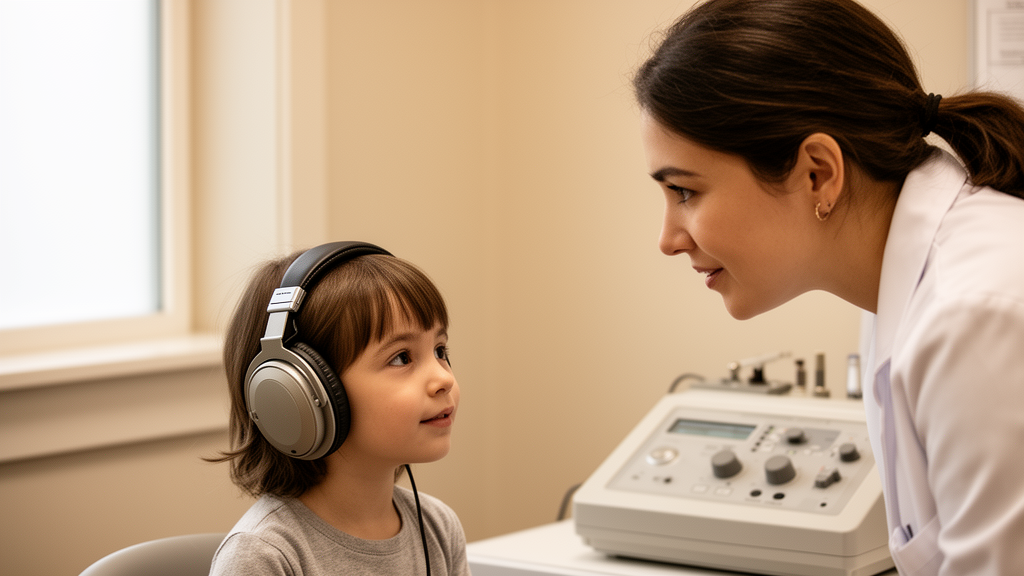
Children with mucopolysaccharidosis (MPS), a group of rare inherited metabolic disorders, face a substantial burden of hearing loss, according to a cross-sectional study of 70 Iranian patients published in BMC Pediatrics. The researchers found that 45 of the 70 children assessed—64.29%—had hearing loss, while the remaining 25 (35.71%) had normal hearing. The findings underscore how common auditory impairment is in this population and suggest that it may persist regardless of the treatments patients receive.
MPS is a multisystem genetic disorder caused by deficiencies of lysosomal enzymes, which leads to the accumulation of glycosaminoglycans and progressive involvement of multiple organs. Hearing loss is described by the authors as a common but under-recognized manifestation of the disease. Crucially, it does not follow a single pattern: it may include conductive, sensorineural, or mixed components, meaning that different parts of the auditory pathway—from the middle ear to the auditory nerve—can be affected in different patients.
The study was conducted as a descriptive cross-sectional epidemiological investigation at two tertiary referral children’s hospitals in Tehran province, Iran. Seventy-one children with MPS were enrolled, and audiological assessments were completed for 70 of them. The test battery included pure-tone audiometry (PTA), otoacoustic emissions (OAE), auditory brainstem response (ABR), and tympanometry. Hearing loss was defined as a PTA threshold greater than 25 dB HL in at least one ear. Demographic, clinical, and treatment-related variables were then analyzed for associations with hearing status.
The cohort included 42 boys (59.2%), and the mean age of the patients was 11.97 ± 6.38 years. When the results were broken down by MPS subtype, the highest rate of hearing loss was observed in MPS II, also known as Hunter syndrome, where every affected patient assessed (100%) had hearing loss. MPS IIIA, or Sanfilippo syndrome, followed at 66.7%, and MPS I, or Hurler syndrome, at 63.6%.
A central question was whether current therapies influence hearing outcomes. The analysis found no statistically significant association between hearing status and the duration of enzyme replacement therapy (ERT), with a P value of 0.81. Nor was there a significant relationship with bone marrow transplantation (BMT), P = 0.21, or with treatment modality overall, P = 0.9. The authors conclude that hearing loss in their cohort appears to be independent of the therapeutic interventions patients had received.
The clinical significance of these findings lies in timing. Because hearing loss may negatively affect speech and communication abilities in children with MPS, the authors emphasize the importance of distinguishing the type of hearing loss and ensuring early diagnosis so that intervention can be delivered promptly. Early and comprehensive audiological assessment, they argue, is essential for this population.
Based on their results, the researchers recommend regular audiological screening and early rehabilitation for children with MPS to improve communication outcomes and quality of life. The conclusion aligns with the study’s central observation: with nearly two-thirds of patients affected and no apparent protective effect from ERT, BMT, or treatment choice, monitoring hearing over time becomes a practical necessity rather than an optional extra in the care of these children.
The study has limitations inherent to its design. As a descriptive cross-sectional investigation of 70 patients at two referral hospitals in Tehran, it captures a snapshot of hearing status at a single point in time rather than tracking changes within individuals, and its findings are specific to the patients studied. The reported subtype-specific rates are based on small numbers of patients within each MPS category, so the percentages for individual subtypes should be interpreted with caution. The authors also note that the accepted version of the article is being shared early and remains subject to further edits before the final version of record is published.
Even with those caveats, the study adds a clearly quantified picture of auditory involvement in MPS in an Iranian pediatric cohort: hearing loss affecting 64.29% of assessed patients, a complete rate in Hunter syndrome, and no measurable link to the duration or type of treatment received. For clinicians managing MPS, the practical message is that hearing should be assessed systematically and early, since the condition is highly prevalent and does not appear to be prevented by current therapeutic approaches.
Subject of Research: Prevalence and types of hearing loss among Iranian children with mucopolysaccharidosis and their association with treatment variables
Article Title: Prevalence and associated factors of hearing loss in 70 Iranian patients with mucopolysaccharidosis
Article References: Alaee, M. R., Rasouli Fard, P., Saneifar, H., Shakiba, M., Salehpour, S., & Moarefian, S. (2026). Prevalence and associated factors of hearing loss in 70 Iranian patients with mucopolysaccharidosis. BMC Pediatrics. https://doi.org/10.1186/s12887-026-07859-3
Image Credits: AI Generated
DOI: 10.1186/s12887-026-07859-3
Keywords: mucopolysaccharidosis, hearing loss, Hunter syndrome, Hurler syndrome, Sanfilippo syndrome, enzyme replacement therapy, bone marrow transplantation, audiological assessment, pure-tone audiometry, pediatrics, Iran, rare disease
Cite Scienmag News
Ophelia Keating. (October 27, 2026). Hearing Loss Affects Nearly Two-Thirds of Iranian Children with Mucopolysaccharidosis. Scienmag. https://scienmag.com/hearing-loss-affects-nearly-two-thirds-of-iranian-children-with-mucopolysaccharidosis/
Ophelia Keating. "Hearing Loss Affects Nearly Two-Thirds of Iranian Children with Mucopolysaccharidosis." Scienmag, 27 October 2026, https://scienmag.com/hearing-loss-affects-nearly-two-thirds-of-iranian-children-with-mucopolysaccharidosis/. Accessed 27 October 2026.
Ophelia Keating. "Hearing Loss Affects Nearly Two-Thirds of Iranian Children with Mucopolysaccharidosis." Scienmag. October 27, 2026. https://scienmag.com/hearing-loss-affects-nearly-two-thirds-of-iranian-children-with-mucopolysaccharidosis/


